


 0
0
0

Introducing Autograph’s new exhibition by artist Charan Singh, examining how South Asian narratives have been obscured, omitted and reshaped by colonial legacies.
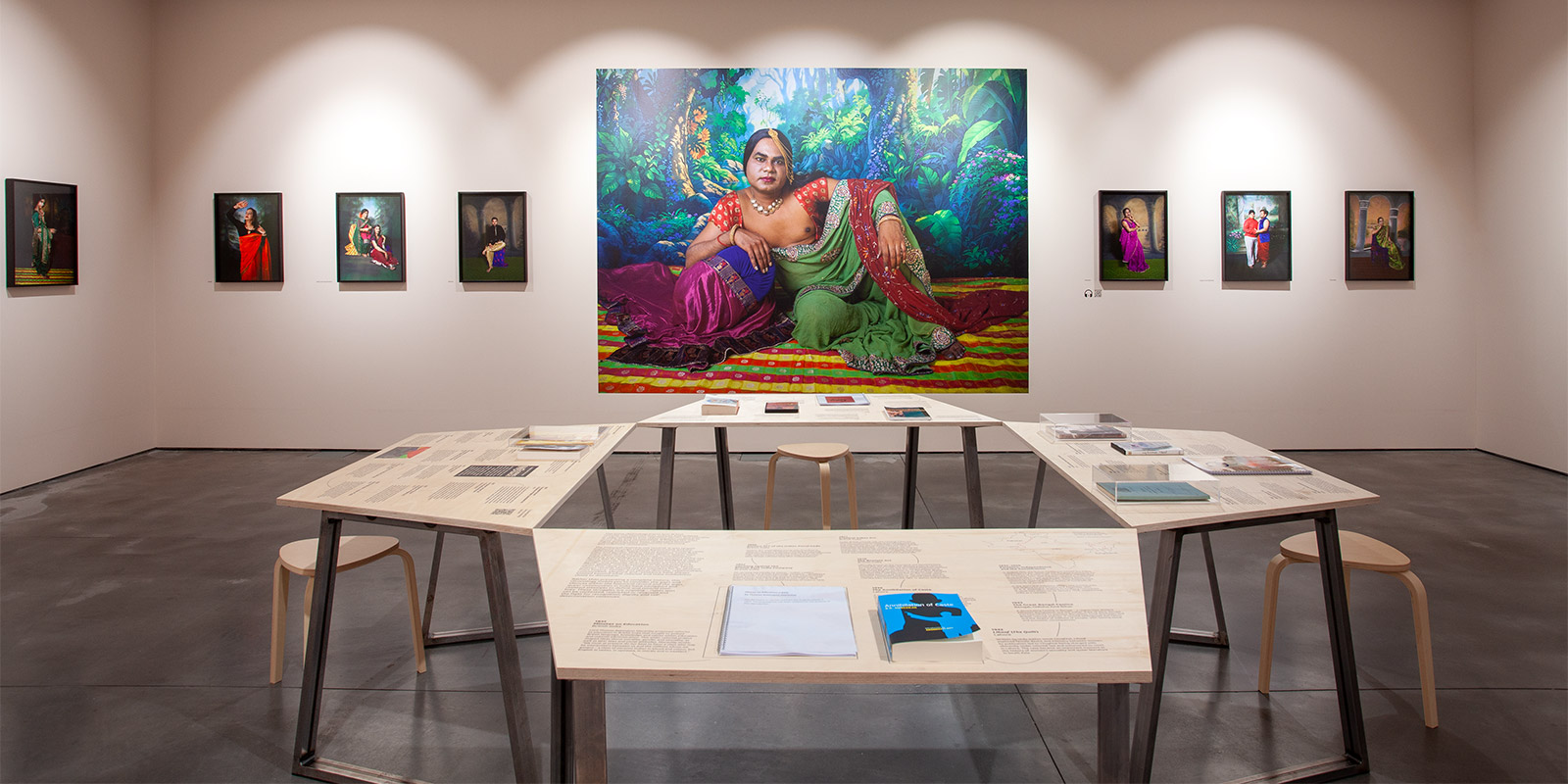
Sitting at the intersection of gender, desire and the intertwined histories of Britain and India, Charan Singh: Your Tongue in My Mouth examines how queer narratives have been obscured, omitted and reshaped by colonial legacies – particularly through the politics of language.
Here we introduce the exhibition and answer four quick questions that are key to the show.
Your Tongue in My Mouth is on display alongside Our Bodies Have Been Bridges, a group exhibition exploring the intersections of indigenous knowledge and feminist thought. Both shows are free to visit at Autograph until 13 February 2027.
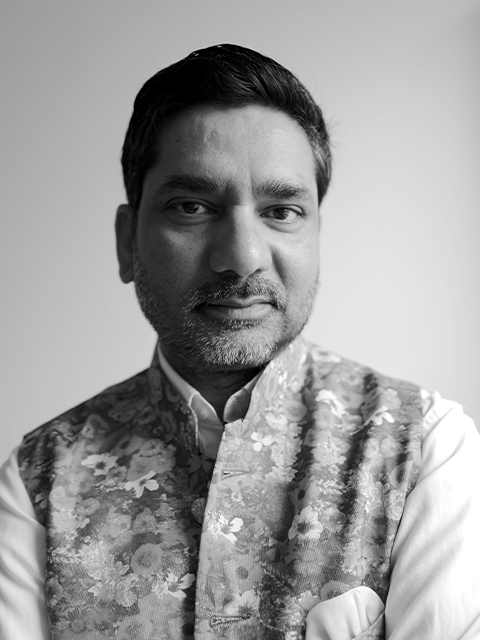
Charan was born in Delhi, India in 1978, and worked with communities around issues of HIV/AIDS for more than two decades. In 2012, he moved to the UK, where he developed his practice as an interdisciplinary artist.
His practice explores issues of queer identity and representation and is informed by his involvement in community activism, and his relationship with the English-language, which he did not speak prior to 2012.
He says: "I hope this exhibition allows people to move between intimacy and history – to first encounter those portrayed through their presence, their vitality and their playfulness, and then to recognise the much deeper histories embedded within the images."
To find out more about the artist and his work you can read this interview between Charan and Bindi Vora, Autograph’s Senior Curator.
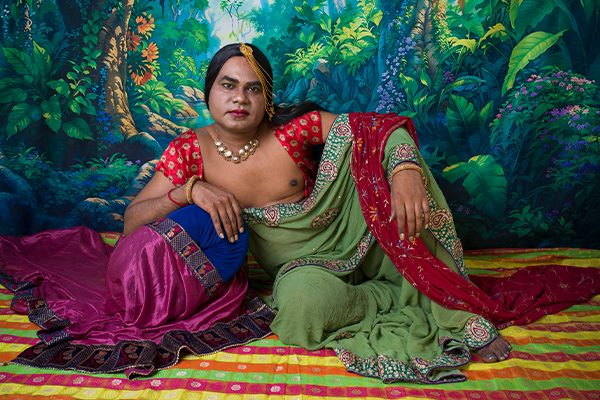
The exhibition features 22 newly commissioned photographic portraits. These portraits were made in collaboration with Hijra, Kothi and trans people – long-established communities in India whose lives and identities extend beyond the gender binary (see question 3 below for more information on these communities).
Alongside the new portraits, the exhibition features a timeline which traces key moments which have impacted LGBTQ+ communities in the UK and India from 1835 to the present day. Instead of representing a simple story of progress, this timeline shows how the law has been used to define and control identities, while also being challenged through collective struggle and resistance. Singh’s images form a part of this resistance, centring the presence and agency of each sitter, in the face of discriminatory systems.
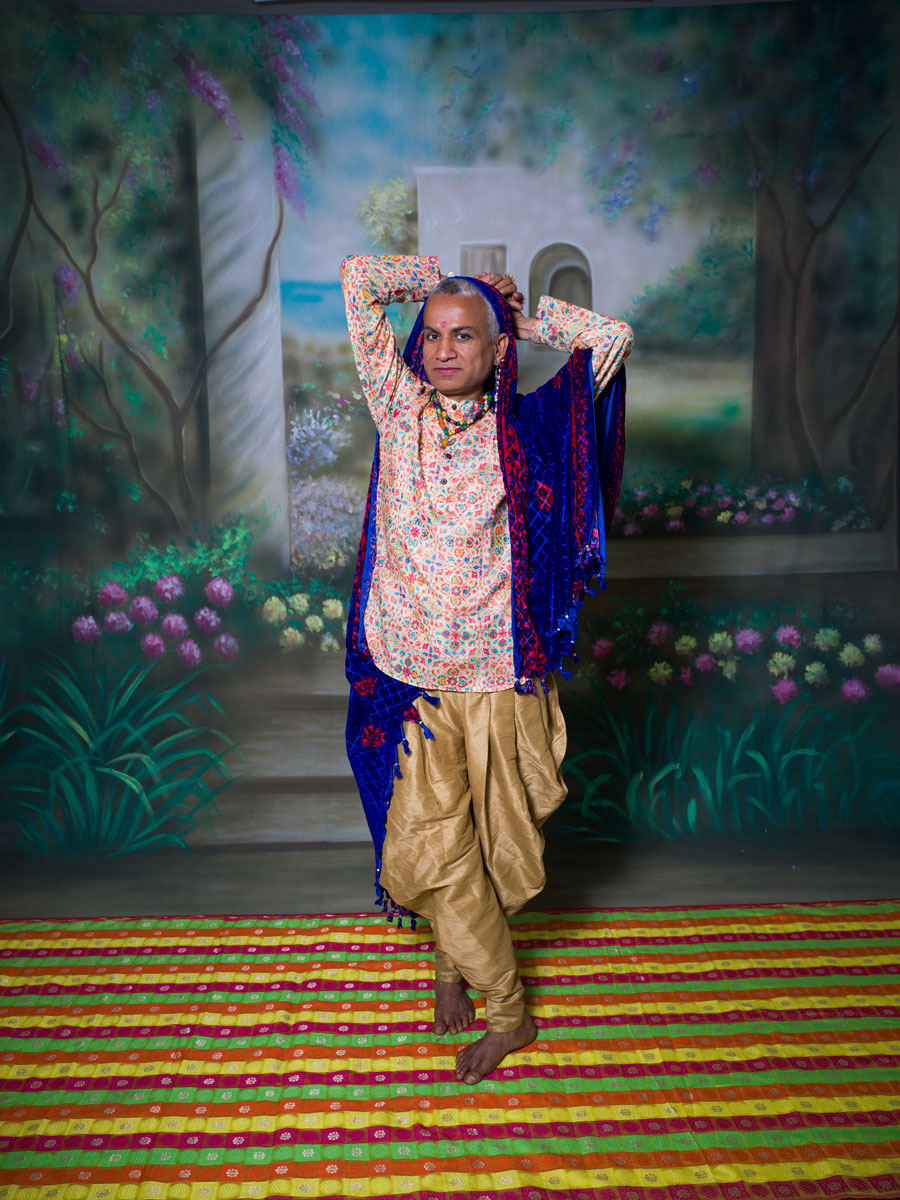
%20charan%20singh%2C%20sonu%2C%202026.%20commissioned%20by%20autograph%2C%20london.jpg)
Sonu, 2026
%20charan%20singh%2C%20aditi%20and%20vasantsena%202026%20commissioned%20by%20autograph%20london.jpg)
Aditi & Vasantsena, 2026
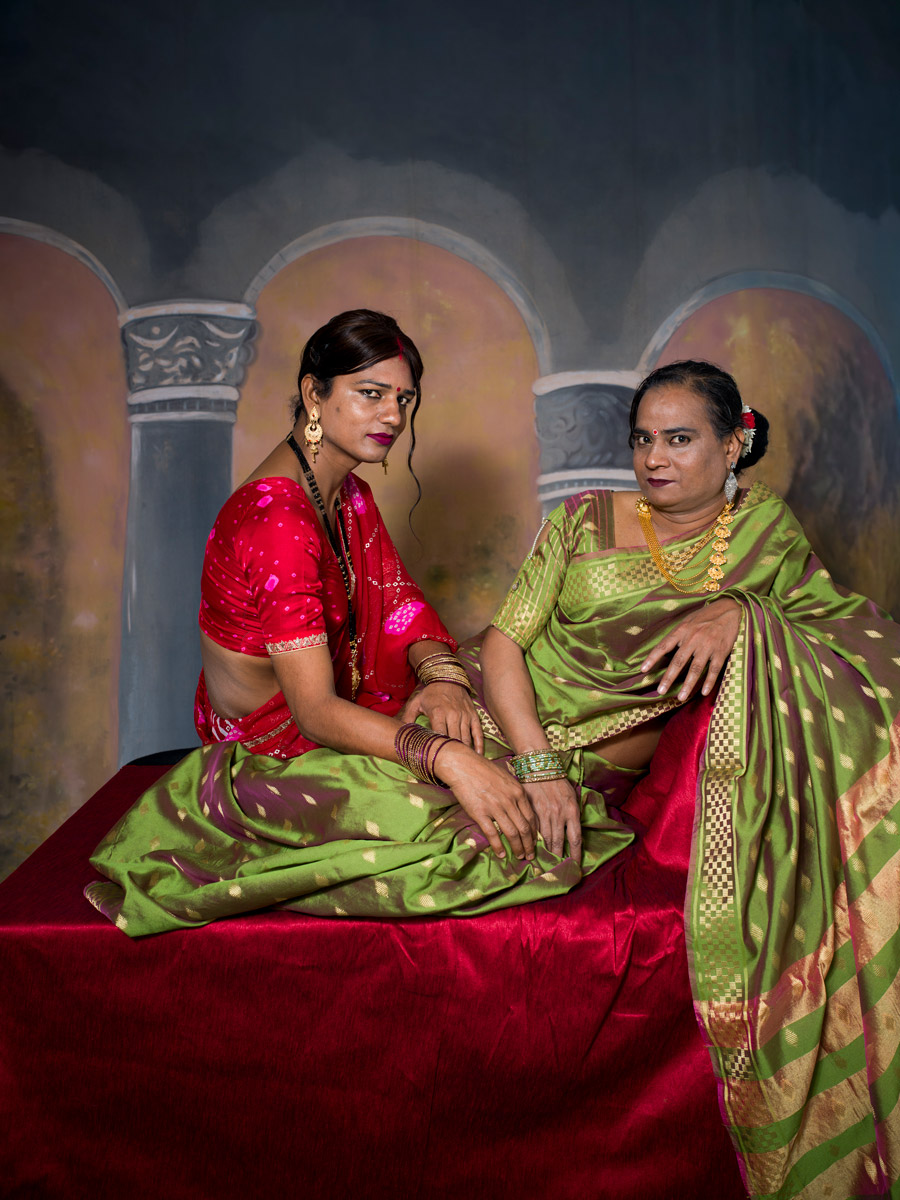
The terms Hijra and Kothi are used to refer to the people and communities represented in Singh’s photographs. While there are some overlaps with the way trans identity is understood in the UK, Hijra and Kothi communities are rooted in South Asian histories, cultures and languages that do not have direct English equivalents. Their meanings are shaped by individual experience, social context and place.
Hijra may refer to distinct gendered and social communities with long and diverse histories across South Asia. For many Hijra, identity is connected not only to gender but also to shared traditions, cultural practices and social ties. Hijra communities have historically been organised through guru-chela relationships, in which gurus act as elders, teachers or community leaders and chelas as their disciples. These relationships can provide kinship, belonging, care, community and mutual support.
The term Kothi may relate to femininity and gender expression, sexuality, desire, social roles, intimate relationships or ways of presenting and understanding oneself.
Some Hijra and Kothi people may identify as transgender, while others may not. These terms can overlap, but they are not interchangeable.
This title refers to Charan’s experience of and interest in the impact of Western colonialism and the British language on queer identity in India. From the 1980s onward, Acquired Immunodeficiency Syndrome (AIDS) profoundly affected the Hijra and Kothi communities in South Asia due to structural marginalisation, stigma and economic vulnerability.
The response to AIDS in South Asia was largely informed by Western sexual politics and led by Non-Governmental Organisations (NGOs). Life-saving information about HIV/AIDS circulated primarily in English, with no equivalent available in the languages and dialects spoken in India.
The information provided did not recognise indigenous gender identities. For example, Charan explains how “the introduction of the term 'MSM' (men who have sex with men) dehumanized the very community it was meant to help because it simplified complex ways of belonging and loving, rendering other gender identities inferior and homogenizing expressions of desire.”
The effect, essentially, was to force communities into adopting the ‘tongue’ and identity labels of another culture in order to access lifesaving information and healthcare. You can read more about these issues in this text from Charan.
8 October 2026 - 13 February 2027
A free exhibition celebrating the lives and collective resistance of gender fluid communities in India
With thanks to Beyond Print for their generous production support of Charan Singh: Your Tongue in My Mouth.
.png "sample")

Banner image: Charan Singh: Your Tongue in My Mouth exhibition at Autograph. 8 October 2026 - 13 February 20247. Curated by Bindi Vora. Photograph by Kate Elliott.
Images on page: 1) Image of Charan Singh, courtesy of the artist. 2) Charan Singh, Sonu, 2026. Commissioned by Autograph, London. 3) Charan Singh, Aditi & Vasantsena, 2026. Commissioned by Autograph, London. 4) Charan Singh, Naagrani & Roopa, 2026. Commissioned by Autograph, London. 5) Charan Singh, Phoolwa, 2026. Commissioned by Autograph, London.
Visit: Charan Singh, Rasili, 2026. Commissioned by Autograph, London.
Join our newsletter and get the latest on Autograph’s exhibitions, events, open calls, digital content, books, prints and fundraising. Find out more.



Autograph is a space to see things differently. Since 1988, we have championed photography that explores issues of race, identity, representation, human rights and social justice, sharing how photographs reflect lived experiences and shape our understanding of ourselves and others.
Support our work

