


 0
0
0
Free exhibition
Curated by Mark Sealy and Bindi Vora

Acknowledging how bodies carry memory and ancestry while resisting erasure

Autograph
Rivington Place
London EC2A 3BA, UK

Prebook free, timed tickets or visit anytime the gallery is open. Visiting with a group of more than 10 people? Book a free group visit here.

Wed, Fri: 11am - 6pm
Thu: 11am - 9pm
Sat: 12:30 - 6pm
A major new exhibition bringing together three feminist artists from across the Americas whose work centres the body. In distinct ways, each use their body to bridge personal and collective memory, indigenous knowledge and relationships to land.
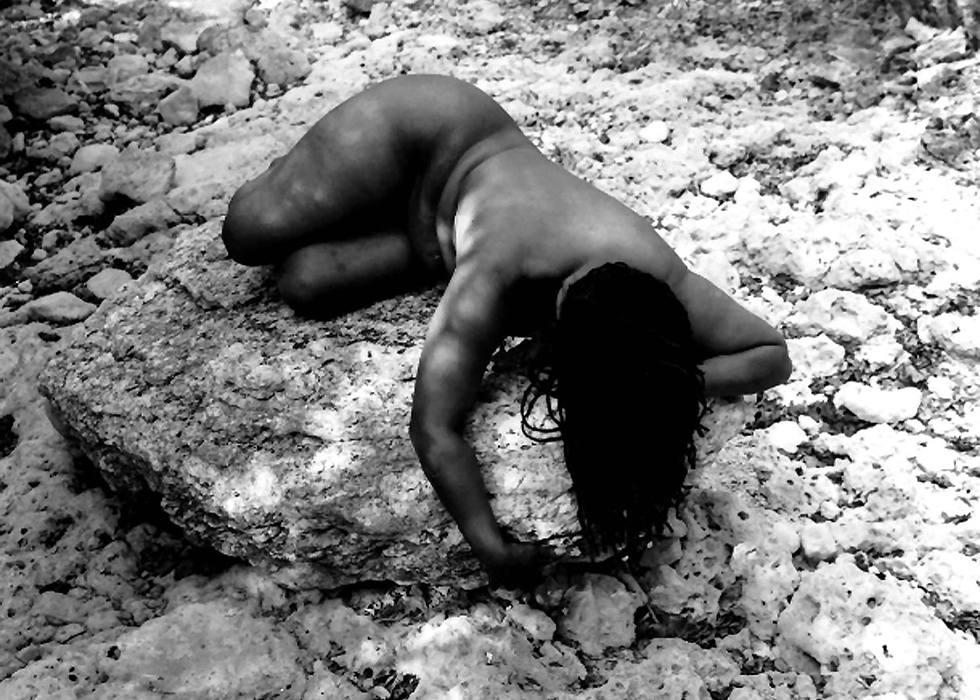
Across 65 works made over three decades, Laura Aguilar, Tarrah Krajnak and Koyoltzintli use photography to claim presence and resist fixed ideas of who can be seen, and how. In Our Bodies Have Been Bridges portraiture, the archive and land underpin the artists’ works. For Laura Aguilar, her self-portraits place her queer body in the landscapes of the American Southwest, bringing forward a body rarely seen in dominant photographic histories. By continually turning the camera on herself, Aguilar resists erasure and asserts the right to take up space.
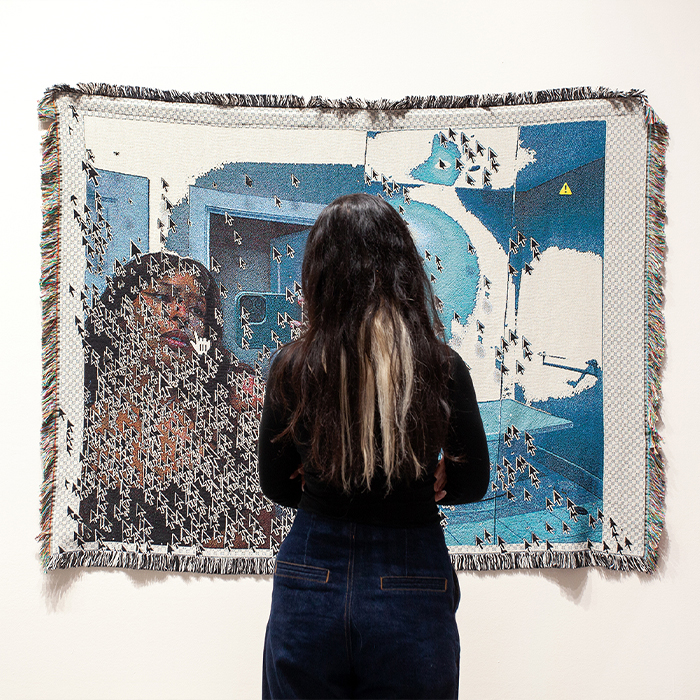
Born in Lima in 1979 and adopted by a white working-class American family, Tarrah Krajnak explores the gaps in her personal history against the backdrop of Peru’s political upheaval. By placing herself in dialogue with archival photographs, she imagines a past that remains fragmented and unresolved.
Koyoltzintli reflects on how Indigenous origin stories and cultural traditions sustain connection across generations. For her, the land holds living relations between memory, ceremony and ancestry.
When entering the exhibition, feminisms emerge as a way to negotiate ideas of belonging and power. Drawn from Elizabeth Acevedo’s poem Afro-Latina, the exhibition title Our Bodies Have Been Bridges reiterates the possibility of connection without erasing difference. Each artist asserts their right to appear in their full complexity.
Together their work forms an intergenerational conversation about how the past is carried through the body. Photography becomes an act of resistance – insisting that the politics of the body cannot be separated from the politics of the image.
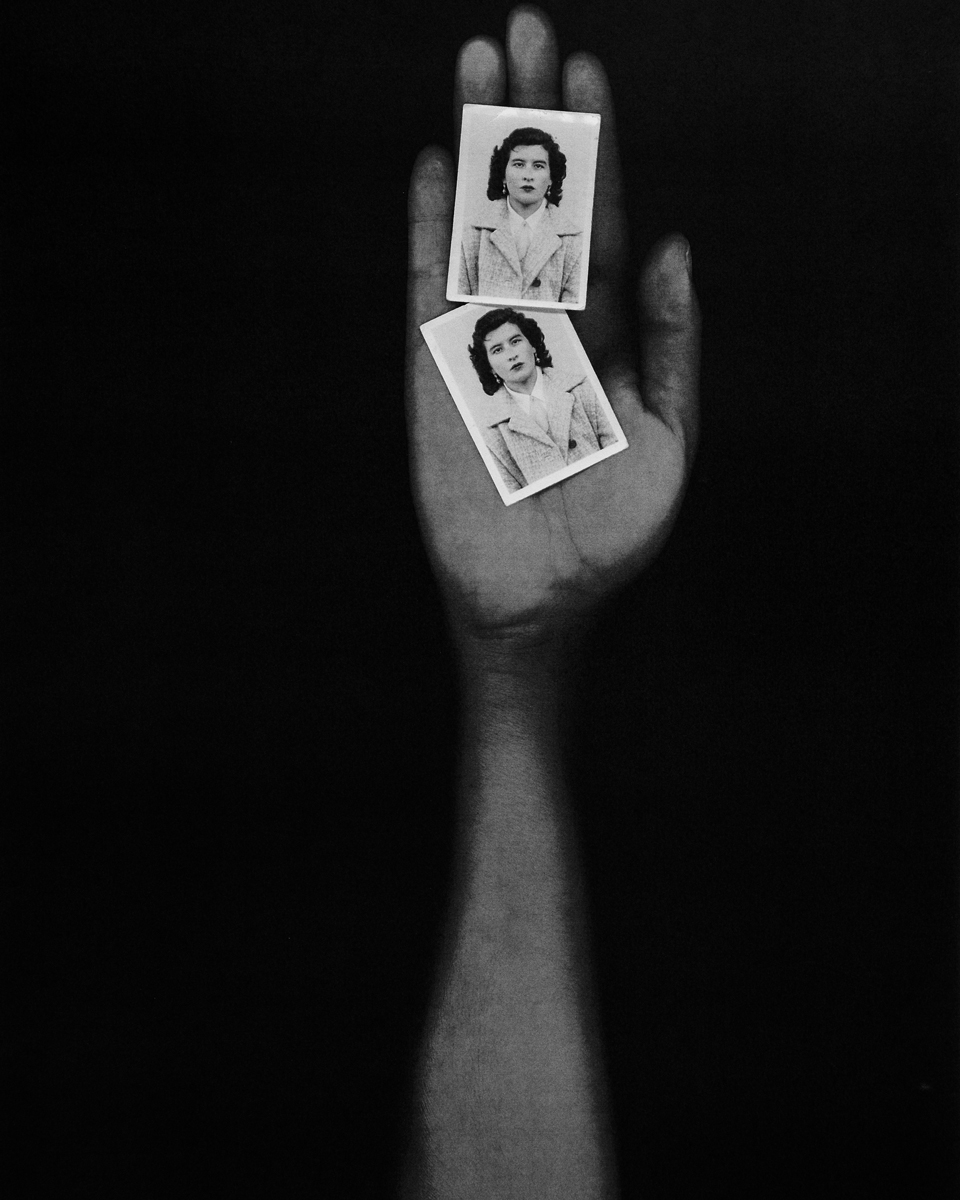
Tarrah Krajnak, Holding Hands 2, 2011-2022

Koyoltzintli, Mud Woman Gazing, 2019
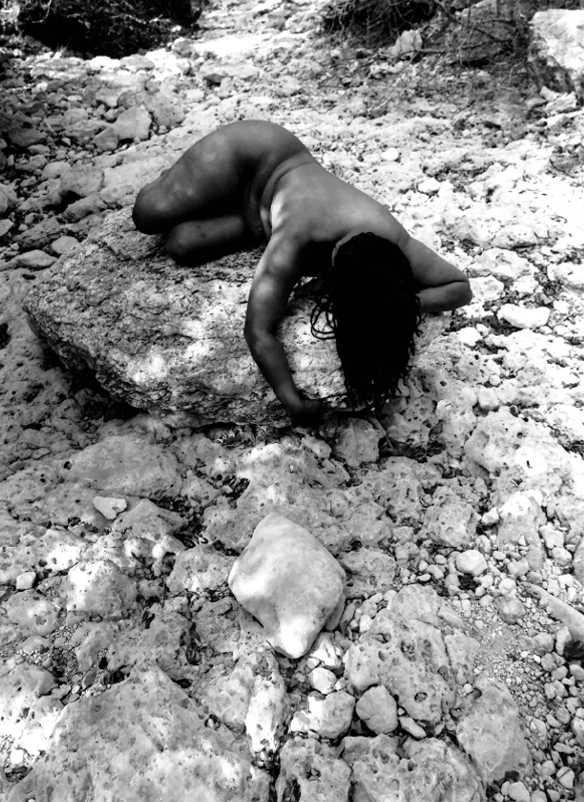
Laura Aguilar, Motion #50, 1999

Laura Aguilar was an American photographer (born 1959 – died 2018, California, USA). Aguilar, of native Californian, Mexican and Irish descent, was born in San Gabriel, California and grew up in the San Gabriel valley.
After studying photography at East Los Angeles College, her photographic production was characterised by portraits of diverse communities in the Los Angeles area, self-portraits, and later, nude self-portraits in nature. Ahead of her time, Aguilar’s late 20th century and early millennium photography first exposed the visibility of underrepresented and marginalised women and communities, then celebrated them.
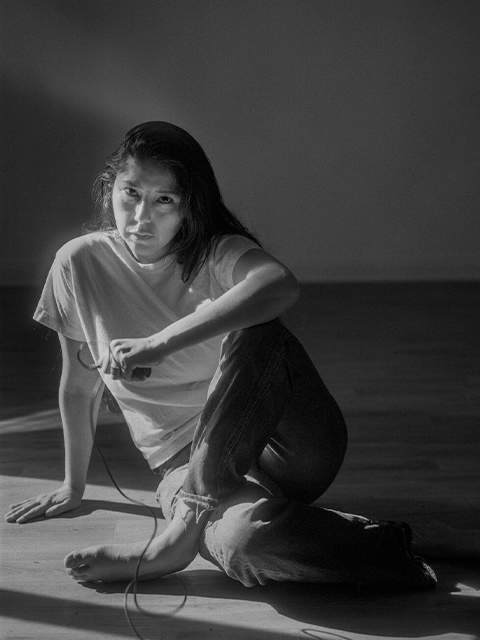
Tarrah Krajnak (born 1979, Lima, Peru) is an artist and educator based in Los Angeles. She is an Associate Professor of Art at UCLA, and is represented by Galerie Thomas Zander, Cologne.
Krajnak is the recipient of the 2025 Henri Cartier-Bresson Creation Award, a Guggenheim Fellowship, the Louis Roederer Discovery Award at Les Rencontres d'Arles, and the Dorothea Lange- Paul Taylor Prize among others. She has published three books including El Jardín De Senderos Que Se Bifurcan (DAIS 2021), Master Rituals II: Weston's Nudes (TBW 2022) and RePose (FW Books 2023).
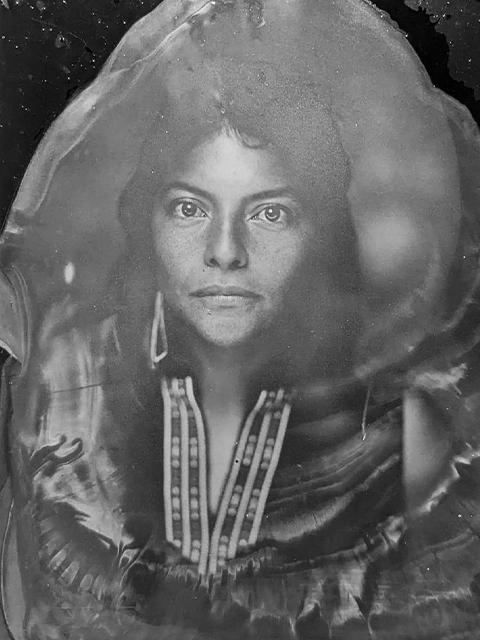
Koyoltzintli (born 1983, New York City, USA) is an interdisciplinary artist and educator based in Ulster County, New York. She was raised on the Pacific coast and in the Andean mountains of Ecuador. Her work revolves around sound, ancestral technologies, ritual, and storytelling, blending collaborative processes with personal narratives.
Nominated for the Prix Pictet in 2019 and 2023, her work has been exhibited at the National Portrait Gallery in Washington, DC; the United Nations; the Parrish Art Museum; Princeton University; the Aperture Foundation in New York City; and Paris Photo. She has had two solo exhibitions at Miyako Yoshinaga Gallery and a solo exhibition at Leila Greiche in 2023.
Submit your event proposal by Monday 16 November 2026
read more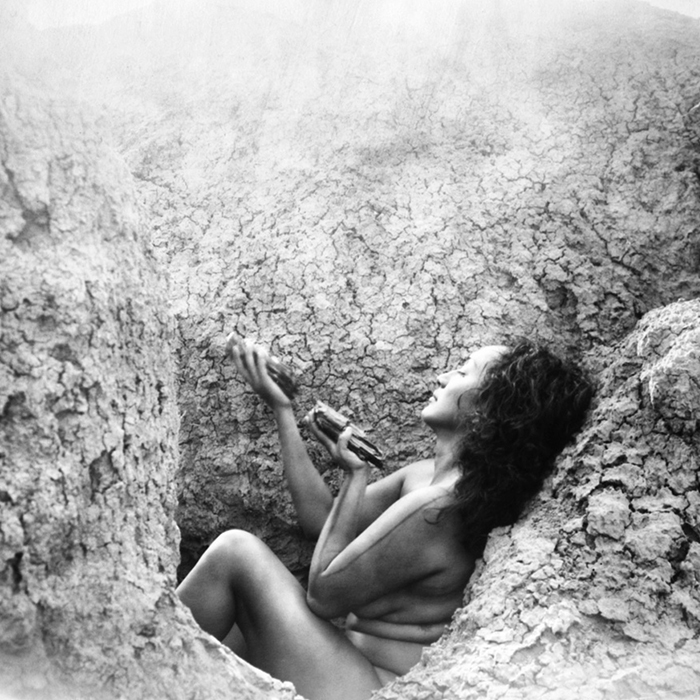
Submit your photograph by Monday 7 December 2026
read more 
Introducing the artists and key themes in Our Bodies Have Been Bridges
Read | 4 min read
Hear from the curators and the artists whose works feature in the exhibition
Listen
Writer Alanna Lockwood reflects on Koyoltzintli's work
Read | 6 min readKoyoltzintli discusses her relationship with ancestry and place
Read | 5 min readSkye Arundhati Thomas explores the artistic work of Tarrah Krajnak
Read | 5 min readTarrah Krajnak discusses her work using unstable archives as a means of refusal and survival
Read | 7 min read We would like you know before your visit that, as the artists' work on display centres the feminist body, the exhibition contains some nudity.
With thanks to Beyond Print for their generous production support of selected works by Koyoltzintli and Tarrah Krajnak.
.png "sample")

Banner image: Laura Aguilar, Motion #50 [detail], 1999. © Laura Aguilar. Courtesy of The Laura Aguilar Trust of 2016. Collection of Light Work, Syracuse.
Exhibition preview: 1) Tarrah Krajnak, Holding Hands 2, from the series El Jardín de Senderos Que Se Bifurcan, 2011-2022. © and courtesy the artist. 2) Koyoltzintli, Mud Woman Gazing, 2019. From the series MEDA. © and courtesy the artist. 3) Laura Aguilar, Motion #50, 1999. © Laura Aguilar. Courtesy of The Laura Aguilar Trust of 2016. Collection of Light Work, Syracuse.
About the artists: Courtesy the artists.
Open calls: 1) Photography by Kate Elliott. 2) Koyoltzintli, Obsidian woman [detail] from the series Meda, 2019. Courtesy the artist.
Join our newsletter and get the latest on Autograph’s exhibitions, events, open calls, digital content, books, prints and fundraising. Find out more.



Autograph is a space to see things differently. Since 1988, we have championed photography that explores issues of race, identity, representation, human rights and social justice, sharing how photographs reflect lived experiences and shape our understanding of ourselves and others.
Support our work

