


 0
0
0

Artist Charan Singh discusses the creative, colonial and historical contexts of his new portraits made in collaboration with queer and gender fluid communities in Delhi
Charan Singh is an interdisciplinary artist from Delhi, India. His new exhibition at Autograph, titled Your Tongue in My Mouth, explores the influence of colonial language and ideology on the experiences and representations of India’s long-established queer and gender fluid communities, including the Kothi and Hijra.
In this conversation, the artist speaks with Autograph’s Senior Curator, Bindi Vora, about the complex work of creating representational portraiture that creates space for self-expression, playful tenderness and intimacy despite legacies of violence and erasure.
Your Tongue in My Mouth is on display at Autograph and free to visit until 13 February 2027.
Bindi Vora (BV): Before developing your artistic practice, you spent several years working in HIV/AIDS advocacy in India. You’ve described that period as ‘people simply trying to help each other’, rather than ‘working for a community’. How did that experience shape your understanding of how Non-Government Organisations (NGOs) named and categorised people?
Charan Singh (CS): I began learning about HIV in the early 1990s during my school years in India and, by the end of the decade, I became formally involved in HIV/AIDS related work. Initially I was engaged in on-the-ground prevention, training and research projects, starting as a volunteer and working with a few organisations including Development Advocacy & Research Trust (DART).
The language of ‘community’ was borrowed from the social sciences, with NGOs using it to replace and improve upon more reductive terms that had become common in the field, such as ‘target population’, ‘high-risk population’ or ‘beneficiaries’. But at that time, it did not feel like we were ‘working for a community’ – some of us were simply trying to help each other and, by doing so, we were also learning about ourselves. There was a tendency to distinguish between those working with an NGO and those who were considered beneficiaries of the project, even if we were members of the same community. In retrospect, I feel that this might have arisen from the legal status of homosexual desire in India. Perhaps because it was illegal at the time, we were taught to separate ourselves from the ‘community’ when talking about the work we were doing – both to protect ourselves and to avoid being implicated by the judicial system.
Who gets to name? Who gets to classify? Who gets to decide what is knowledge and what is evidence?
BV: The power of language, and particularly the colonial influence of the British language, is a recurrent theme in your work – can you say more on that?
CS: Growing up in post-independence India, where access to English education was restricted to the privileged few, I always felt that language was one of the places where power became most visible. I say this because I saw first-hand how language can also conceal or obliterate the realities of people’s lives.
For example, in HIV/AIDS work, almost every funding agency came with its own vocabulary and its own understanding of what the problem was and how it should be addressed. There were categories to measure vulnerability, determine who was at risk and establish what services were required for an intervention to be considered successful. The language in these spaces could sound progressive and humanitarian, especially when terms such as ‘participation’ or ‘collaboration’ were used so casually. However, these terms always carried a very particular politics, often operating among people with very unequal levels of power.
The problem, as I see it, is not English as a language in itself but the unequal power attached to it. For me, this work is not an argument against funding or against organisations working on HIV/AIDS. It is more a question of the politics of translation and representation. Who gets to name? Who gets to classify? Who gets to decide what is knowledge and what is evidence? And perhaps most importantly, what happens when we stop assuming that these communities need to be translated into a universal language in order to be understood? Maybe the task is not always to make people more legible to institutions. Sometimes it is to question the institutions and the languages that have made certain forms of life difficult to see in the first place.
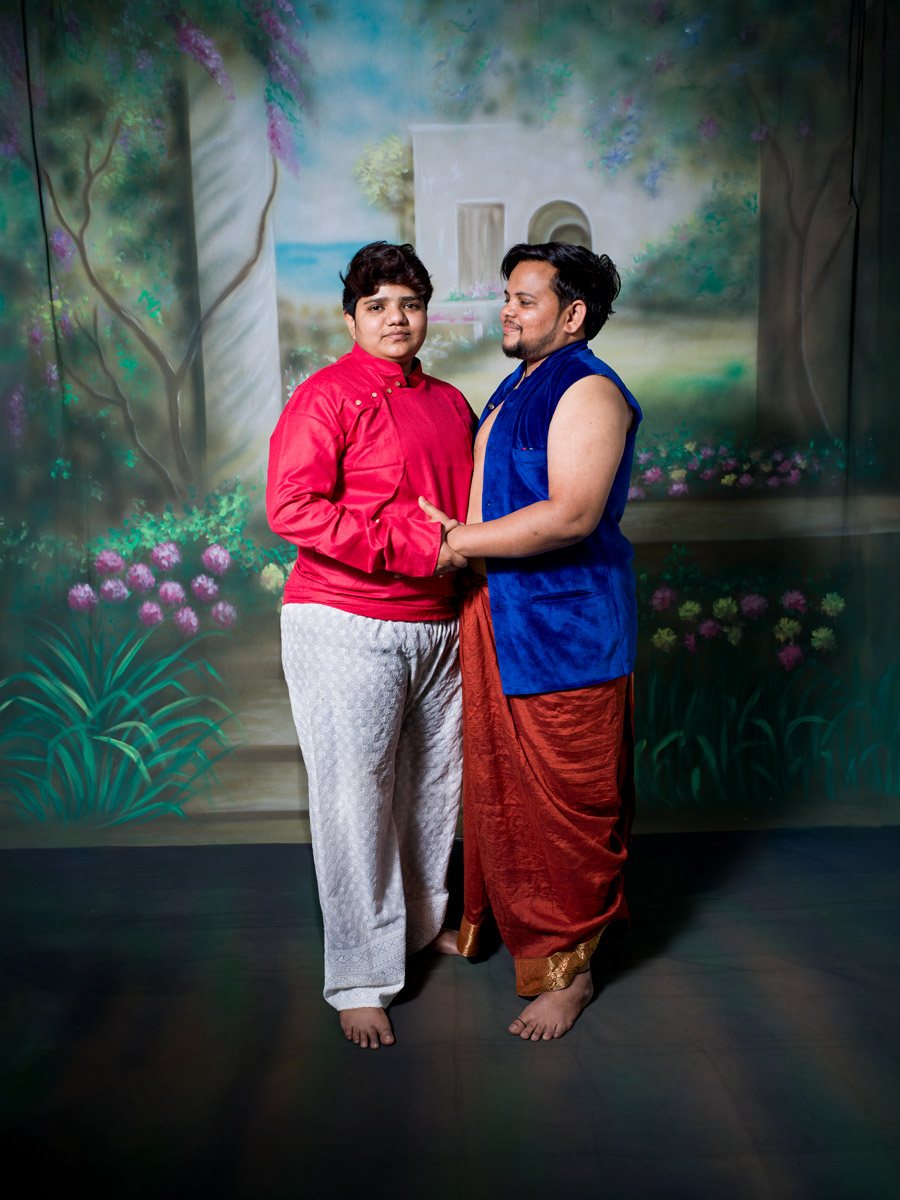
Gopal & Shankar, 2026
%20charan%20singh%2C%20umrao%2C%202026.%20commissioned%20by%20autograph%2C%20london.jpg)
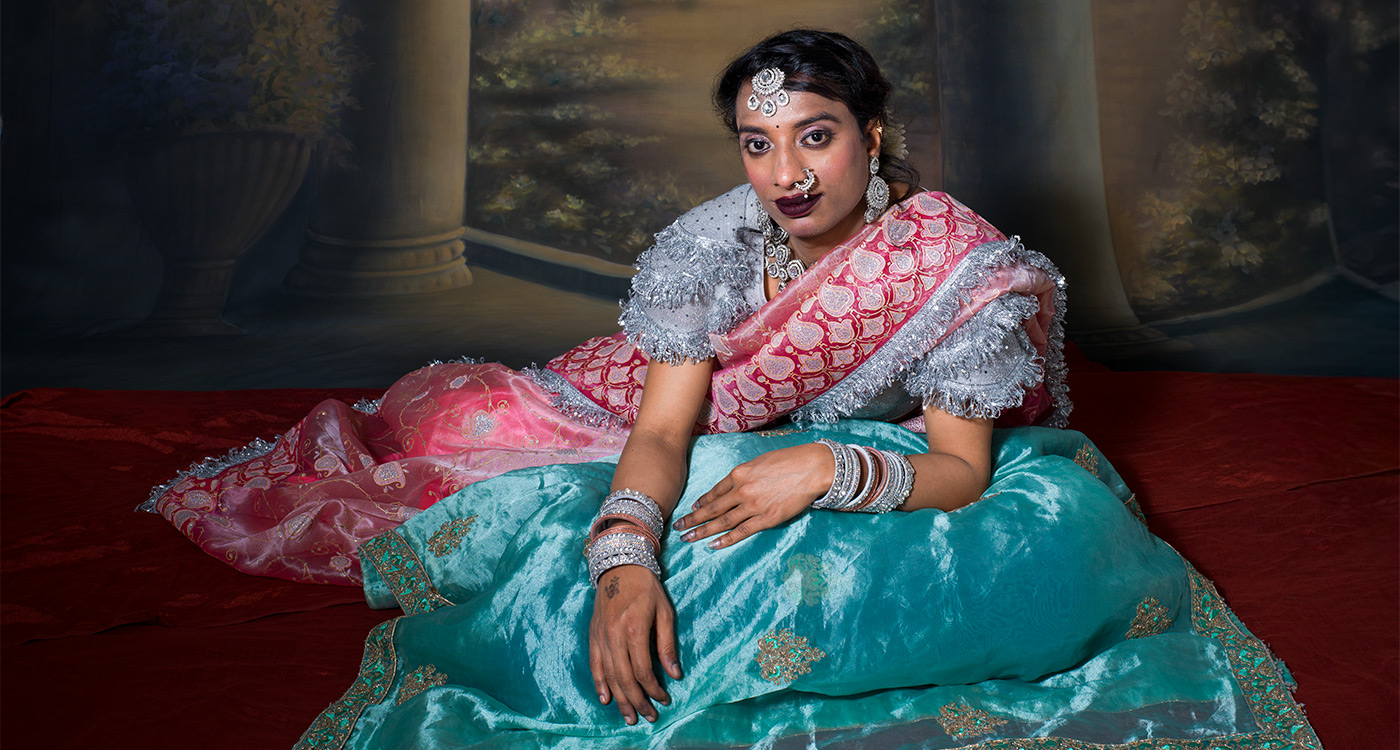
Umrao, 2026
BV: Terms such as ‘Hijra’, ‘Kothi’, ‘transgender’ and ‘queer’ emerge from different cultural, legal and political contexts. How does the exhibition challenge the idea that gender fluidity in South Asia is recent or imported – and what gets lost when local terms are translated through Euro-American categories?
CS: Yes, in queer political or academic spaces, these terms are often understood or translated through Euro-American categories and theoretical frameworks. I like to believe that things are changing now and there is an undeniable resistance, even within these spaces. However, the theoretical dominance of those frameworks has often led to a dispute about native versus imported perspectives. If we refer to some of the material in the living chronology which accompanies this exhibition, for example the anthology: Same-Sex Love in India: Readings from Literature and History, it provides literary evidence of same-sex desires over the past two millennia, and the notion that queer and gender fluid identities are only a recent phenomenon becomes difficult to sustain.
The question of ‘naming’ was particularly important to me when I started my art education and was working on the photographic project Kothis, Hijras, Giriyas and Others (2013-14). I was interested in the inadequacy of translation itself and, at the time, there were no simple equivalents to Kothi, Hijra and Giriya identities used within an international public-health framework. On paper, a kothi has to become an ‘MSM’ (a man who has sex with men) and a hijra has to become ‘transgender’ in order to access funding or be depicted in an international report.
This act of translation may make that person visible to an institution, but it can also erase an aspect of their identity in the process. In real and material terms, this means that, to access clinical services or legal support, a person has to actively participate in their own erasure. This, combined with the intersecting issues of caste, class and displacement, all contribute to the precarious conditions that force people into a perpetual mode of survival. Over time, these terms - which come from particular social and linguistic worlds and have their own histories, relationships and meanings - begin to fade within the acronym-heavy jargon created by the development world.
For the exhibition, I wanted to bring together these histories through portraits and the living chronology, to demonstrate that gender diversity in South Asia is neither new nor simply imported from the West.
%20Charan%20Singh%2C%20Munnibai%2C%202026.%20Commissioned%20by%20Autograph%2C%20London.jpg)
Munnibai, 2026
BV: Could you tell us more about the initial research into nineteenth century studio images and how that influenced the backdrops for the new portraits? What drew you to these visual histories, and how do your portraits borrow from, disrupt or depart from the ways gender, authority and the body were framed within them?
CS: Growing up in the 1980s and 1990s, I recall calendar art in the style of the Indian painter Raja Ravi Varma in every household I visited - it was a significant part of my social milieu in India. During this period, I would attempt to replicate those poses and preserve them in pencil drawings. This interest led me to take up painting in my senior years of school.
I also had a failed attempt to teach drawing to Kothi and Hijras who visited our drop-in centre at DART, using William Morris’s flora and fauna as references. It was only after relocating to London in 2012, when I began studying photography and making frequent visits to museums, I recognised the connection between Ravi Varma and the Pre-Raphaelite painters and understood why his designs felt so familiar. This realisation prompted me to acknowledge that I have always been fascinated by nineteenth-century studio portraits, particularly by the ways they have subsequently been interpreted and narrativised through significant historical events within art history, as if there had never been any other history.
This was also a period in which colonial extraction of resources from the subjugated world was at its peak; many motifs, classical figures and references were adopted uncritically into European art - for example, some of William Morris’ compositions drew on Indo-Persian cultural heritage. If we look through a decolonial lens, we realise that there is often a tendency to overlook the immense power imbalance between the subject and the maker of some of these images.
I saw first-hand how individuals were often reduced to numbers and data. These silences have drawn me to use portraiture as a medium through which to tell a counter-story.
This became an important point of departure. For me, individual people have always been significant in discussing histories, as they situate the conversation in a bodily reality. Whether the conversation is about beauty, desire, politics or aesthetics, individuals play a crucial role. This is particularly relevant given that I saw first-hand how individuals were often reduced to numbers and data. These silences have drawn me to use portraiture as a medium through which to tell a counter-story. It focuses on the individual, who may embody those missing histories.
To further amplify the sitter’s presence within the portraits, I wanted the backdrops to function not simply as decorative devices but as spaces where history is deliberately constructed and contested. Many of the backdrops and costumes were inspired by Ravi Varma’s paintings, not directly but as a way of reimagining the clothing and colours a Hijra protagonist might wear in that era. I am also interested in drawing from the visual authority of historical portraiture while questioning it – whose body is permitted to stand for history with poise? This question connects to some of my earlier work, including What Would My Father Think (2013), which similarly explores the burden of the archive and how personal and collective histories are carried through bodies. The sitters in my portraits are not merely invited to serve as a representation of a wider social condition - the work creates a space in which these individuals may embody histories that have been overlooked, or worse, erased.
%20Charan%20Singh%2C%20Rasili%2C%202026.%20Commissioned%20by%20Autograph%2C%20London.jpg)
Rasili, 2026
BV: Could you tell us more about the relationships that developed with the people you photographed? Across the portraits, there are moments of tenderness, playfulness and self-fashioning – hair being braided, bodies leaning into one another and people experimenting with pose and dress. How did these forms of intimacy, joy and self-expression emerge through the process of making the portraits together?
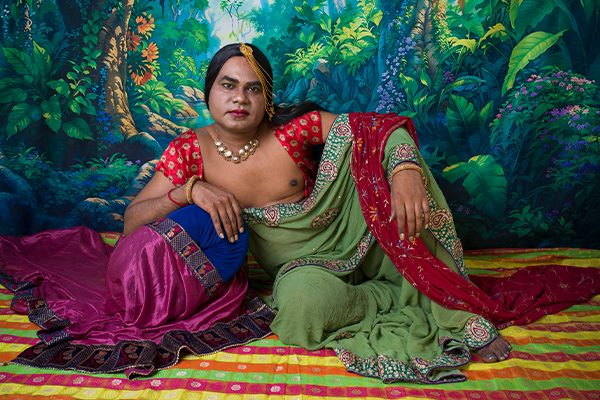
CS: Studying art, like other disciplines, forced me to have logical research questions and planned outcomes. However, in the studio, a lot depended on chance encounters and, in the case of this commission, on the availability of participants at a particular time. On the first day of the shoot we spent all day experimenting with lighting and catching up with friends while creating the portrait of Rasili. The next day, news travelled about the fun we had making the portrait, and people started showing up in large numbers.
The conversations we had while making the portraits were central to the mood and feeling that emerged in each photograph. Some people were more comfortable in front of the camera than others, so the images were shaped by the relationships, conversations and forms of familiarity that people brought into the studio. I would say that the intimacy in the work emerged from those relationships rather than from the act of making the portrait itself.
Playfulness was part of the making of the portraits. In fact, I wanted to make sure that play remained part of the process and that the studio space offered everyone an opportunity for self-expression. As a result, we experimented with poses, clothing, gestures and different ways of occupying the frame. For example, Munnibai was very keen to participate but preferred not to show their face. So, we worked together to find a pose that felt comfortable. I wanted to leave room for each person to decide how they wished to be seen – and, equally, what they did not want to reveal.
I couldn’t resist the opportunity that emerged through these gatherings to create group portraits that underscored the sense of community and shared sensibility within the space. Making intergenerational portraits allowed existing relationships of care, affection and kinship to become visible. A hand resting on a shoulder, one person braiding another’s hair, or bodies naturally leaning towards one another can seem like small gestures, but they carry a poignant history of surviving together, even when everything feels against you.
So often, when queer lives shaped by social and economic precarity appear on the page, they are represented primarily through violence or hardship. However necessary those accounts may be, they can leave little room for other dimensions of people’s lives – for love, care, humour and dignity. Whether we are represented through identity categories such LGBTQI+ or through the classifications used by NGOs, I feel that we have often been put into category-based silos. I wanted to use these gestures to portray how people can be sources of love and care for one another. That is why these portraits speak to familiarity and tenderness, as well as to the ways in which care can be expressed through the body.
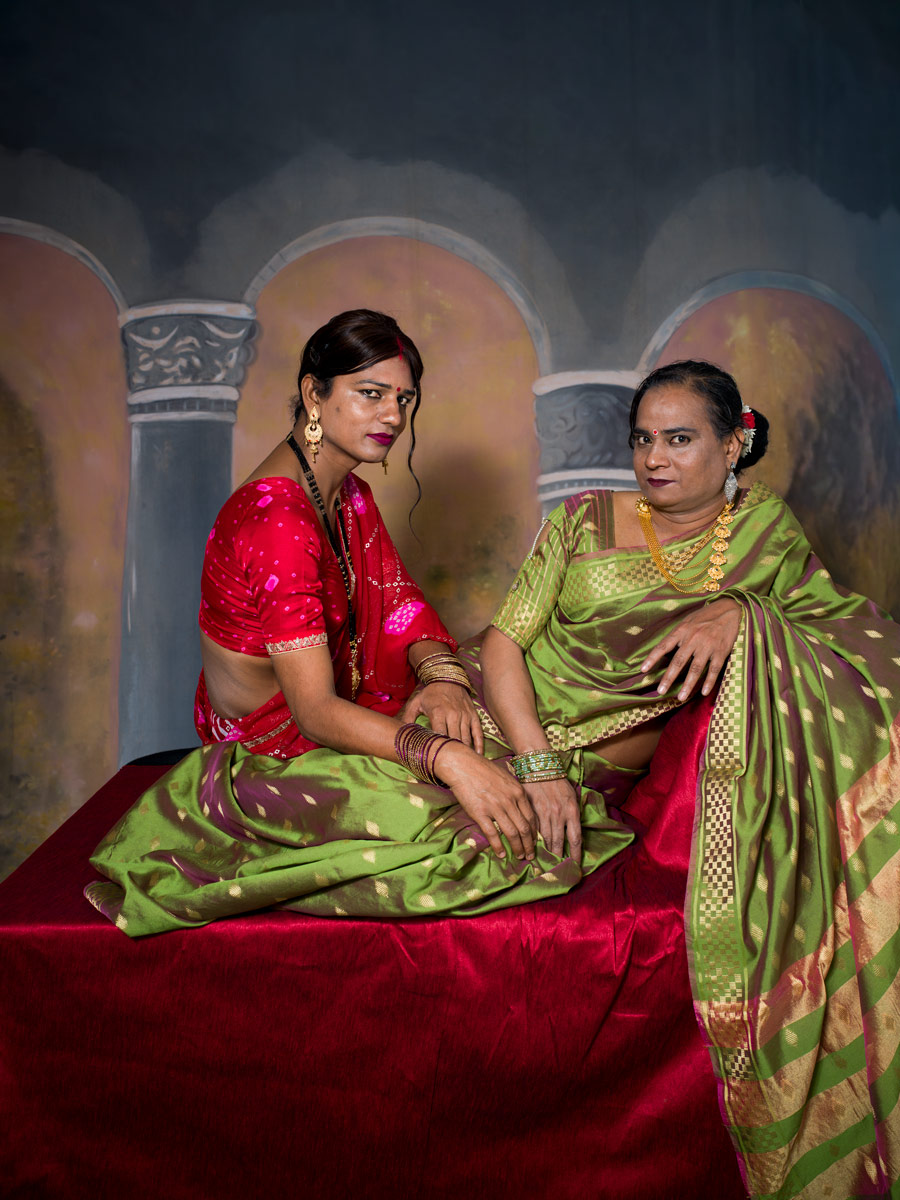
Naagrani & Roopa, 2026
BV: Each portrait takes its title from a character in a Bollywood song. Many of these songs carry queer connotations or particular meanings within Hijra and Kothi communities. How do music and song bring further resonance, memory and meaning to the portraits beyond the image itself?
CS: Popular cinema provides a crucial space for queer desire that is accessible to a wide range of people, while other art forms have often remained restricted due to caste, class and language divides. Cinema has allowed us to connect with characters who resonate with our own experiences of being different, of feeling like outsiders or sometimes even rejected. Over the years, it has articulated forms of queer desire that might otherwise have felt impossible to express.
The songs chosen for each portrait are still embraced by Hijra communities in meaningful ways. For example, Shishi Bhari Gulab Ki is about a lover who is unwilling to compromise their right to remain in their lover’s street, even if they must leave the world. The character in the movie is called Rasili – the literal meaning of the term is ‘juicy’ or ‘succulent’. When I mentioned the song and title to the sitter, they chuckled and agreed that they do look very salacious. A queer interpretation of the character could be that they are chasing an unattainable desire, feeling rejected while remaining unaware of their own desirability.
The song remains popular in Badhai rituals among Hijra communities, it is often sung at NGO centres during Kothi gatherings and is an all-time favourite among women at weddings. In fact, during the development of this project, I discovered that many of the Kothi and Hijra influencers still lip-sync to these songs, thereby giving them a new queer life and expanding their reach to wider audiences through social media platforms.
I understand that Bollywood is facing scrutiny for its silence on marginalised issues in India, but this is a different and an important discussion for another time. Here I wanted to highlight that cinema and song have long formed part of queer cultural life. Many marginalised people have found a deep connection with the cinema, and the songs have resonated with their emotions – with feelings of despair, love and longing – and even helped articulate political views.
Bollywood actresses such as Meena Kumari, and later Rekha achieved lasting popularity among generations of queer audiences due to their screen presence and portrayals of longing, heartbreak, unattainable desire for men who often left them lonely and vulnerable. At times, their heightened performance and camp sensibility also offered something that could be read as intrinsically queer. Their performances as courtesans in Pakeezah and Umrao Jaan have resonated with queer communities across classes. For this reason, I selected songs from these films for the playlist that accompanies the show, and the characters also lend their names to two works in the exhibition.
%20Charan%20Singh%2C%20Aditi%20and%20Vasantsena%202026%20Commissioned%20by%20Autograph%20London.jpg)
Aditi & Vasantsena, 2026
BV: As part of the exhibition, we’ve researched and provided a living chronology, which is integral to how the portraits are read. It traces legislation, court judgements and political movements, but also points to histories of collective survival that exceed legal recognition or rights. What is missed when these histories are told primarily through law, and how might we understand them instead through practices of kinship, care and resistance?
CS: I think we have to remember that, despite the upheavals reflected within the chronology, the subcontinent has also been a sympathetic place for certain forms of queerness to exist. These histories cannot be understood only through the language of law, rights, legal recognition or medical ethnographies, and certainly not through the neocolonial language and NGO-ification of gender and sexuality in the Global South.
When we tell queer stories through these frameworks, we risk making it appear as though the possibility of queer life begins when the law recognises it, reducing people to narratives of pathos and to testimonies of victimhood. But regardless of the law, people have found ways of living, caring for one another, forming kinship and creating spaces of love and of being loved long before their ways of life became legible to the nation state. The people who appear in this work, as well as those occupying streets, cities and villages today, are a testament to that resilience.
In 1871, the Hijra population was subjected to colonial legislation that classified them within a criminalised category, forcing many to live at the margins and profoundly affecting their social status. Despite all that, Hijra communities across the subcontinent have kept their culture alive and there have been many instances of people overcoming social obstacles – the life of Shabnam Bano is one such example. They have lived through and resisted different forms of violence, while continually carving out space for themselves within the rigidity of law, language and social structures.
For me, that is what the chronology needs to hold alongside its account of legal and political change: not simply a history of rights being won, but a much longer history of people making life possible for themselves and for each other.
people have found ways of living, caring for one another, forming kinship and creating spaces of love and of being loved long before their ways of life became legible to the nation state.
BV: The exhibition brings together pleasure, intimacy and histories of violence and resistance. What do you hope audiences carry with them about the people portrayed – beyond the histories that have shaped their lives?
CS: I hope the exhibition allows people to move between intimacy and history – to first encounter those portrayed through their presence, their vitality and their playfulness, and then to recognise the much deeper histories embedded within the images. For me, it is important that the people portrayed are not encountered primarily through narratives of suffering or marginalisation. Their lives have been shaped by violence and resistance, but also by pleasure, care, humour and forms of belonging created for themselves and for one another. I would like the portraits to remain with the viewer both as individual presences and as a collective – a community that has continually negotiated, survived and created ways of being together despite the conditions around them. The portraits are not illustrations of history; they are portraits of people who have lived it, carried it, resisted it and continue to make their own histories.
8 October 2026 - 13 February 2027
A free exhibition celebrating the lives and collective resistance of gender fluid communities in India
All images on page © and courtesy of Charan Singh. Commissioned by Autograph, London.
Visit: Charan Singh, Rasili, 2026.
Join our newsletter and get the latest on Autograph’s exhibitions, events, open calls, digital content, books, prints and fundraising. Find out more.



Autograph is a space to see things differently. Since 1988, we have championed photography that explores issues of race, identity, representation, human rights and social justice, sharing how photographs reflect lived experiences and shape our understanding of ourselves and others.
Support our work

