


 0
0
0

“How might photography illuminate the complexities of identities obscured and even erased by the legacies of empire?”
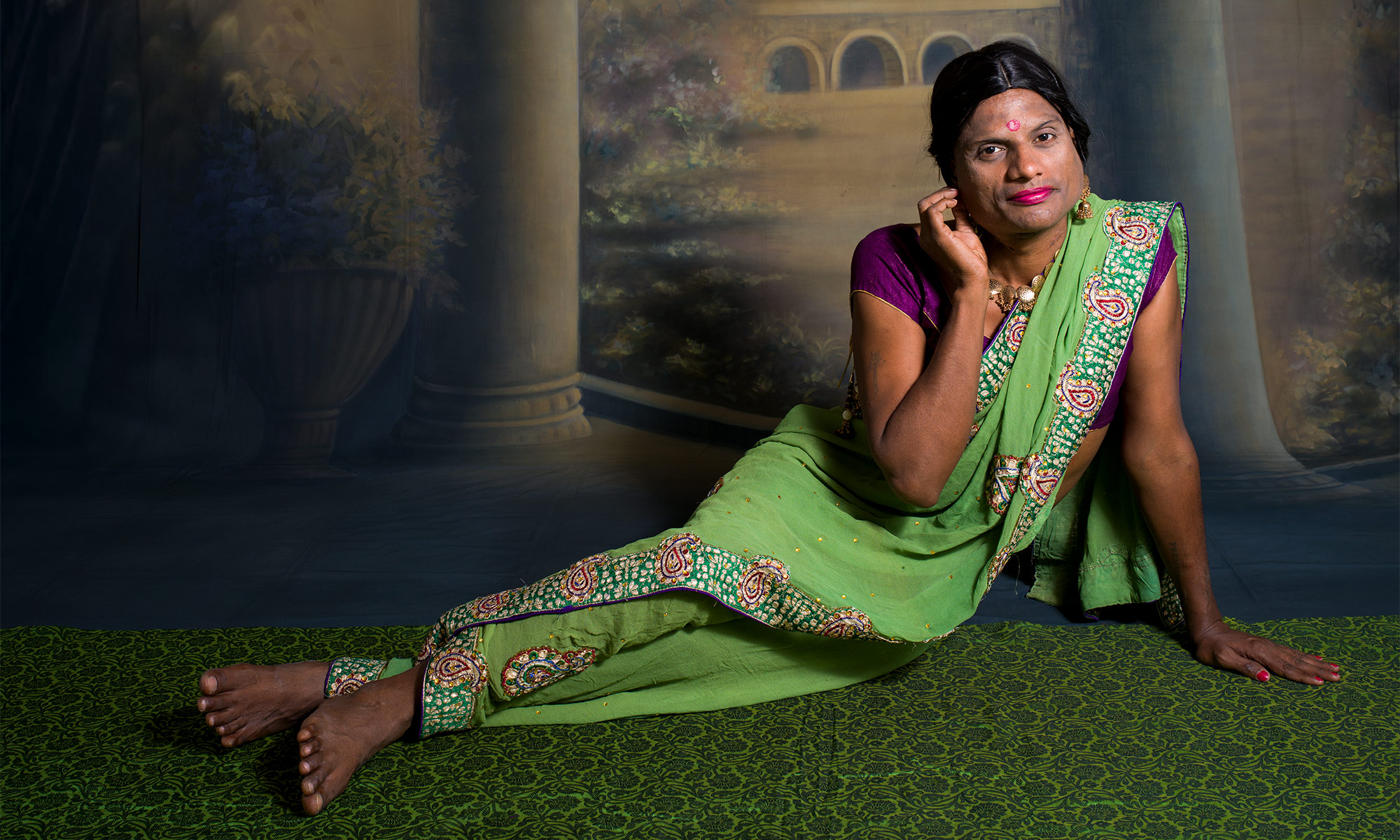
To coincide with the opening of the new solo exhibition Charan Singh: Your Tongue in my Mouth, we’re republishing extracts from Singh’s essay exploring photography’s capacity to challenge colonial frameworks for understanding queer identity and desire in India. Blending photographs, memories and conversations, he presents identity as fluid, relational and continually unfolding, while remaining attentive to the unequal power dynamics between photographer and sitter.
Singh’s practice is informed by more than two decades of HIV/AIDS advocacy in India and community activism. Through a critical queer lens he demonstrates how linguistic absences compound the cultural erasure of Hijra communities (long-established South Asian gender-diverse groups), and Kothi communities (with feminised queer and trans identities) who have historically been placed outside dominant social structures.
These extracts are taken from the text originally published by Trans Asia Photography in 2021, with permissions from the artist.
Singh’s solo exhibition is on display and free to visit at Autograph until 13 February 2027.
How might photography illuminate the complexities of identities obscured and even erased by the legacies of empire that have shaped the very language within which we come to know and name our desires? My photographic work, often based in Delhi, India, a megacity where I was born, raised, and frequently return to, examines the visual terms in which identities merge, blur, and overlap. In my work, I consider the overlaps and contexts in which multiple identities can be claimed despite the challenges that a dominant English language culture poses for expressions of gender and sexuality.
While language has made it possible to express desire, love, and identity, it has also resulted in erasures. In the Indian subcontinent, these erasures stem from colonial histories that made the English language “inaccessible to the mass of Indians who employed indigenous languages for both communication and the creation of literature” and “has continued to be the vehicle of divisiveness” long after independence.¹ Notably, the first Indian rebellions in 1857 marked the beginning of repressive laws, including the Anti-Sodomy Act under the Indian Penal Code’s Section 377 (1861) and the Criminal Tribes Act (1871).² The latter made it compulsory for all eunuchs to register themselves and declare their property to the state and enabled bureaucrats to prosecute and even erase Hijra from Indian society. This group was disparaged because its gender expression did not align with Western norms. The 1871 Act went so far as to use 'Hijra' interchangeably with 'eunuch' without regard for cultural nuances, discursively making them pariahs in their own home and land.³
While language has made it possible to express desire, love, and identity, it has also resulted in erasures.
The surge in the globalization of queer activism––largely shaped by Western sexual politics and by AIDS/NGO-driven categories—has further overshadowed indigenous gender identities.⁴ I saw this first-hand during the 1990s when I began working in Delhi as an activist in the “AIDS service industry,” attempting to democratize access to information and health services through HIV projects.⁵
For example, the introduction of the term MSM (men who have sex with men) dehumanized the very community it was meant to help because it simplified complex ways of belonging and loving, rendering other gender identities inferior and homogenizing expressions of desire.⁶ This form of activism also problematically abridges the term Kothi. As a self-selected identity that mainly documented a subculture, Kothi referred to underprivileged men, who often acquire feminized mannerisms, hairdos, and names. These men occasionally altered their clothes to exaggerate effeminacy. Though they were sometimes married to women, they frequently sought masculine sexual partners.⁷ And yet, the lexicon imposed by HIV/AIDS discourse resignified Kothi so that it epitomized AIDS vulnerability, a status of victimhood that holds to this day.
Notably, in NGO settings, accounts of violence and victimization are often narrated by the “subject” population themselves in order to access support and services. That is, the only way to validate their status as project beneficiaries is to produce such accounts. When others speak on their behalf, Hijra and Kothi are perpetually spoken of as an alternative to mainstream sexuality and gender discourse. Many representations of Kothi and Hijra or anyone who desires to transcend the gender assigned at birth, reductively start with phrases such as “a woman trapped in a man’s body,” suggesting links to Freudian scholarship, which pathologizes gender and sexuality.⁸ This approach not only trivializes queer desires but also devalues the fight for dignity by narrowly portraying Hijra and Kothi as unhappy in their body. It also overlooks the long history of repressive laws inflicted on them, from colonial times to the current Transgender Persons Bill, which not only threatens their freedom to choose their gender, but also creates bureaucratic processes that are hard to penetrate.⁹ In the absence of a diverse conversation on trans issues, dominant perspectives can also foster an image, however unintentionally, of ideal men and women. The Hijra presence destabilizes the normative structure of gender discourse.
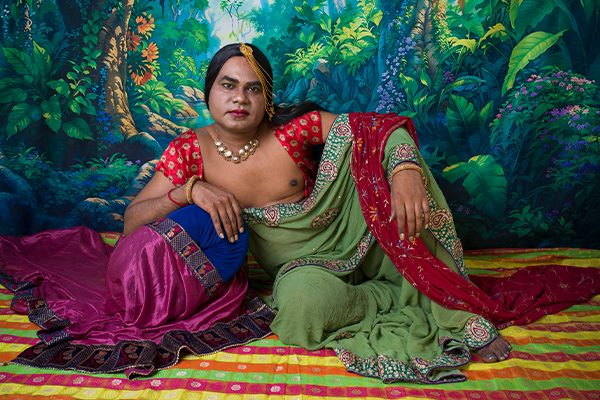
%20charan%20singh%2C%20rasili%2C%202026.%20commissioned%20by%20autograph%2C%20london.jpg)
Rasili, 2026
In 2009, the Delhi High Court declared Section 377 of the Indian Penal Code unconstitutional. In its decision, the High Court argued that these archaic laws disrupt the constitutional tenets of equality and fundamental rights of LGBT people. Keeping Section 377 in the statuary books contradicts the overarching provision of constitutional rights to Indian citizens. At its core, it was an encroachment on the right to life and liberty. Ensuing conversations around gender and sexuality are democratizing, prompting healthy debates among queer activists.
However, the language in which these legal debates unfold remains exclusionary. This is demonstrated further with the sudden inclusion of “privacy” between consenting adults at the core of the language used in the first judgement on Section 377 in 2009. The privileges gained through this judgment are primarily accessed by the middle and upper classes. These rights were not fully extended to minoritized communities in India. Moreover, these developments expose as well as confirm the persisting biases and inequalities of the rule of law.
This complex context suggests the problem of translation for expressions of gender and desire among Kothi and Hijra communities in India, which I take up in my work. The Hijra are formally referred to as kinnar in northern India and aravani in southern India. They are divided into many subgroups, including jogappa, jogta, ali, and more. These subgroups have their own cultural practices, origin stories, and mythological connections—a diversity that cannot be grasped within the reductive framework of assumptions about sexual and gender identities that until recently has dominated the scholarship of sex. Though they live on the margins of society, Hijra are understood to be empowered by their unique relationship with their guru and have been accepted in many South Asian societies. Some members of this community can maintain their role as toli-badhai, performing at weddings and at (male) childbirths.¹⁰ In the absence of structural change to redress inequities, however, many Hijra are compelled to beg and take on sex-work to survive. Only an exceptional few have attained prominent positions. Such conditions underscore the Hjira’s ongoing social marginalization, which is marked by class-based geographies.
Given the imposition of the imperial eye in the history of Indian photography, my own photographic practice has sought to queer Indian portraiture.
Since its inception in the late nineteenth century, photography was deployed to document and to impress the Indian elite class; it has gone on to become a widespread visual form in India.¹¹ Notably, colonial photographers used the camera to study their subjects through formal portraiture, a practice informed by as much as it perpetuated the uneven power relationship between operator and sitters. In addition, photographers documented the landscape as evidence of the imperial power’s holdings and found similar patronage amongst the native ruling class who mimicked their colonial overseers. Given the imposition of the imperial eye in the history of Indian photography, my own photographic practice has sought to queer Indian portraiture. Through this means, I strove to maintain a faithful commitment to the sitter’s lived experience and to establish a sense of poignancy while avoiding the temptation to glamorize.
My objective in this work has been to consider the conditions that deprive Hijra of access to self-representation, to reflect on the danger of speaking for the subjugated, and to consider the impact of doing so on this community. At the same time, I am mindful of the structural and prevailing power imbalance between the photographer and photograph/ed. Yet my own positioning on the other side of the camera makes me aware of the ethical boundaries and vulnerabilities, as well as anxieties, of “being-seen.” Although at times this awareness is burdensome, it informs my visual practice. To address the fraught terms of this awareness, I have also turned the camera lens on myself, as shown in selections from Not at Home (2014), to explore delicate relationships with home, family, lovers, and to confront notions of masculinity and patriarchy.

From the series Not at Home, 2012 - onging

From the series Not at Home, 2012 - onging
In March, 2001 at a drop-in center located in an urban slum of northeast of Delhi, a roomful of people start their weekly meeting, focusing on the day’s topic, “Main Kaun Hoon?” (Who Am I?).¹²
One of the volunteers explained the theme to the group and encouraged people to feel free to express how they see themselves. To break the ice, the volunteer introduced himself.
“Hello everyone, I welcome all of you to today’s meeting. I consider myself an MSM. For those who haven’t heard this term before, MSM stands for ‘Men who have Sex with Men.’ It has been used by NGOs such as ours, to describe people like us; our community.¹³ I have been working with the ‘Saksham’ for the past seven months and I am proud to be part of our MSM community.”¹⁴
Before he has finished, Ananas Wali Mausi, a 53-year-old person, interrupts with a question. “Will I be part of the SNM?”¹⁵
“Err, MSM not SNM.
– a man (the volunteer pointed at himself, putting his right hand on his heart)
– who have (pointing his finger in the air, as if he is evoking something)
– sex with others (bringing both hands together and forming a lock shape)
– man” (gesturing at everyone)
– a man – who have – sex with other – man.
“Ahh... however, I am not a man,” Ananas Wali replied to a burst of laughter.
“Sure,” the volunteer said, “but MSM is an umbrella term that covers all biologically male (assigned at birth) sexual identities including transgender (woman), transvestite, kothi, and hijra.”
“Oh, I see,” Ananas Wali reflected. “Is that what people are called in bahar-desh (abroad) these days?”
(No one knew this person’s real name, hence the name, Ananas ‘Wali’, a female pronoun, for someone who in this case selling ananas [pineapples], and because she was older, so people would call her Mausi [aunt] out of respect. It was common to use female pronouns to address each other without essentializing cross-dressing, for it makes it easy to switch between genders. In her case, one of the reasons for not wearing female clothing was that she had to work in public spaces. In those days, one would attract humiliation and violence especially if a male-presenting person cross-dressed while doing a man’s job; sadly, still true.)
She asked again, “So, will I be an MSM outside the center?”
Another participant chimed in, “And if yes, and how will my friend know that I am an MSM; they don’t come here?”
The volunteer raised his fist, a symbol of unity, and explained, “This language is designed to make work easier within the NGO sector. To work with the international communities, we all are together in this fight against HIV.”
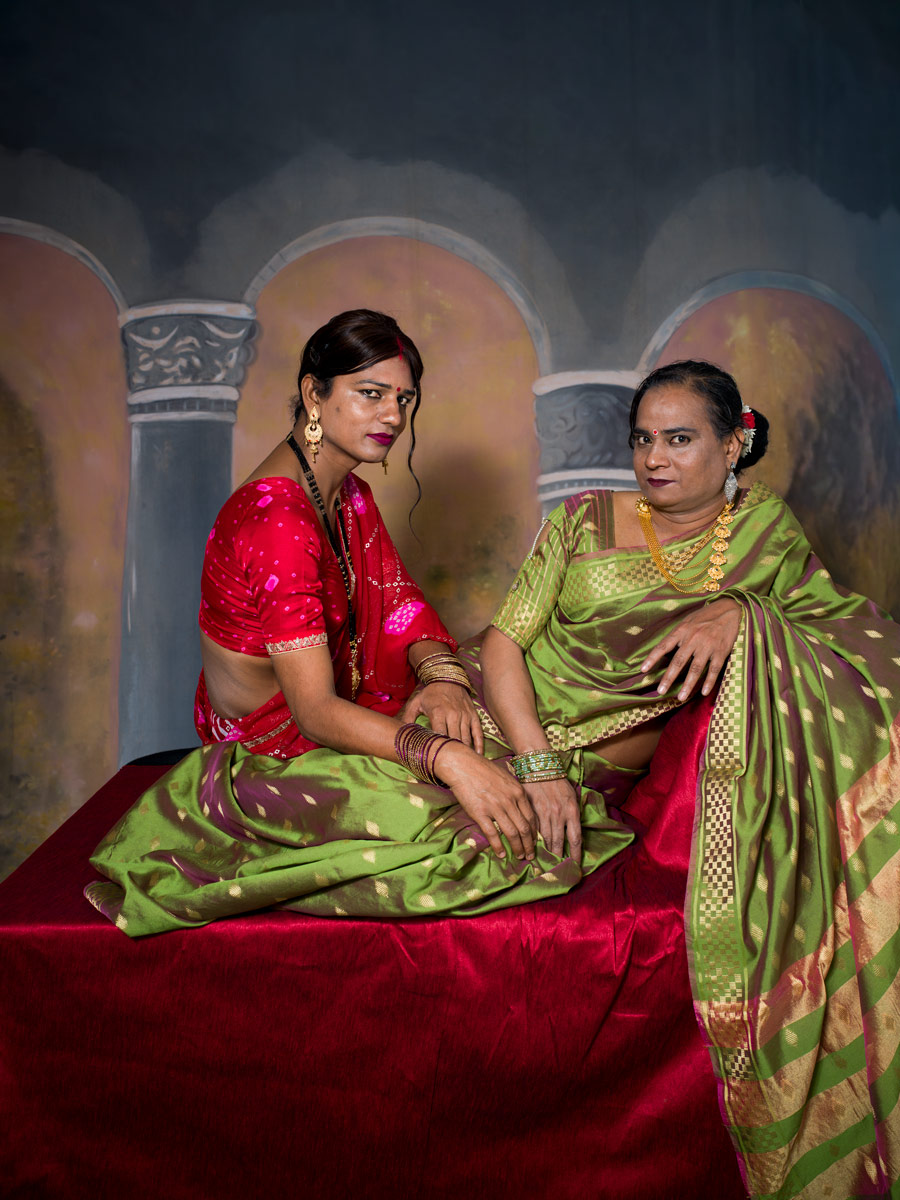
Naagrani & Roopa, 2026
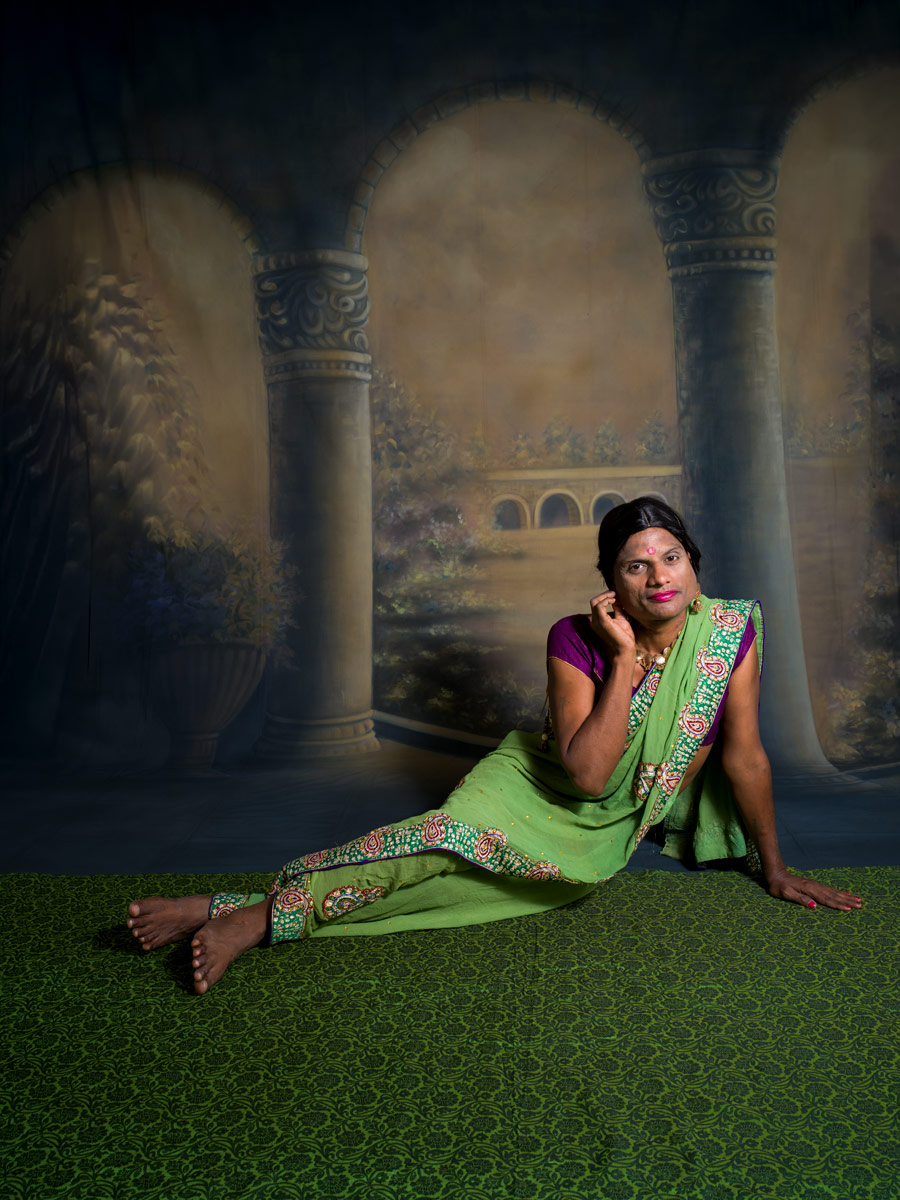
Mala, 2026
The term “queer” seems to be able to absorb many forms of political discussions. Indeed, critics seeking to queer representation often distinguish between the homoerotic and the homo-social (following the theoretical terrain paved by Eve Kosofsky Sedgewick’s book, Between Men & Epistemology of the Closet¹⁶). This distinction establishes a dominant framework for queerness that adapts our eyes for a liberal gaze. This framework has meant that Indian societies have often been theorized as homosocial societies and have praised homosociality through art and literature. At the same time, this framework creates an ambiguous environment, which only extends a certain kind of opacity to the elite classes to avoid confrontations about their sexual identities, if they wished.
My photographic projects show, however, that the precarity experienced by Hijra and Kothi communities denies them the currency to purchase privacy and opacity. Instead, their lives are easily available to state scrutiny. Still, the premature celebration of the term queer suffers failure, as it is unable to translate all the cultural specificities of a gender identity, such as Kothi and Hijra. This failure marks my reluctance to submit to yet another cultural project of the West, one that cannot be utilized without accessing the English language, thereby succumbing to anglicized cultural imperialism. The arrival of queer discourse began as a counterculture with the promise of the anti-identarian potential of “queerness.”
Rather than destabilizing identities, "queer" in the context of India tends to produce fixity, due largely to its expansion within limited sociolinguistic geographies. Moreover, the world has been witnessing a naked proximity between queerness and capitalism, a shifting realm of neoliberalism, resulting in an unassailable, acceptable queer identity — an identity that the original non-conformist queers opposed. Accordingly, my objective in these projects is to offer a polymorphic, polygonal approach to translate gender photographically. At a time when everything is so sure, and so certain, where is the place for ambiguity, absurdity, and arbitrariness that comes with our desires and with our bodies that are unruly? How can one voice such concern? How is this surety helping us evolve, to possess messy reasoning and obscene love, and an absolute queer desire?
At a time when everything is so sure, and so certain, where is the place for ambiguity, absurdity, and arbitrariness that comes with our desires and with our bodies that are unruly?
Giving accounts of feeling differently has always been a painful challenge for queer people; our bodies at times betray gender, though in deceptive ways. The recent Western vocabulary of "trans" might be inadequate, for it works in one location but perhaps may not work in others, which is why here, I dwell instead on the significance of translation as a way of thinking through the importance of indigenous expressions of gender identity and sexual desire in India. My own location in Delhi, and connections to and relationships with Hijra and Kothi, an amalgamation of subcultures, taught me that gender has its own rules, denoting “third-sex” or “third-gender” – terms that some official documents have adopted. While I resist romanticizing “third-sex” or “third-gender,” I appreciate its potential potency. Queer linguist Kira Hall writes that, “the hijras [...] have a privileged position with respect to the linguistic gender system, their experiences on either side of the gender divide allowing for strategies of expression unavailable to the mono-sexed individual.”¹⁷ Many Indian languages have three genders and multiples pronouns that are used to address a range of relationships and degrees of intimacy.
Still, translation, which enables many of us to make sense of the world, continues to pose constraints, especially when doing so reductively describes communities that have a vast and rich history and perform their gender through language which they manipulate and reproduce as they please. To impose a global norm is to perpetuate colonial practices, which impose unsuitable categories on people who end up caught in the net of language. Worse yet, to impose global terms so deeply imbued with Western assumptions is to elide other ways of desiring and identifying, and as such, are part of an ongoing legacy of colonialism. In my discussion of my evolving photographic practice, I thus sought to present a series of conversations through an evolving photographic practice. These projects do not suggest a closure, but instead imply incompleteness and a point of departure. They are deliberately open, in the same way as the language of our sexualities and gender expressions are continuously evolving.
_______
NOTES:
¹ Anita Desai, Introduction to Midnight’s Children, Salman Rushdie. (London: David Campbell Publishers Ltd, 1995).
² Section 377, currently amended, was known as Indian Penal Code’s (IPC) Section 377. It was originally drafted by Lord Macaulay in 1835, reworked and posthumously instigated as law in 1861 both in India and in Britain, which was then earnestly adopted by postcolonial India, suggesting the persistence of colonial ways of thinking in many British ex-colonies.
³ Hijra were implicated by this statute as a unique community of people. There were hundreds of other tribes that were part of this elaborated list, some tribes were even called ‘habitual criminal’. The short-term aims of the law included the cultural elimination of Hijra persons through the erasure of their public presence. The explicit long-term ambition was ‘limiting and thus finally extinguishing the number of Eunuchs.’ A detailed discussion can be found in the latest monograph by Jessica Hinchey, Governing Gender and Sexuality in Colonial India, The Hijra, c1850 – 1900 (United Kingdom: Cambridge University Press, 2019).
⁴ Sexual politics, by this I mean, primarily, lesbian and gay politics, something I was not aware of at the time.
⁵ Though in the mid-1990s my understanding of ‘activist’ was limited to slogan shouting and public protest, in retrospect it strikes me that I always was an activist. The HIV projects I worked on, situated in Delhi, consisted of activities that included literacy, skill building, the provision of psychosocial support, and participation in health and behavioural research project. Later, as a consultant, I ran training and capacity building of NGO staff, monitoring and evaluation of state-run AIDS projects across India. I became critical about my NGO work and began reading. In her work, Cindy Patton poses critical and ethical questions concerning what she describes as the “AIDS service industry.”
⁶ The key population was divided into high-risk groups (HRG) for which all the AIDS funding was channelled through: MSM (men who have sex with other men), FSW (Female Sex Worker), IDU (Intravenous Drug User). Young & Mayer make a crucial point here, they write “MSM often implicitly refers to people of color, poor people, or racially and ethnically diverse groups outside the perceived mainstream gay and lesbian communities.” Rebecca M. Young and Ilan H. Meyer, “The Trouble With ‘MSM’ and ‘WSW’: Erasure of the Sexual-Minority Person in Public Health Discourse.” American Journal of Public Health, 95 (2005): 1144-1149.
⁷ London-based Shivananda Khan, while extending his AIDS work in South Asia, developed what he termed the “Kothi-Concept” based on his field research, later he backed this concept through a group of organisations. For a comprehensive study of how Kothi and HIV work come about in India, see Cohen’s poignant essay, “The Kothi Wars: AIDS Cosmopolitanism and the Morality of Classification,” in Sex in Development: Science, Sexuality, and Morality in Global Perspective, edited by Vicanne Adams and Stacy Leigh Pigg (Durham, NC: Duke University Press, 2005).
⁸ Similar to many other parts of the world, this phrase has been used in many ways in India since the beginning of the 1990s to describe homosexual, gay, transgender, MSM, and transsexual persons. Even after gender affirming surgery, people have been described as such. Surabhi Rastagi, Growing Up as a Girl Trapped Inside a Boy’s Body Was Not Easy: Gazal Dhaliwal, accessed March 16, 2021.
⁹ For an overview of ongoing debates on a transgender persons’ rights bill which is supposed to ensure constitutional protection as full citizens, see Tripti Tandon and Aarushi Mahajan, Reclaiming Rights: Transgender Persons Bill and Beyond, accessed March 16, 2021.
¹⁰ “Toli-Badhai” is a congratulatory blessing in return for gifts. Because it is generally performed by a group of Hijras, it is called toli (literally, “group”). Through a complex structure one gains membership within such communities that have very strict rules and hierarchies to follow in a guru-disciple relationship. In return one obtains social security and respect in society.
¹¹ There are many photographers from Europe and America who have documented this, but the example I am thinking of is Lala Deen Dayal, an Indian photographer, who began his influential photographic career in the mid-1870s.
¹² Drop-in-Centre (DIC) also known as a community centre: a common space offered supplies of condoms and referrals to clinics or to just the opportunity to meet others informally.
¹³ Community was used as a suffix with MSM. It soon became the expression “MSM community” but this community, unlike other communities, was only applicable during the working hours of the NGO office space.
¹⁴ The English word for ‘Saksham’ is competence, this group name suggests making everyone competent and self-reliant.
¹⁵ Although there is one particular incident that would contest what has been just said. In November 2005, Debendra Kishore Panda, an Inspector General of Police in Lucknow, India, was found guilty of breaching the police dress and service rules by appearing in public and at work dressed as ‘Radha’ (the consort of Lord Krishna), stunning government officials and the High Court. Later, he was seen on various television shows and became popular as Dusari Radha (the second Radha). Panda now has a YouTube channel where he reads the Bhagavad Gita.
¹⁶ Eve Kosofsky Sedgewick. Between Men: English Literature and Male Homosocial Desire (New York: Columbia University Press, 1985) and, Epistemology of the Closet (Berkeley: University of California Press, 1990).
¹⁷ Kira Hall, "Go Suck Your Husband’s Sugarcane: Hijras and the use of sexual Insult” in Queerly Phrased: Language, Gender and Sexuality, eds. Anna Livia and Kira Hall (Oxford: Oxford University Press, 1997).
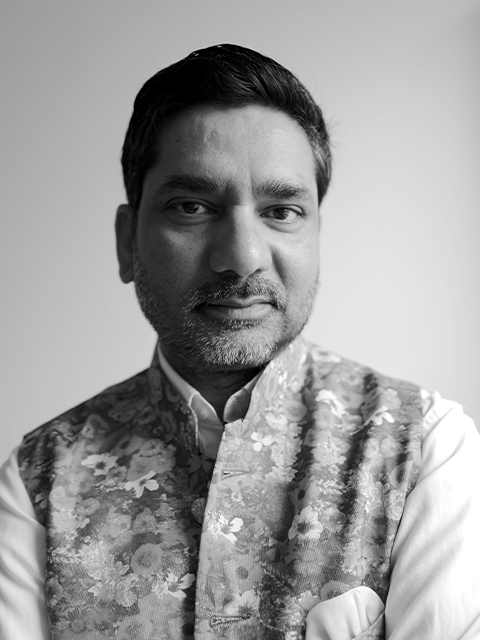
Singh’s research and practice are informed by his involvement with HIV/AIDS work and community activism, that uses the mediums of photography, video and text to explore his 'pre-English language' life to creates artistic resistance through storytelling and fictional fragments to express multi-layered gender experiences and the ephemeral nature of queer desire. His work reclaims subaltern queer identities, sub-cultures that has been defined mainly as victims. While refusing to form of subjugation it investigates the institutionalised modes of knowledge productions that are stained with colonial past and are being overshadows by neo-colonial narratives in India.
8 October 2026 - 13 February 2027
A free exhibition celebrating the lives and collective resistance of gender fluid communities in India
Banner image: Charan Singh, Mala [detail], 2026. Commissioned by Autograph, London.
Images on page: 1) Charan Singh, Rasili, 2026. Commissioned by Autograph, London. 2-3) Charan Singh, from the series Not at Home, 2012 - ongoing. © and courtesy the artist. 4) Charan Singh, Naagrani and Roopa, 2026. Commissioned by Autograph, London. 5) Charan Singh, Mala, 2026. Commissioned by Autograph, London.
Visit: Charan Singh, Rasili, 2026. Commissioned by Autograph, London.
Join our newsletter and get the latest on Autograph’s exhibitions, events, open calls, digital content, books, prints and fundraising. Find out more.



Autograph is a space to see things differently. Since 1988, we have championed photography that explores issues of race, identity, representation, human rights and social justice, sharing how photographs reflect lived experiences and shape our understanding of ourselves and others.
Support our work

