


 0
0
£5

Join us for a conversation on colonial legacies, language and queer identities in India
Across South Asia, histories of gender fluidity and sexual diversity have long existed beyond the categories imposed through British colonial rule. How have colonial laws and language shaped the ways queer lives are understood and represented? And how have communities challenged these forms of control and asserted their right to self-definition?
Bringing together exhibiting artist Charan Singh, activist-scholar Dr Nat Raha and queer feminist researcher and community organiser Dr Akanksha Mehta, this conversation will explore the colonial histories of queer language, the politics of representation and the role of artistic practice and collective organising in challenging structures of power.
Drawing on his experiences as a former HIV/AIDS worker in India, Singh will reflect on how queer lives and histories exist beyond the Western categories often used to define them. Raha brings a transfeminist perspective shaped by her work on anti-colonial liberation movements, abolitionist politics and collective care, while Mehta's research into queer and trans organising in India considers how communities build political solidarities and resist structures of power.
Moving between South Asian queer histories and wider struggles for liberation, the speakers will consider how language and law have been used to regulate gender expression, sexuality and belonging. Drawing on their distinct experiences of art, research and activism, they will speak to how queer and trans communities have resisted imposed identities, developed their own ways of understanding and expressing lived experience and organised collectively to demand rights and recognition.
The discussion will last for an hour, with time at the end for a Q+A. This event is part of the programme for Charan Singh: Your Tongue in My Mouth.
Tickets for this event are £5. No one will be turned away for lack of funds. If the ticket price is unaffordable for you, please get in touch with Ishy at Ishy@autograph-abp.co.uk about free ticketing options.
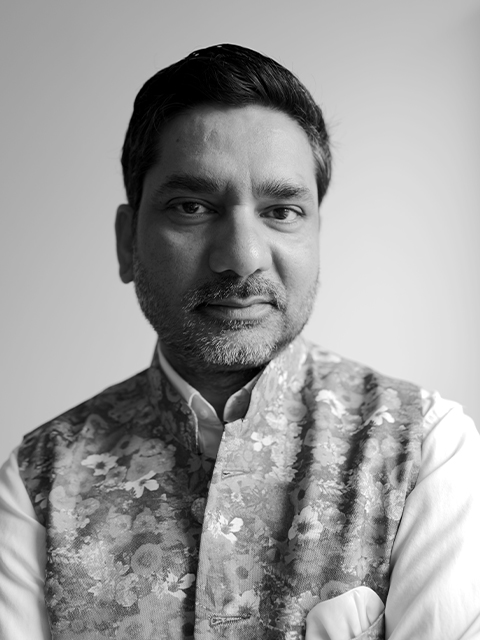
Charan Singh (born 1978, Delhi, India) is an interdisciplinary artist who explores the mediums of photography, video and text to understand how language shapes queer landscapes and the politics of representation.
Prior to coming to the UK in 2012, Singh was a non-English speaker and had an unusual relationship with the English language, where words got altered and they adopted new meanings. He often uses his 'pre-English language' gay life to question the legitimacy of certain forms of queer histories in India and the UK.
Previously an AIDS worker in India, he retrained as an artist, leading to a research interest in queer theory that comes from a place of the void of subaltern representations and the desire to agitate that void and foregrounds the significance of storytelling as a knowledge system.
Singh holds a master's in fine art from the University of Creative Arts, Farnham and a PhD from the Royal College of Art. His work has been exhibited at The Art House, Wakefield; The Photographers’ Gallery, FotoFest, Houston amongst others. His writing has appeared in Photo South Asia, TAP Review and On Curating. Singh has been commissioned by Visual Aids (New York), The Art House, Wakefield and Fierce, Birmingham. He lives and works between London and Delhi.
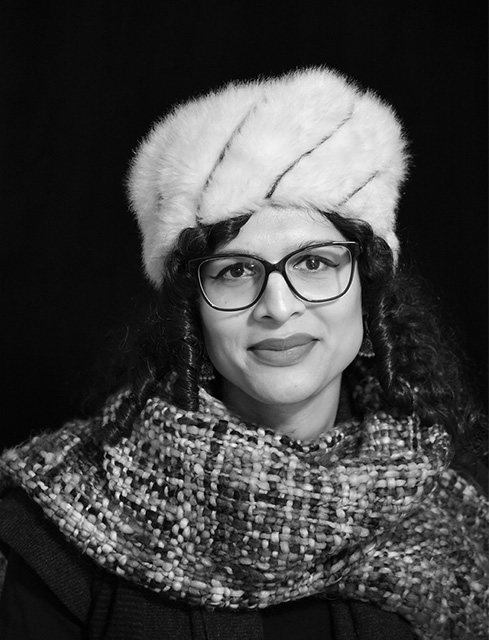
Dr Nat Raha is a poet and activist-scholar. Her current research focuses on transfeminism, practices and collectives of care and social reproduction, racial capitalism and decolonisation, across poetry, art, politics and hi(r)story.
Her recent writing addresses politics, print cultures and poetics of LGBTQ, anti-colonial, feminist and Mad liberation movements in North America and Europe from the early 1970s onwards. She works broadly on sexuality and gender, critical theory and Marxism, contemporary poetry, poetics, and aesthetics, through creative and critical methods.
Nat is the co-author of Trans Femme Futures: Abolitionist Ethics for Transfeminist Worlds (with Mijke van der Drift, 2024), and co-edited 'Imagining Queer Europe then and now', Third Text special issue (2021). She is the author of four books of poetry, including apparitions (nines) (2024) and of sirens, body & faultlines (2018). Her critical writing has appeared in Social Text, South Atlantic Quarterly, The Funambulist, TSQ and more.
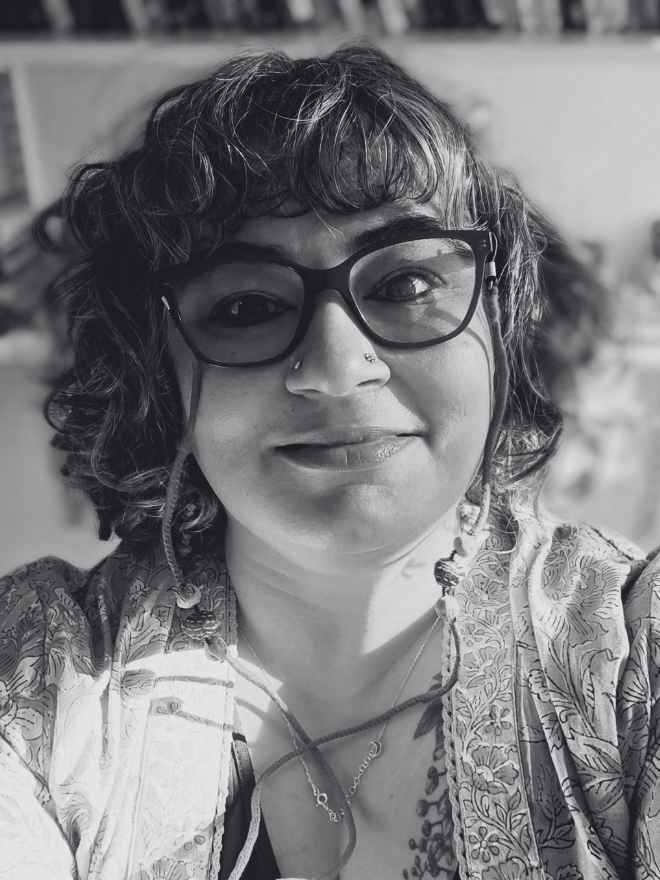
Dr Akanksha Mehta is a queer feminist educator, researcher, writer, photographer, and community organiser based in SE London and India. Her work uses ethnographic and narrative writing, visual practice, and feminist methodologies to understand the racialised-gendered-sexualised-disabling-caste-based grammars of everyday violence, resistance, and political mobilisations and their relation to the state, coloniality, capital, and collective struggle.
Her current research project (funded through the Emma Goldman Award and involving four incredible co-researchers) examines Queer and Trans collectivisation in India. Her previous work, Rightwing Sisterhood focussed on women's politics in Hindutva and Zionism. She has been on strike from her institutional job since June 2026 and is a union caseworker and organiser.
She is a Senior Lecturer in Gender, Race and Cultural Studies and the Co-Director of the Centre for Feminist Research at Goldsmiths, University of London.
Free Exhibition
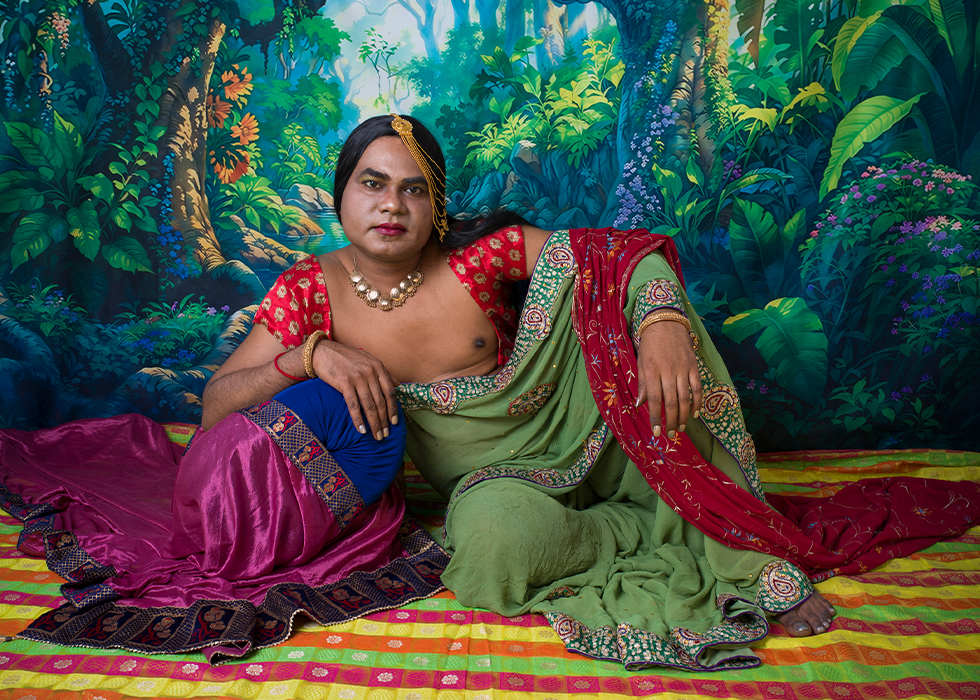
Examining how South Asian queer narratives have been obscured, omitted and reshaped by colonial legacies.
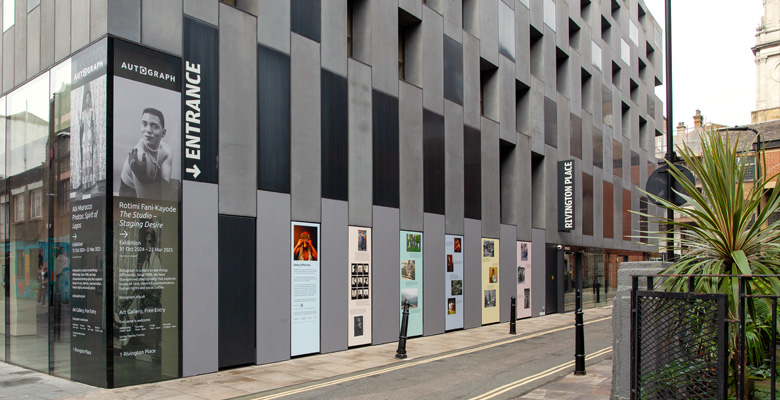
Everyone is welcome at Autograph. Planning a visit? Have a look at our Visit Us page to find out more about getting to the gallery, accessibility and more.

Autograph welcomes people with all types of disabilities.

Our building and entrance is step free. A wheelchair accessible lift goes to all floors.

The discussion will be seated and will take place in Gallery 2, on the second floor.

This event takes place in the gallery, there are limited tickets to ensure the best experience.
The ticket price for this event is £5. No one will be turned away for lack of funds. If this ticket price is unaffordable for you please get in touch with Ishy at Ishy@autograph-abp.co.uk about free ticketing options.
Autograph's events are popular, and often sell out. We recommend booking a ticket in advance. If you need to cancel your ticket for any reason, you can receive a refund up to 24 hours before the start of the event. You do not need to bring your paper ticket to the event.

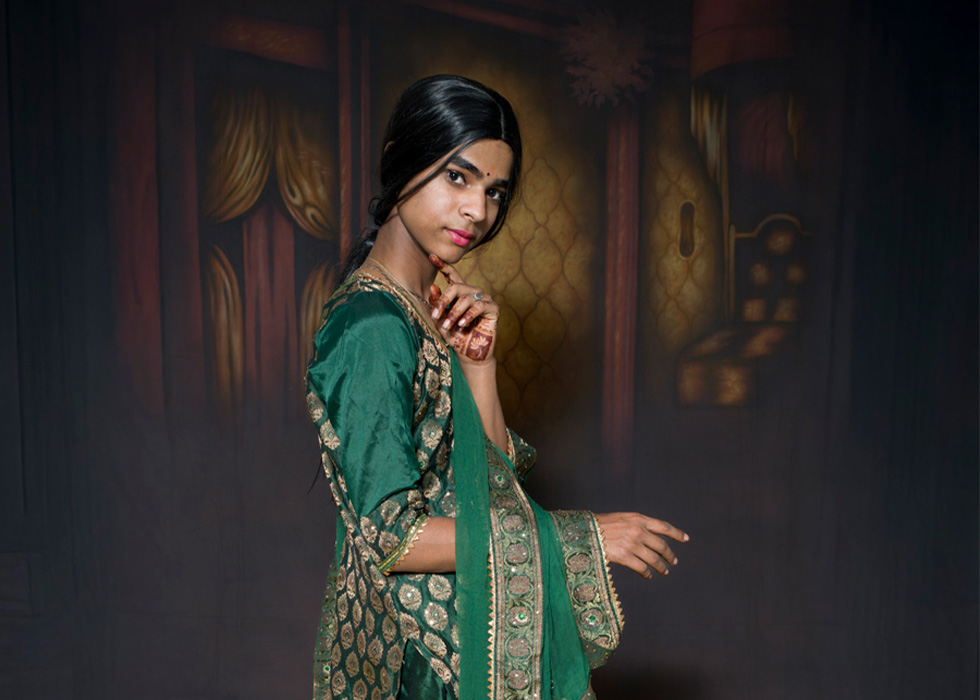
Banner image: Charan Singh, Sonu, 2026. Commissioned by Autograph, London.
Images on page: Speakers: Courtesy the speakers.
4) Charan Singh, Rasili, 2026. Commissioned by Autograph. 5) Autograph, London. Photograph by Kate Elliot.
Join our newsletter and get the latest on Autograph’s exhibitions, events, open calls, digital content, books, prints and fundraising. Find out more.



Autograph is a space to see things differently. Since 1988, we have championed photography that explores issues of race, identity, representation, human rights and social justice, sharing how photographs reflect lived experiences and shape our understanding of ourselves and others.
Support our work


