0
0
0
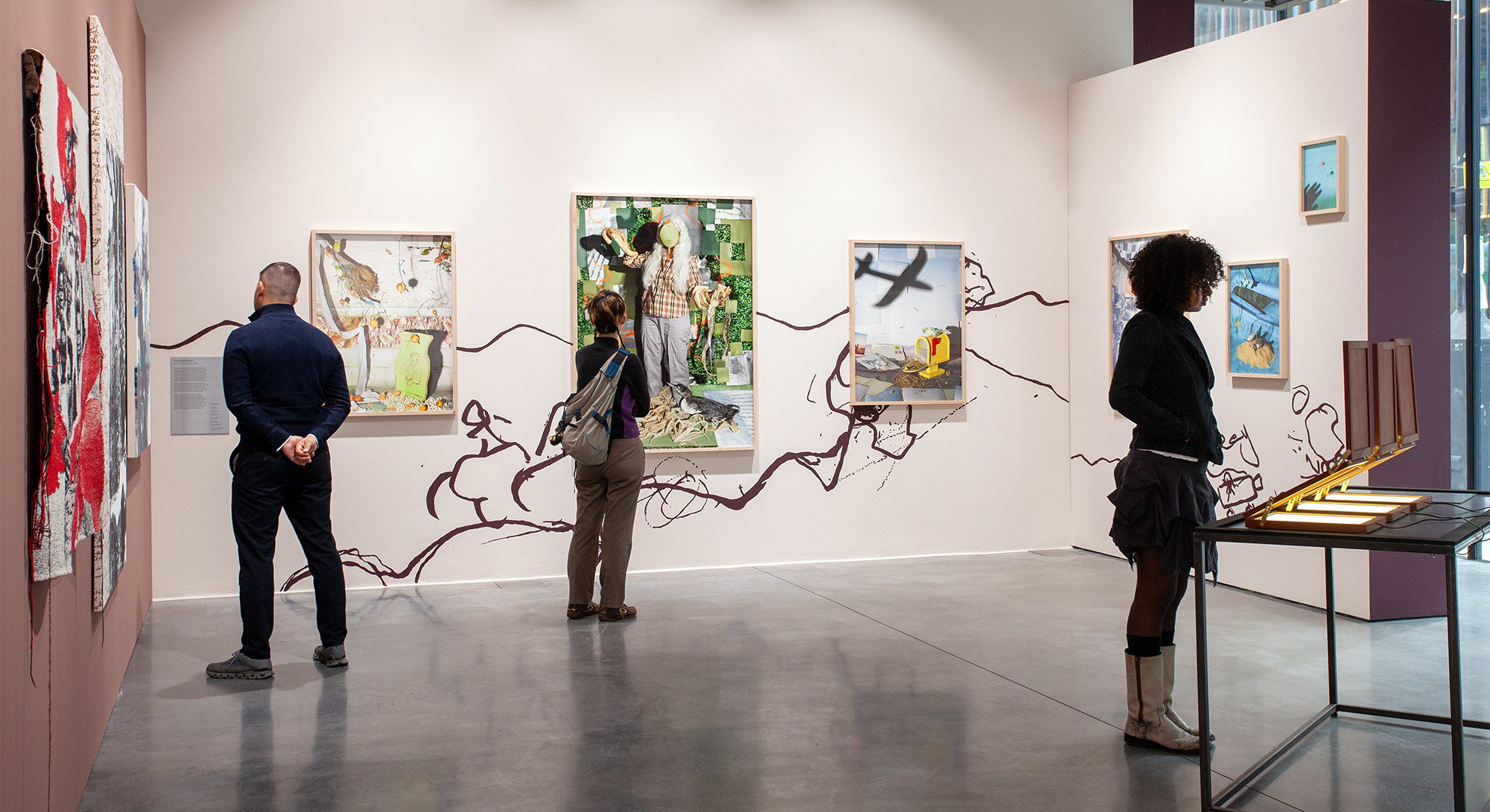

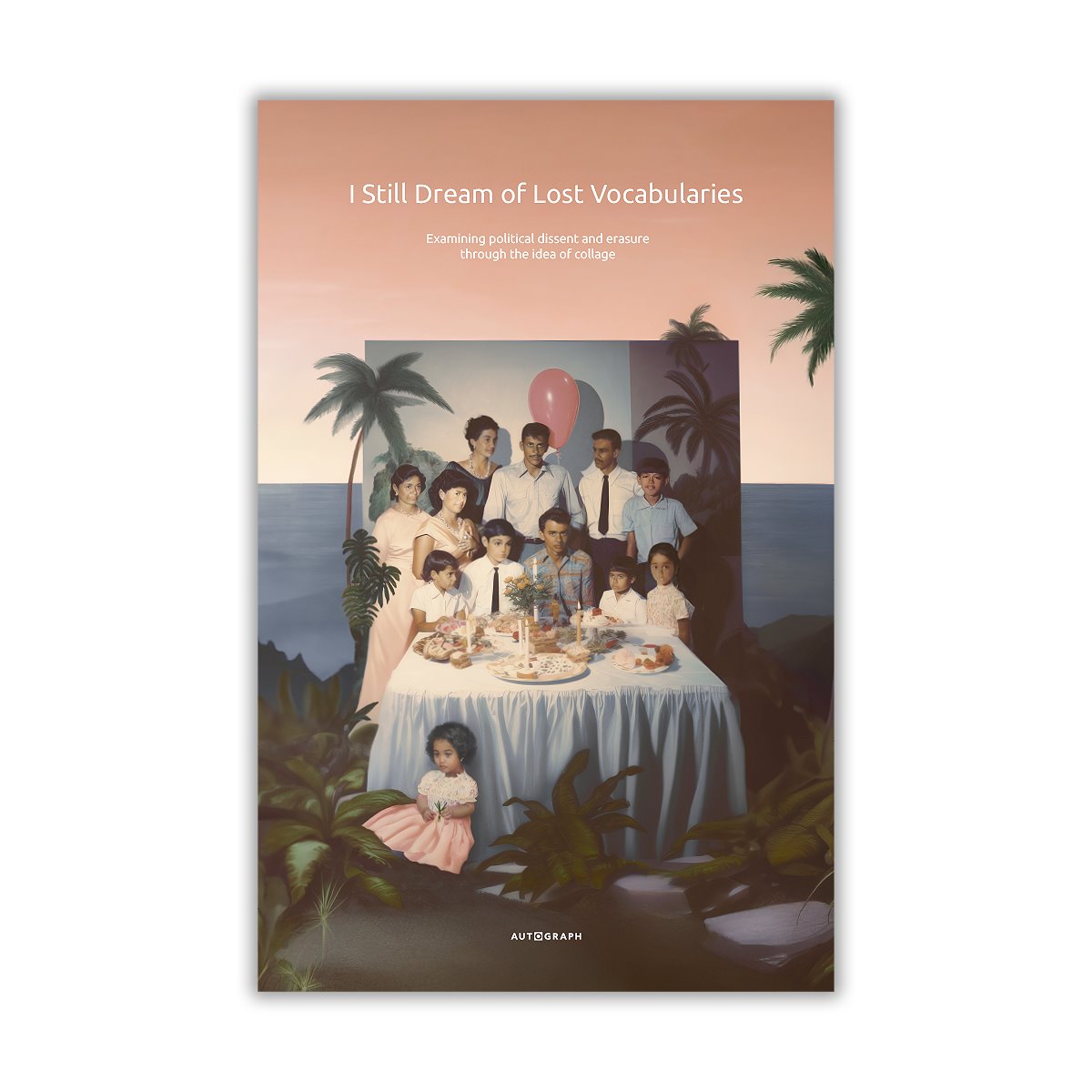
Autograph’s major group exhibition I Still Dream of Lost Vocabularies, examined how photographs can be deconstructed and reassembled through the idea of collage, to offer new perspectives on complex histories and contested social realities. Now we’re pleased to share a selection of highlights from the exhibition, using collage as both method and metaphor to highlight the fragility of photographic ‘truth’ and the archives that hold it.
With deep roots in activism and artistic experimentation, photomontage has a rich legacy as a powerful tool for artists engaging with experiences of political dissent and erasure. Its possibilities are amplified by the relentless evolution of photography - a medium shaped by technological advancement and the shifting politics of representation.
From cut paper to generative AI, the exhibition shared more than 90 works by 13 contemporary artists. Running from 10 October 2025 - 21 March 2026, I Still Dream of Lost Vocabularies resisted completeness, reflecting on the future of image-making, and questioned whether constructed images can stand in for disputed – and often entangled – narratives when words fail.
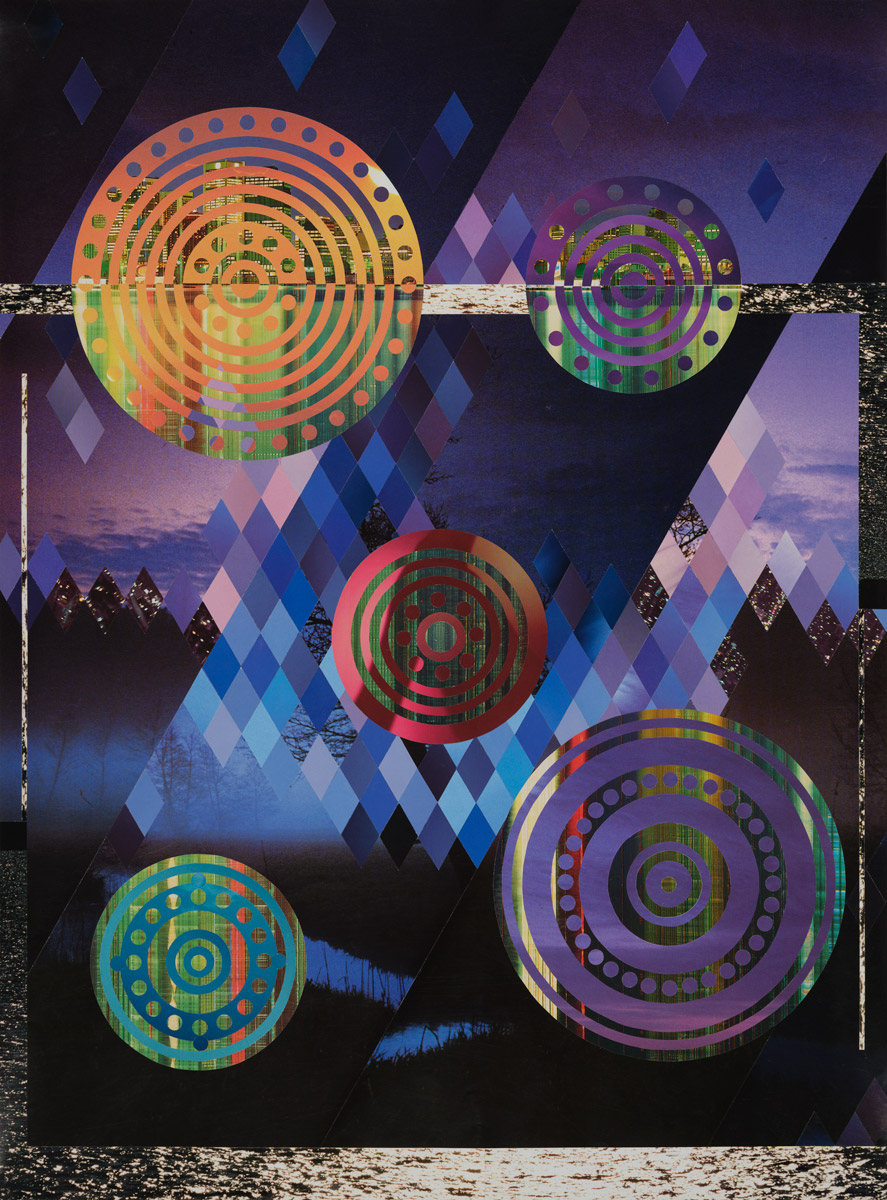
Since the 1990s, Henna Nadeem has been creating intricately cut and layered photographic collages, interrogating how landscapes can be contested sites of memory and identity. She dissects the illusion of landscape as a ‘neutral’ space, meticulously grafting together fragments of both urban and rural imagery taken from tourist guides, magazines and advertising.
For the exhibition, Autograph commissioned the artist to create a new collage, Night Circles. Together, Nadeem's works explore the intertwined nature of tourism and imperialism and how landscapes are disrupted and reshaped. The artist asks us to consider what is visible, what is marginalised and what has been deliberately cut away.
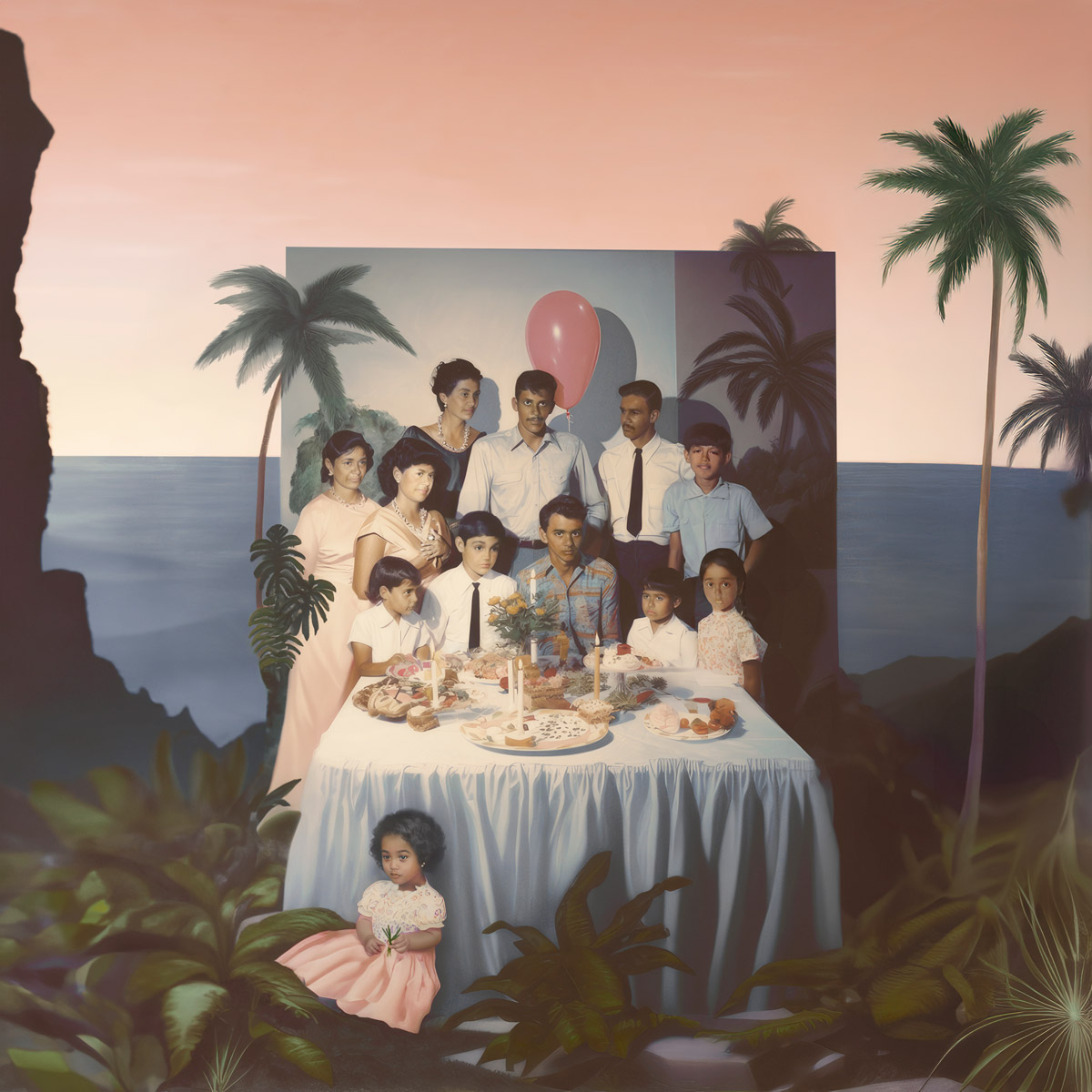
Tirvengadum’s work is driven by a desire to reconstruct the lost history of her Mauritian ancestors, a past deeply intertwined with the legacy of indentured labour in British-colonised Mauritius.
Tirvengadum has few images of her family prior to the 1960s. To reconstruct her family album, she trained an AI model on the photographs that do exist from her personal archive and wider extended family network, prompting generative AI to visualise her family’s lost history. Moments of togetherness are imagined: birthdays, studio portraits, family gatherings. These constructed images complicate the boundaries of truth, questioning what has been lost, hidden or never existed.
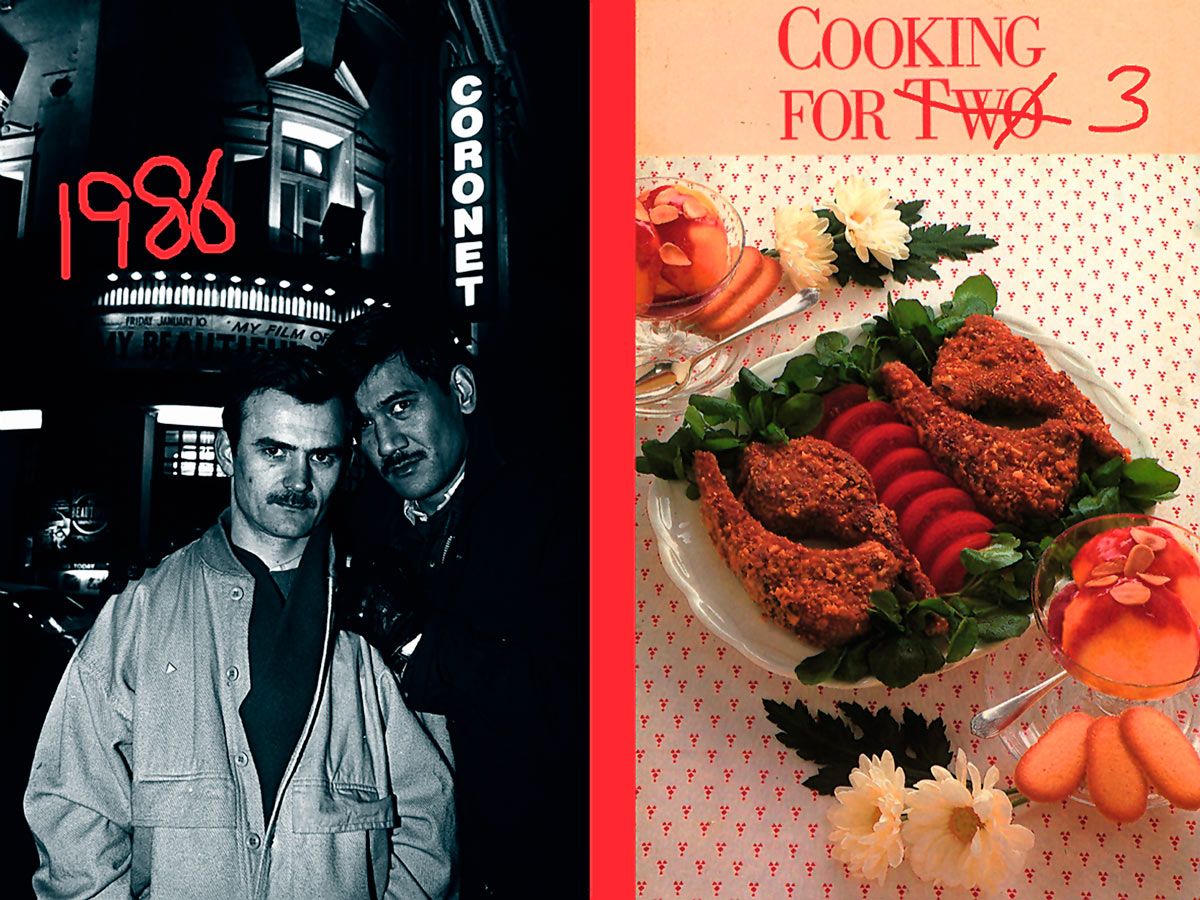
For more than 40 years, Sunil Gupta’s experience of living between cultures has shaped his work. His practice often explores themes of race, migration and queer identity, using his own experiences as a point of departure. Trespass is a series of digital collages created in the mid 1990s, using one of the first models of Apple computer.
Trespass was created over 3 years, each chapter produced in a different location: Berlin, the artist’s kitchen in London and Essex County. Figures, including Gupta and the people close to him, emerge through fragments of texts and constructed imagery. The series remains a powerful reflection on urgent conversations that continue to arise, underscoring the often-fragile intersections of masculinity, migration and resilience.
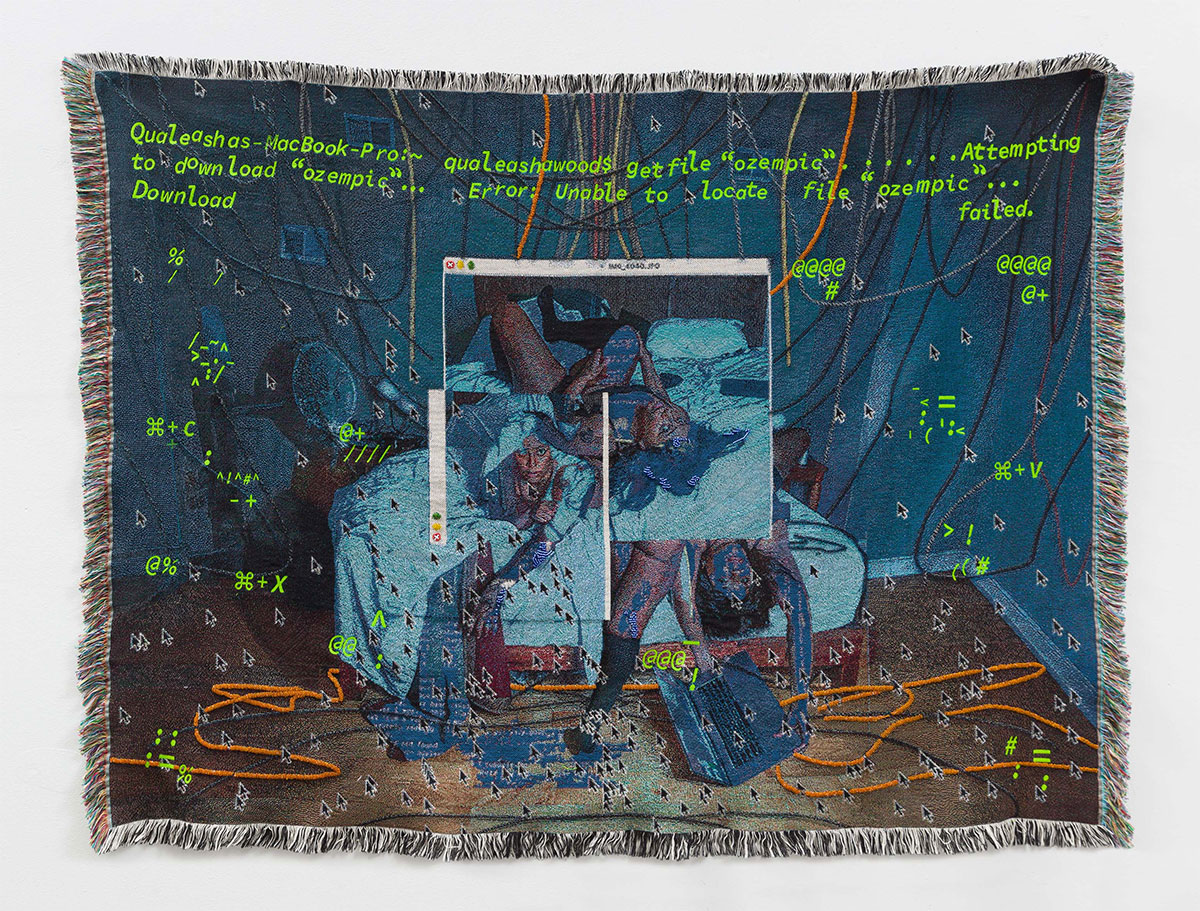
In a world where identity is continually shaped and distorted by digital culture, Qualeasha Wood’s work looks at how we see ourselves - and the impact on representations of race, gender and sexuality. She critiques the coercive nature of online trends, with a particular focus on women’s experiences.
In her tapestries, Wood reflects on the nature of rest in an unrestful age. The artist’s body appears in various states of repose – either within her bedroom or reflected in a mirror – surrounded by coded text referencing the invasive marketing of beauty products from social media. The work highlights how screens reshape our self-image, complicating the sense of privacy: even these moments of stillness can be influenced, broadcast and consumed digitally. By centring fatigue and disillusionment with online culture, Wood reminds us of the impact of turning our bodies into commodities in the digital age.
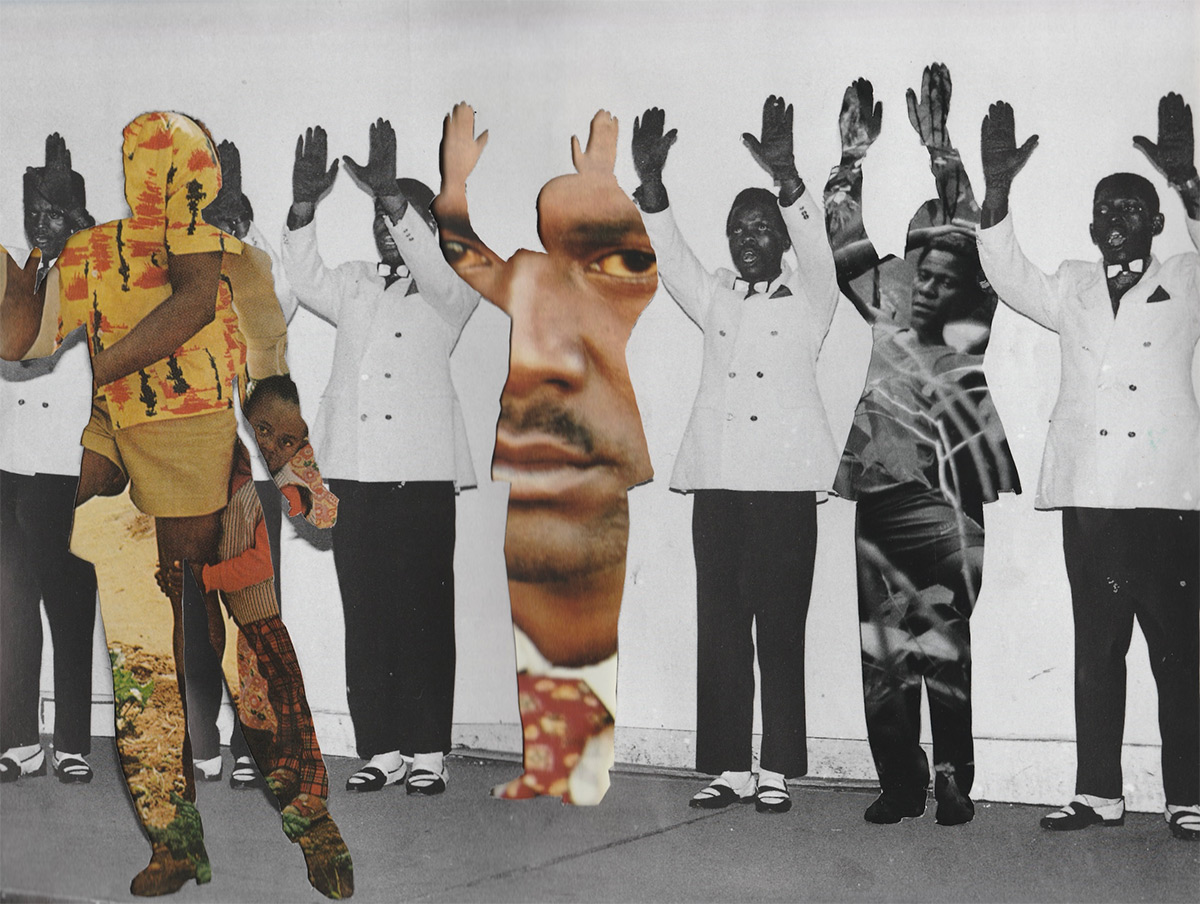
Thato Toeba is an artist and lawyer who uses collage to reflect on troubled and chaotic histories, with a particular focus on the legacies of colonisation in Southern Africa.
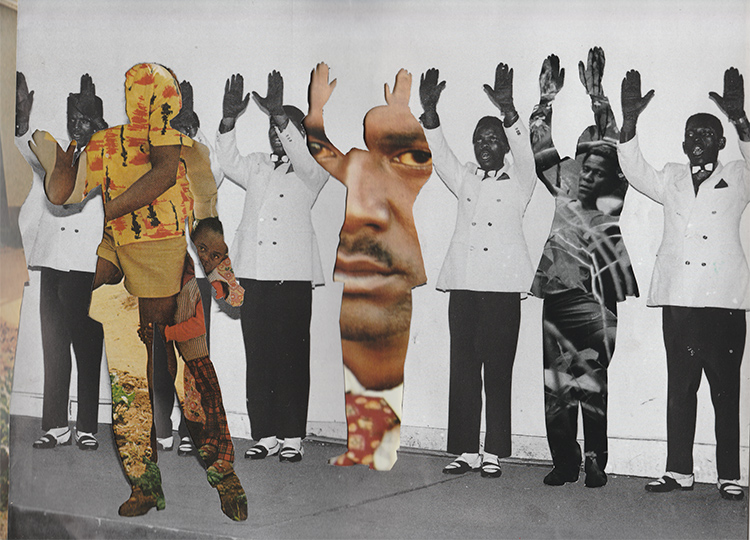
Man on Fire explores themes of violence and resilience through layered imagery and evocative gestures. Reflecting on the story of Ernesto Alfabeto Nhamuave, a 35-year-old Mozambican man who was burned to death during a wave of xenophobic violence in the Ramaphosa settlement in Johannesburg in 2008. In the lead-up to the attack, migrants were accused of being responsible for crime and 'stealing’ jobs from the area, allegations that fuelled a surge of anti-migrant violence. His story became a symbol of the tragic consequences of xenophobia and economic inequality in South Africa. For Toeba, gestures become repeatable forms that evoke imagery the artist has previously encountered. Here, the image of a choir singing in Soweto frames the composition, while at its centre Nhamuave’s portrait arrests our gaze. It does not simply sit within the work; it demands to be looked at.
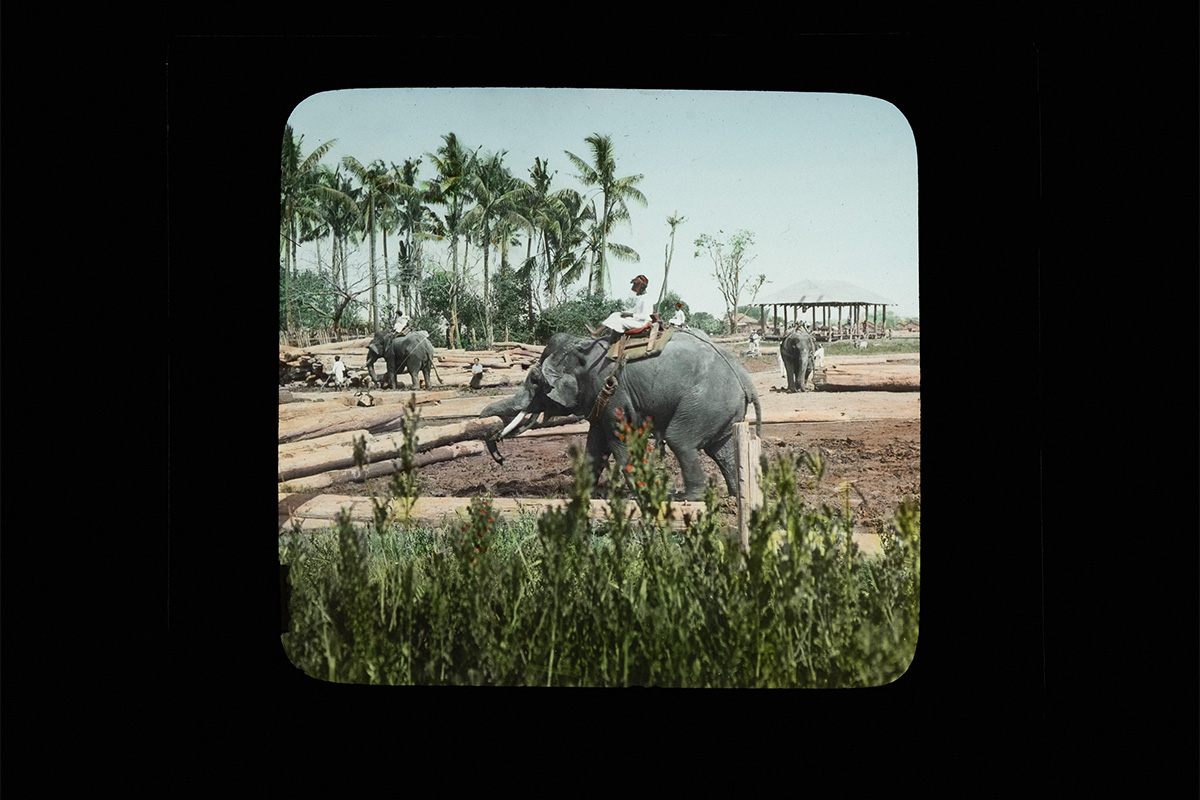
Sim Chi Yin’s research-led practice is concerned with history, conflict and memory. In her series The suitcase is a little bit rotten, Chi Yin uses the archive to muse on the potentials of transgenerational memory. The artist collected glass lantern slides from the late nineteenth and early twentieth centuries depicting landscapes in British Malaya and southeast Asia.
By digitally altering the slides to reference the lineage between her socialist grandfather – a political activist executed for his politics during the Cold War – and her son born in London at the height of the Covid-19 pandemic. Using the archive as an unstable site for photographic time travel, she inserts their figures into the glass slides to create a chronotopia, a ‘collapsing or shifting of time and space’.
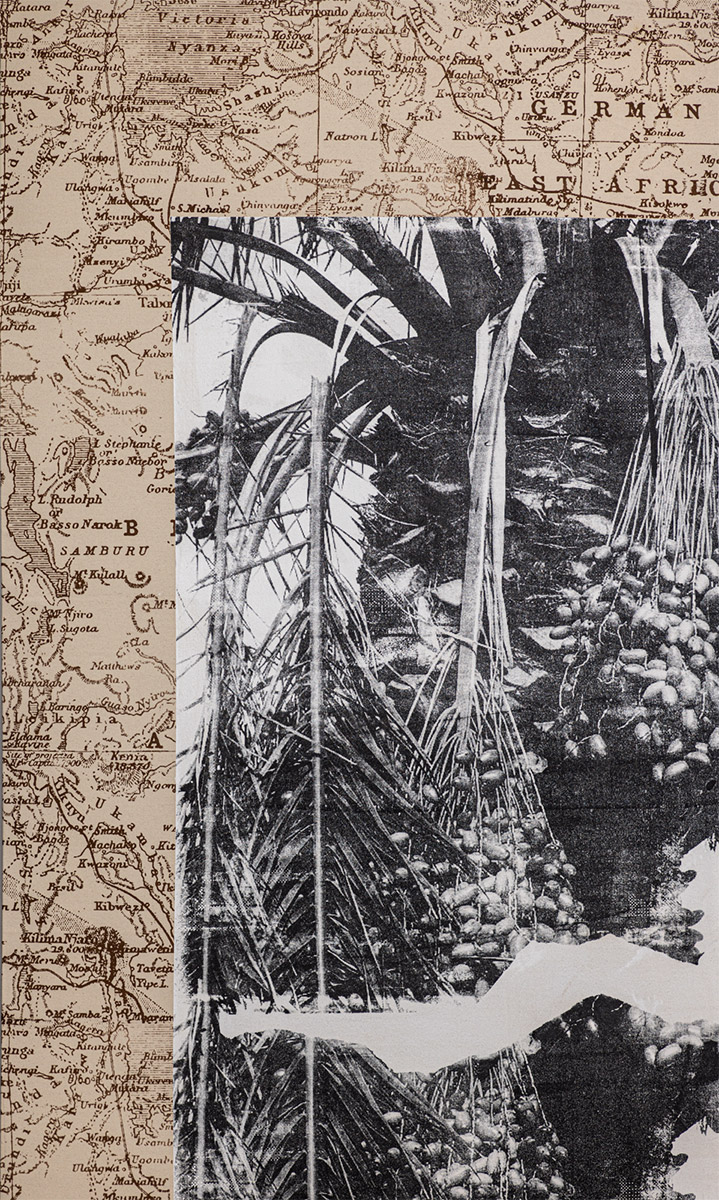
Time-travelling through historical documents, Jess Atieno constructs enquiries into post-colonial Africa. She works primarily with images, postcards and maps produced during Britain’s colonisation of present-day Kenya, Uganda and Tanzania.
The artist does not seek to use the archive to heal these histories, but to examine how they continue to haunt the present. Fragmentation becomes a strategy to reconfigure images created under violent colonial regimes, exploring how history can be restitched to create counter-narratives.
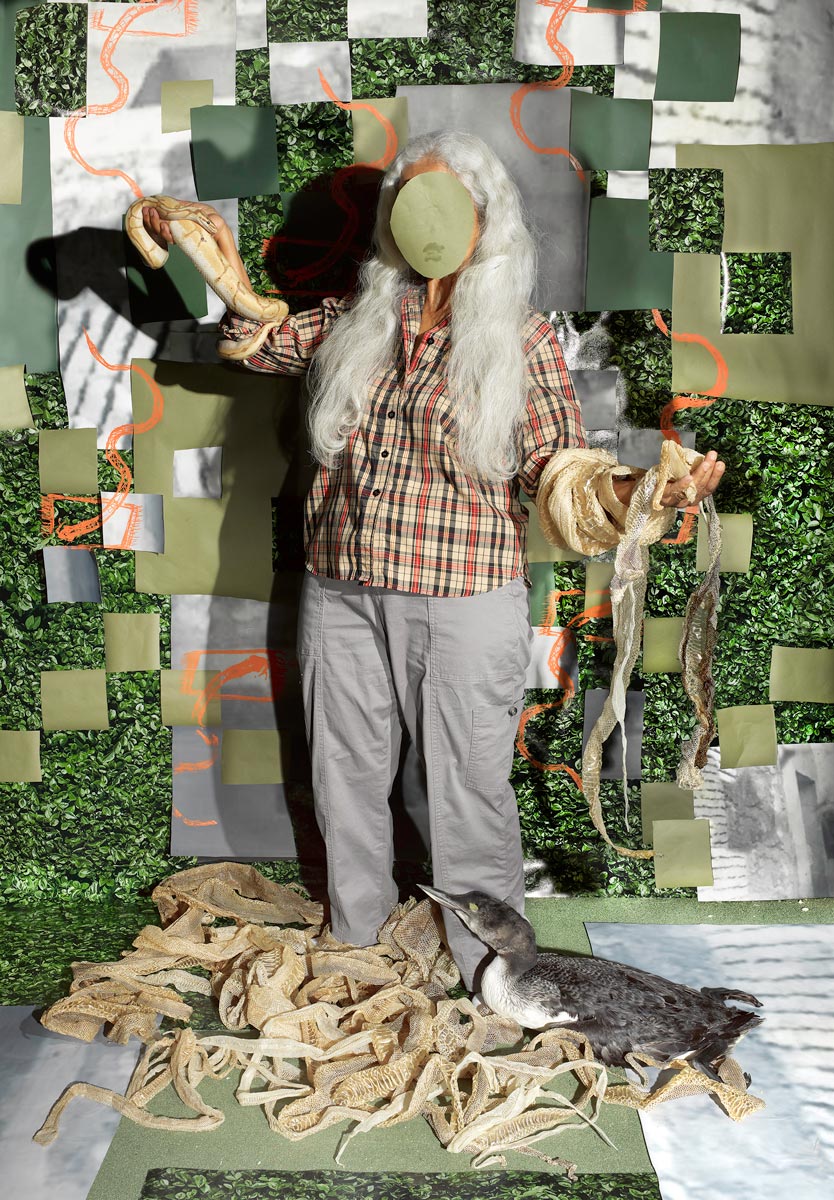
As the daughter of political refugees who fled Iran after the 1979 revolution, Sheida Soleimani’s work is deeply influenced by personal experiences of exile, persecution and migration. Soleimani creates layered tableaux that connect themes of political exile with the care of injured migratory birds.
The work features hand-built life-sized, theatrical scenes, richly layered with symbolism drawn from activists’ testimonies from the Women Life Freedom movement in Iran, and stories from the artist’s mother, who was imprisoned in Iran in the 1970s due to her political activity. Chequerboard patterns reference the games those detained must play to survive, as tools of resistance and agency.
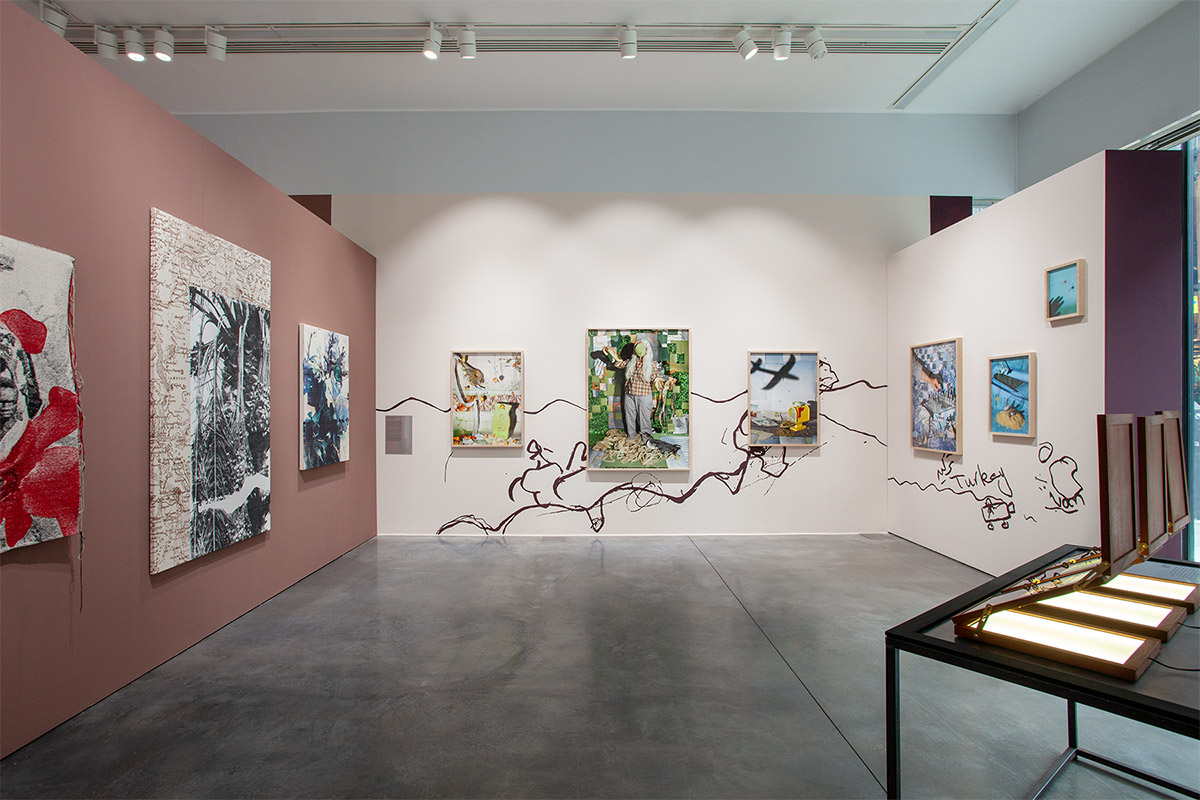
Photograph by Kate Elliott.
%20arpita%20akhanda,%20a%20veil%20of%20memories%20iii,%202023.%20courtesy%20the%20artist%20and%20emami%20art%20gallery.jpg)
Arpita Akhanda responds to the traumatic legacy of the 1947 partition of India and Pakistan through the lens of her own family’s experiences. Her intricately hand-woven paper works grapple with intergenerational memories, family archives and the cartography of colonialism.
A Veil of Memories weaves together layers of maps and images - merging the warp of memory with the weft of reality. Using photographs of her grandparents, Akhanda constructs a fabric in which the image of her grandmother’s sari becomes a symbolic shield, protection amid the tumultuous times following partition.
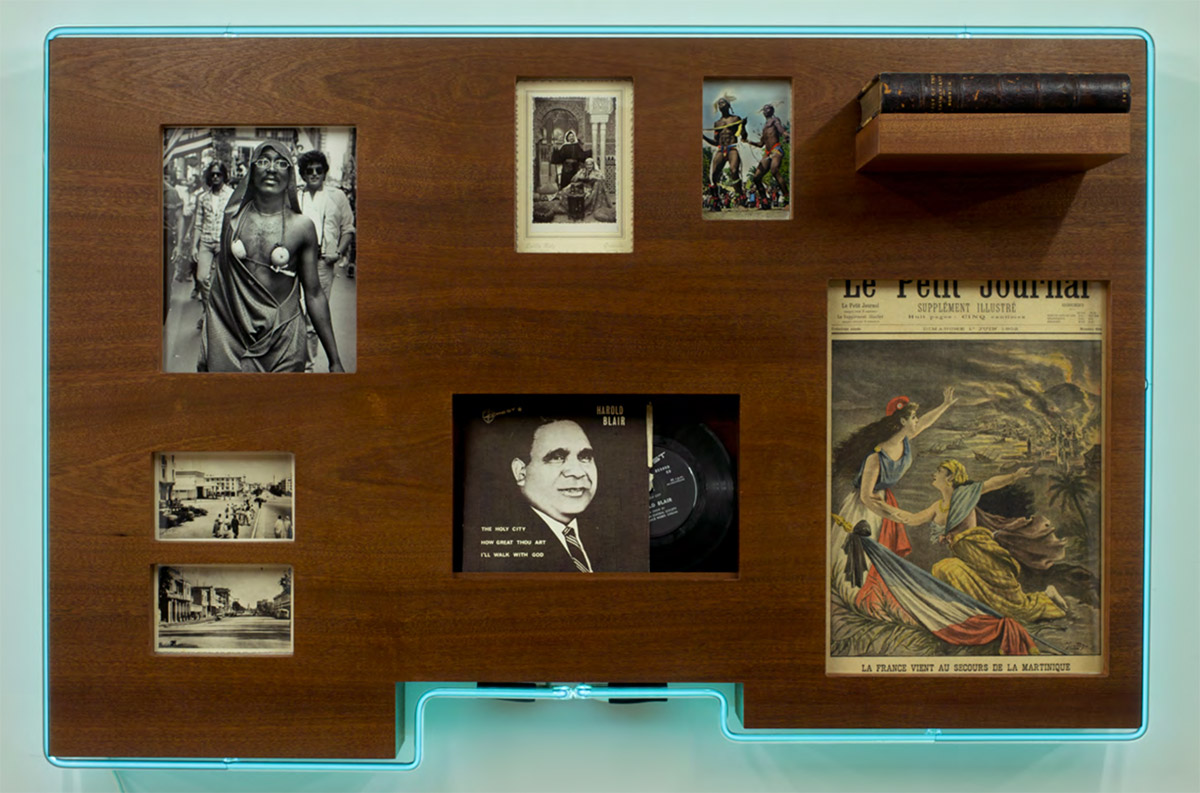
For three decades, Brook Andrew has challenged how colonial histories are remembered. As an artist of Wiradjuri, Ngunawal and Celtic heritage, he critically engages with the ways Western narratives have stereotyped and marginalised Indigenous Australian voices.
In this mixed-media assemblage, Andrew exposes intersecting histories of oppression and resistance. Among the objects used are a press image of a gay rights demonstration in New York City in 1979; a music record by Harold Blair, an Aboriginal tenor and activist; and the front page of Le Petit Journal published in 1902, depicting France as a saviour rushing to Martinique after the Mount Pelée eruption - an image that masks colonial power as benevolence. These historical fragments are encased in sapelli wood, a material originating in West and Central Africa, often associated with resource extraction and the economic structures of empire.
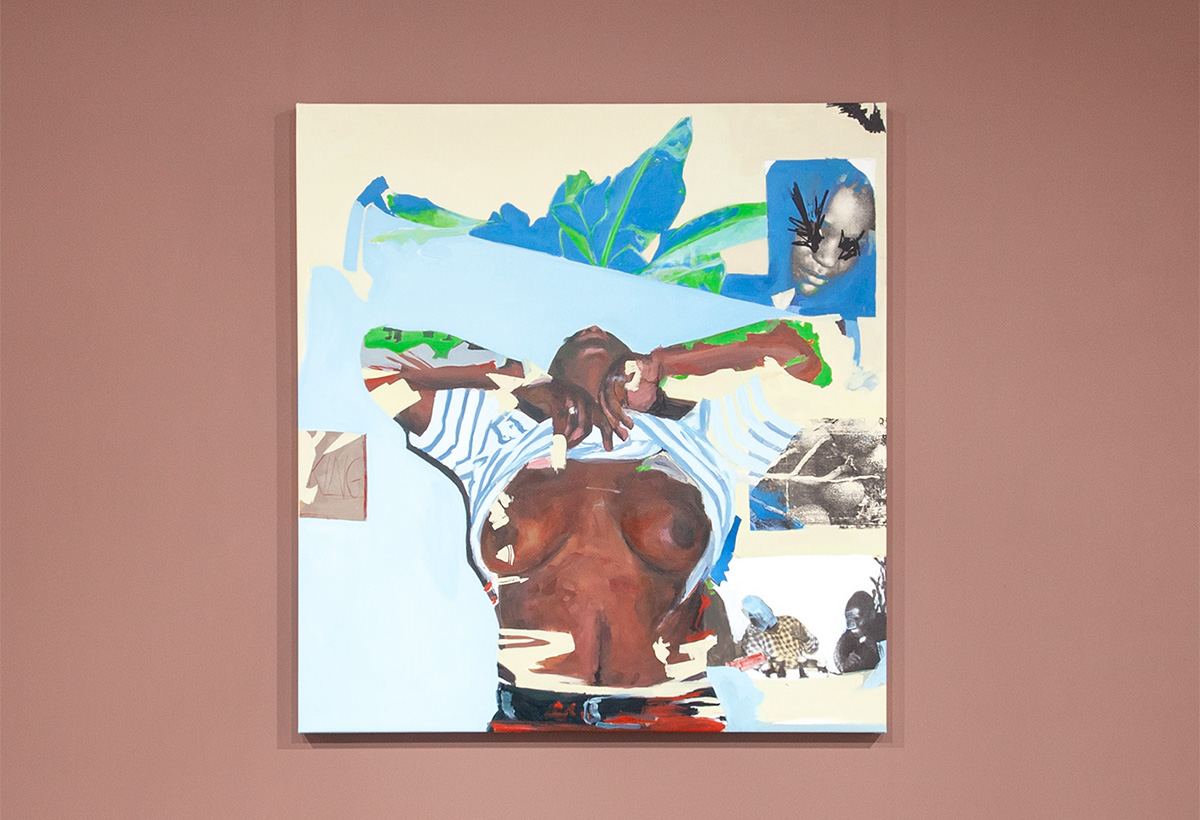
Experiences of geographic dislocation inform the work of Kudzanai-Violet Hwami. Born in Zimbabwe and raised across Southern Africa and the UK, her paintings grapple with the politics of representing marginalised identities – while probing questions of gender, sexuality and spirituality.
In Expiation, these concerns are articulated through a diaristic approach where expressive marks, handwritten letters and photographic collage converge around a nude figure portrayed as a liberated being. Hwami’s surfaces are charged with interruptions – vivid brushstrokes, plant forms and distorted bodies glitch into view, disrupting any singular or fixed reading. By transforming personal and familial archives into layered constellations, Expiation foregrounds these identities as a site of reinvention and possibility – reimagining identity as something multiple, provisional and in motion.
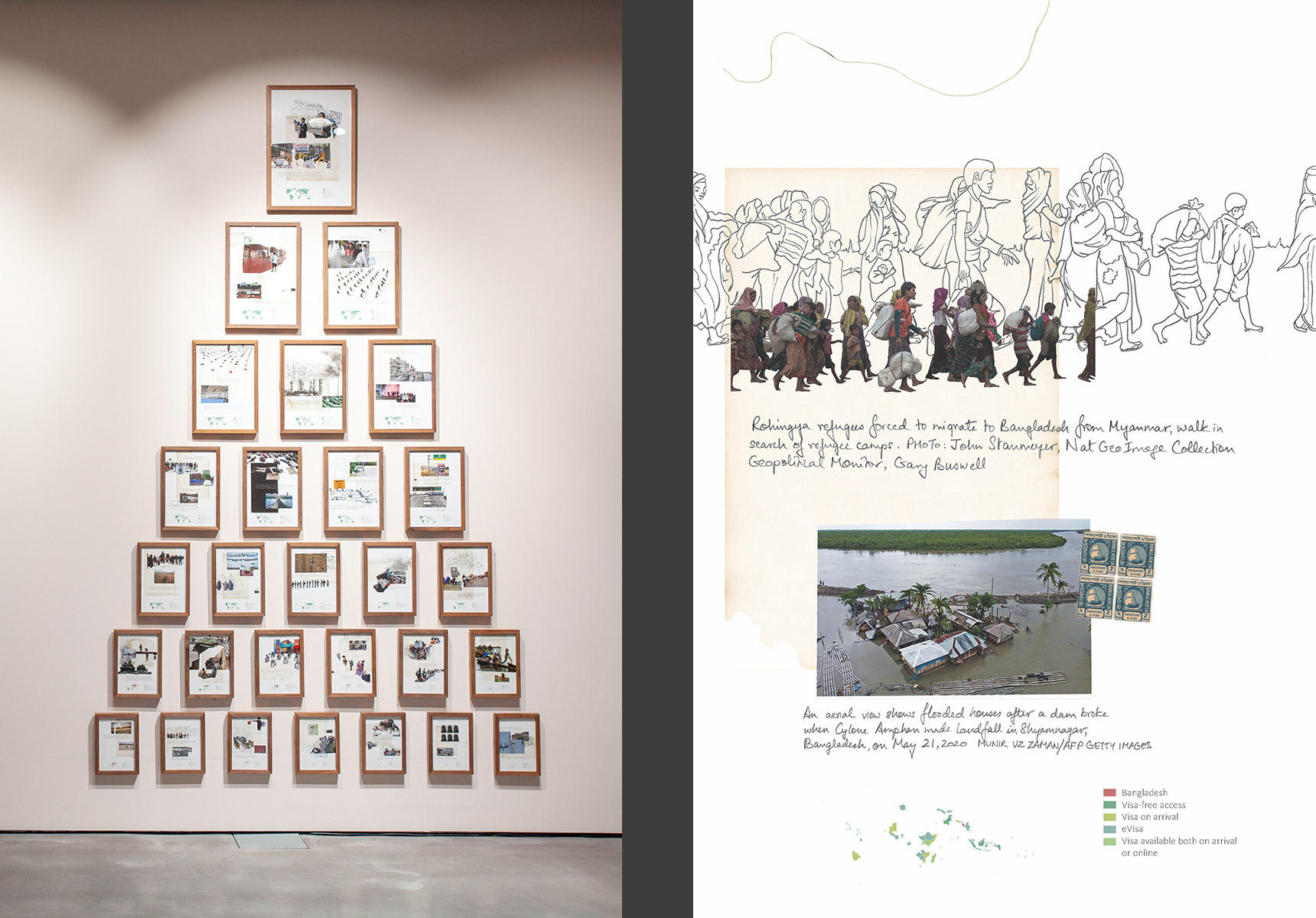
Reena Saini Kallat’s work examines the tensions that arise from political and social borders – and their violent cleaving through land, people and nature. This interest is shared in part by the continuing aftershocks of the Partition in India, a history her family experienced firsthand.
Pattern Recognition examines how different nationalities’ passports grant, or deny, access to international travel. Each country is arranged within a pyramid according to the 2022 Henley Passport Index, which ranks nations by the number of destinations their citizens can enter without a visa. Countries with greater freedom of movement appear larger and higher on the chart, while those facing more restrictions are rendered below in smaller scale. This global ‘mobility map’ sketches a stark portrait of a divided and unequal planet. National borders appear not as fences or barricades, but as constraints shaped by policy and privilege.
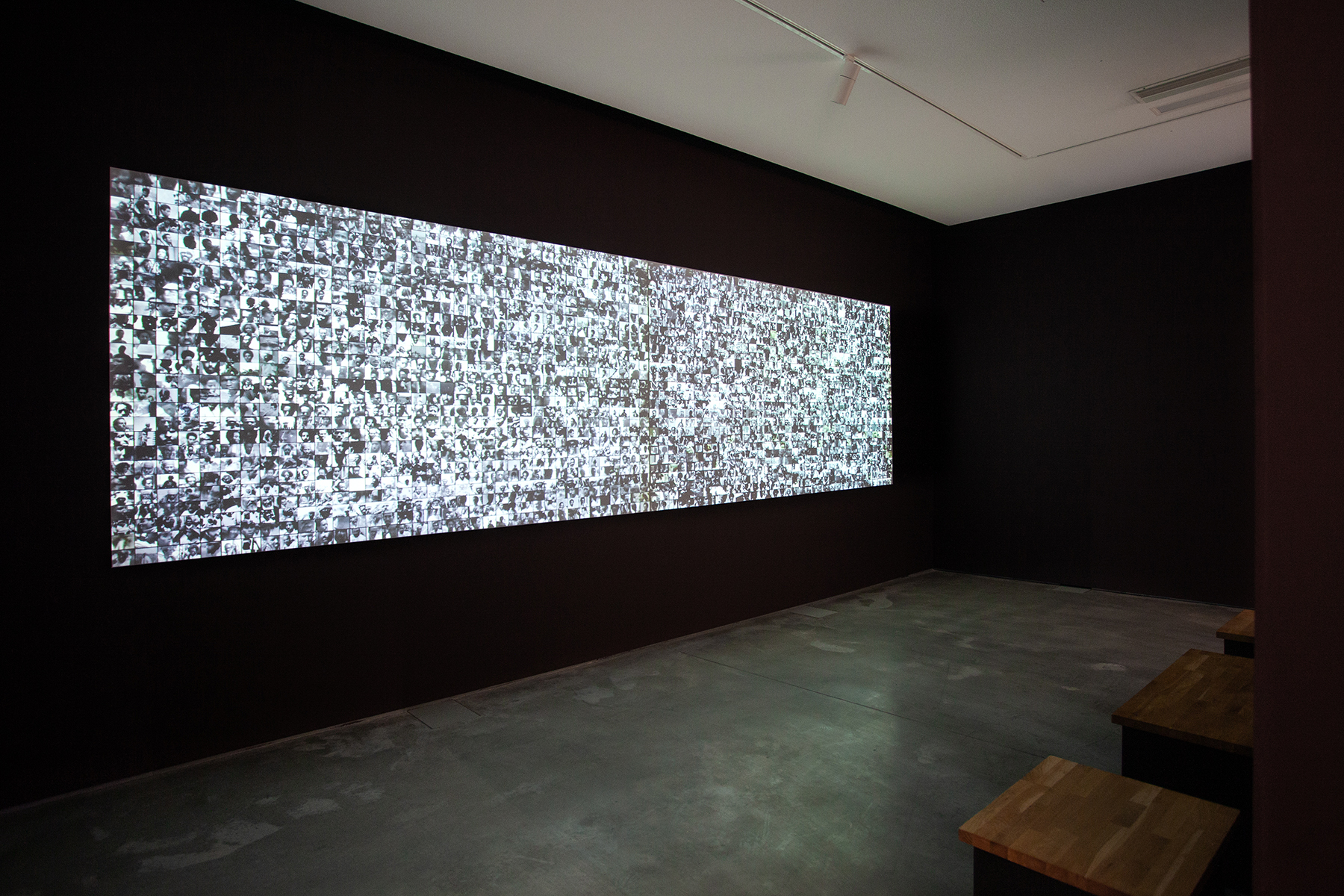
Interested in how memory moves across generations, Wendimagegn Belete’s works are a mediation on remembrance against erasure. His monumental silent film Unveil is inspired by an important chapter of African history: Ethiopia’s resistance to colonial and fascist occupation from 1935 to 1941.
During this period, Ethiopian patriots – known as the Arbegnoch – mounted a fierce campaign against invasion by Benito Mussolini’s Italian forces. The artist spent many years collecting rare 16mm archival film of the conflict to create Unveil. He meticulously spliced together each frame to create a composite portrait, zooming into the faces of thousands of Ethiopian fighters.
From cut paper to generative AI, an exhibition examining political dissent and erasure through the idea of collage
Find out more 
Writer and critic Chandra Frank explores the capacities of collage
Read blog post | 5 min readBanner image: Installation image of I Still Dream of Lost Vocabularies exhibition at Autograph, London. Curated by Bindi Vora. Photograph by Kate Elliott.
Images on page: 1) Henna Nadeem, Night Circles, 2025. Commissioned by and collection of Autograph, London. © and courtesy of the artist. 2) Sabrina Tirvengadum, Happy birthday to you, 2025. © Sabrina Tirvengadum. Courtesy the artist and Autograph, London. 3) Sunil Gupta, from the series Trespass, 1992-1995. Collection of Autograph, London. Commissioned by NGBK Berlin. © Sunil Gupta. 4) Qualeasha Wood, A flaw in my code, 2025. © Qualeasha Wood. Courtesy the artist and Pippy Houldsworth Gallery. 5) Thato Toeba, Man on Fire, 2017. © and courtesy the artist. 6) Sim Chi Yin, from the series The suitcase is a little bit rotten, 2022. © Sim Chi Yin. Commissioned by Autograph, London. Supported by the Bagri Foundation. 7) Jess Atieno, Place, Belonging I, 2022. © Jess Atieno. Courtesy the artist and Galerie Cécile Fakhoury (Abidjan, Dakar, Paris). 8) Installation image of I Still Dream of Lost Vocabularies exhibition at Autograph, featuring work by Jess Atieno, Sheida Soleimani and Sim Chi Yin. Photo by Kate Elliott. 9) Sheida Soleimani, Magistrate, 2024. From the series Flyways. © Sheida Soleimani. Courtesy the artist and Edel Assanti. 10) Arpita Akhanda, A Veil of Memories III, 2023. © Arpita Akhanda. Courtesy the artist and Emami Art Gallery. 11) Brook Andrew, Sunset III, 2016. © Brook Andrew. Courtesy of the artist and Galerie Nathalie Obadia (Paris/Brussels); Ames Yavuz, (London/Singapore/Sydney). 12) Exhibition install image by Kate Elliott, featuring work by Kudzanai-Violet Hwami, Expiation, 2021. © Kudzanai-Violet Hwami. Presented by Kevin Love (Tate Americas Foundation) 2023. 13) Exhibition install image by Kate Elliott, featuring work by Reena Saini Kallat, Pattern Recognition, 2022. © Reena Saini Kallat. Commissioned by Autograph, London. Supported by the Bagri Foundation. 14) Reena Saini Kallat, Bangladesh from the series Pattern Recognition, 2022. © Reena Saini Kallat. Commissioned by Autograph, London. Supported by the Bagri Foundation. 15) Exhibition install image by Kate Elliott, featuring film work by Wendimagegn Belete, Unveil, 2016, 22’00” minutes. © Wendimagegn Belete. Courtesy the artist and Kristin Hjellegjerde Gallery.
Discover more: Sabrina Tirvengadum, Family [detail], 2023. © Sabrina Tirvengadum. Courtesy the artist and Autograph, London.
Join our newsletter and get the latest on Autograph’s exhibitions, events, open calls, digital content, books, prints and fundraising. Find out more.



Autograph is a space to see things differently. Since 1988, we have championed photography that explores issues of race, identity, representation, human rights and social justice, sharing how photographs reflect lived experiences and shape our understanding of ourselves and others.
Support our work