0
0
0
Free, booking essential

Join us for an online talk on Indigenous and diasporic feminist ways of knowing land and body
What does it mean to understand land not as something we own or occupy, but as something with which we share histories, relationships and responsibilities? And what might become possible when we move beyond familiar distinctions between humans and nature, bodies and landscapes?
Taking Autograph’s exhibition Our Bodies Have Been Bridges, which explores how bodies carry memory, ancestry and histories of displacement, as a starting point, this online conversation brings together anthropologist Marisol de la Cadena and writer, artist and scholar Ama Josephine Budge Johnstone to explore how Indigenous knowledges and Black queer feminist thought can reshape our understanding of the living world. The discussion will be chaired by writer and broadcaster Zakia Sewell, whose work re-examines British folklore, mythology and cultural identity, tracing how histories of migration and cultural exchange are carried through music, ritual and traditions rooted in the body.
Drawing on de la Cadena's research into Andean worlds, where mountains and other earth-beings shape and participate in social and political life, and Johnstone's exploration of "Intimate Ecologies," which brings together Blackness, erotics, and the more-than-human, the conversation will consider the limits of Western frameworks of knowledge and the mutual entanglements of bodies, land and other forms of life. In dialogue with Sewell, these perspectives invite us to consider how these expansive forms of knowledge open up possibilities for living and relating to our worlds differently.

Everyone is welcome to join, from any location. The primary language used will be English.

Closed captioning will be enabled at this Zoom event. During the event, click the closed caption icon to start captions and view the live transcript

Only our event speakers and host will be visible on screen. Attendees will not be visible on screen.
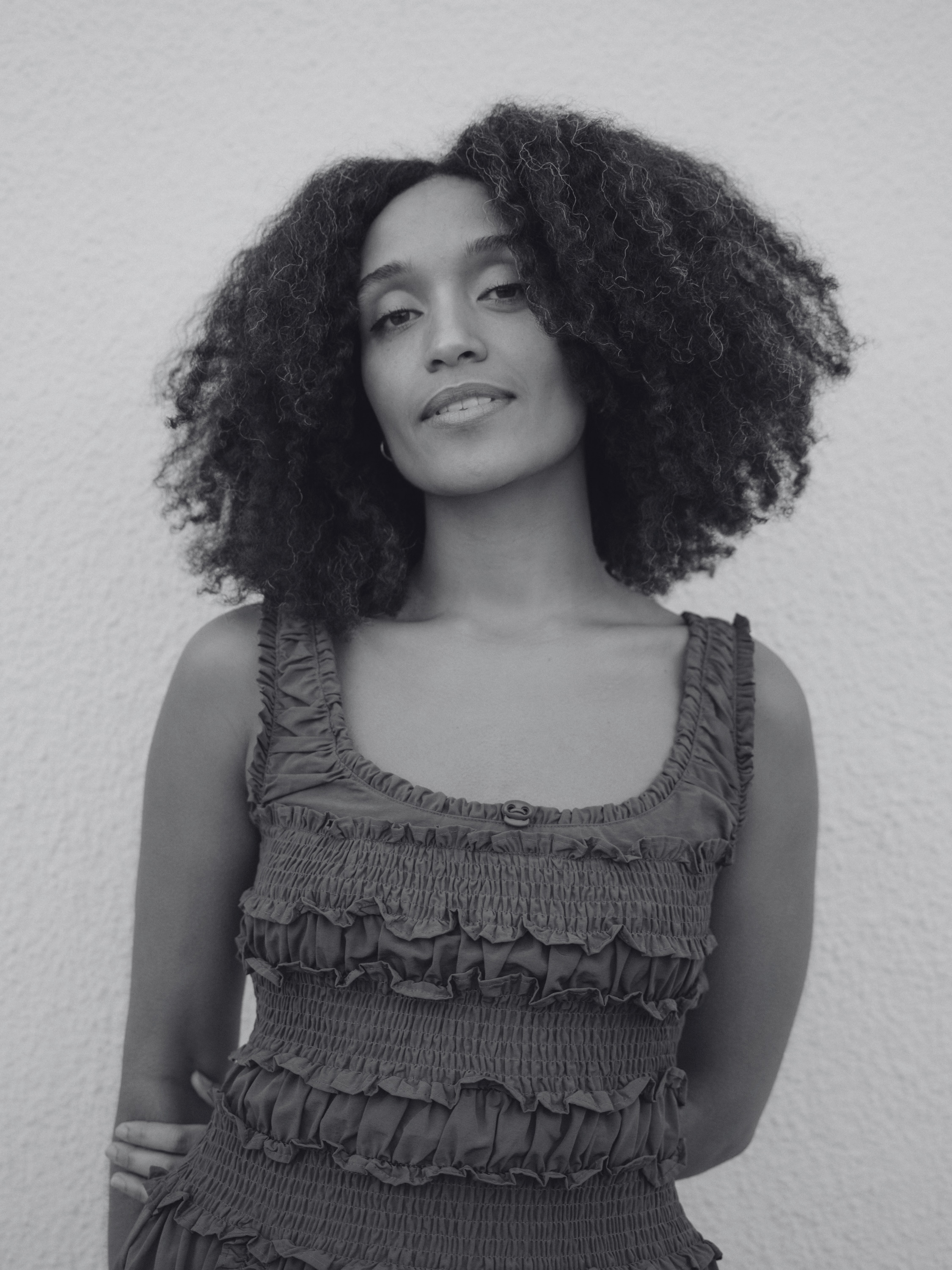
Zakia Sewell is a writer, DJ and broadcaster based in London. She hosts Dream Time on BBC Radio 6 Music, and was a host on NTS Radio from 2016-2024. Zakia has produced and presented radio documentaries and podcasts for platforms such as BBC Radio 3 and 4, Tate and Camden Art Centre.
Her first book, Finding Albion: Myth, Folklore and the Quest for a Hidden Britain, was published in 2026 and was longlisted for the Women's Prize for Non-Fiction. She regularly gives talks and her writing has appeared in publications including Tate Etc., Resident Advisor and Weird Walk and in the essay collection This Woman's Work (White Rabbit, 2022).
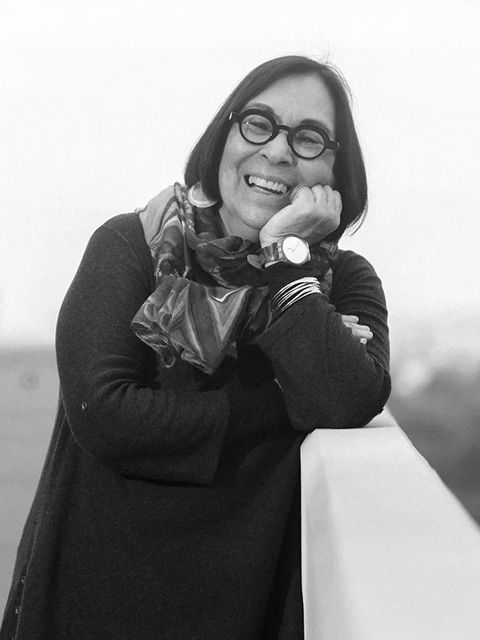
Trained as an anthropologist in Peru, England, France and the US, her work interrogates several interfaces: those between STS (Science and Technology Studies) and non-STS, between major and minor key politics (and what exceeds both) between history and the a-historical. She is interested in ethnographic concepts, that is, those that blur the distinction between what we call theory and the empirical and can indicate the limits of both.
Overall, she revels in what she call ‘not knowing’ as epistemic stance. Her recent book Earth Beings: Ecologies of Practice Across Andean Worlds (2015) was written in the presence of Mariano and Nazario Turpo, including Ausangate, an earth being (and a mountain) that presides over vital landscapes in Cuzco, Peru. With them she thinks the intriguing crossroads where modern politics (and history) and earth-beings (and the ahistorical) meet and diverge. Performing what she calls onto-epistemic openings, the book is an ethnography concerned with the concreteness of incommensurability and the eventfulness of the ahistorical.
Currently her field sites are cattle ranches, peasant farms, slaughter houses, cattle fairs, breed-making genetic laboratories, and veterinary schools in Colombia. There she engages what she calls cow terraforming practices/relations. Thinking at divergent bio/geo interfaces, she is interested in “the stuff” that makes life and death across labscapes and landscapes in a country that itself struggles between war and peace.
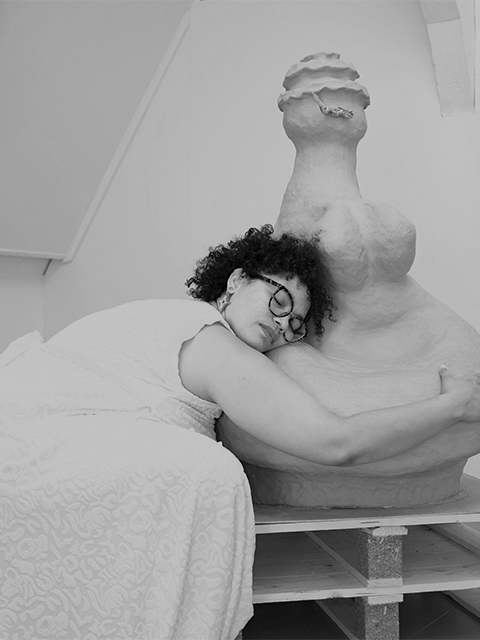
Dr. Ama Josephine Budge Johnstone is a British-Ghanaian speculative writer, artist, scholar and pleasure activist whose praxis navigates that which she has termed “Intimate Ecologies” to explore Blackness, erotics and the more-than-human in queer and speculative ways toward interspecies futures.
Her sculptural, video, performance and installation work has been commissioned and installed internationally including in London, Berlin, Utrecht, Madrid and New York.
Ama is a Course Tutor & Lecturer at University of the Arts London, an MFA tutor at the Sandberg Institute in Amsterdam, and a Research Associate at VIAD (University of Johannesburg). Her PhD project: Intimate Ecologies: Queer Speculations on Pleasure Blackness and Decolonial Aesthetics was awarded in 2025 without corrections.
She is currently working on her first novel, a speculative meditation on sentient trees, queer erotics and isolation, which was shortlisted for the 2023 Future Worlds Prize for Fantasy & Science Fiction Writers of Colour and awarded a 2025 Tin House Autumn Workshop Fellowship.
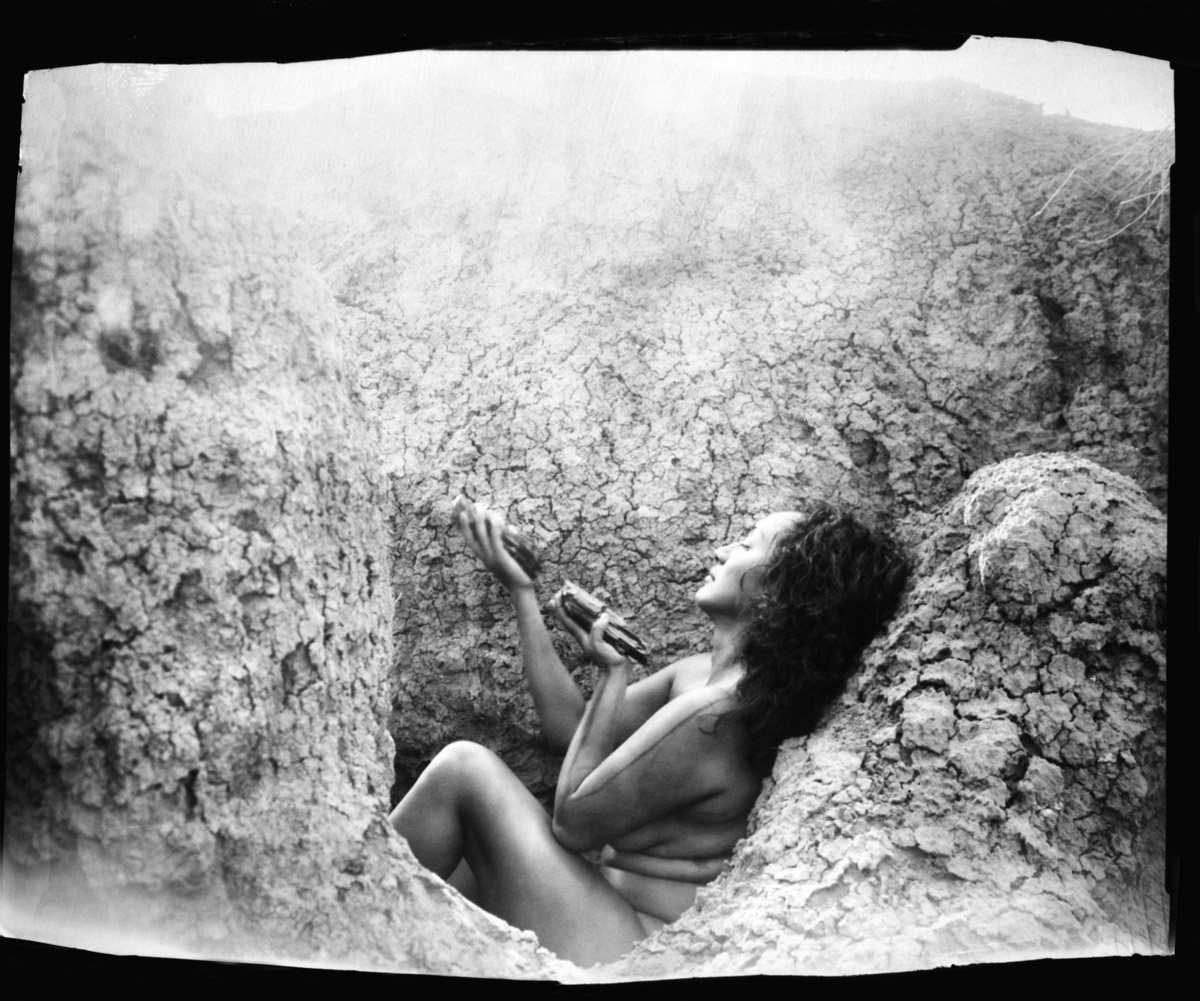

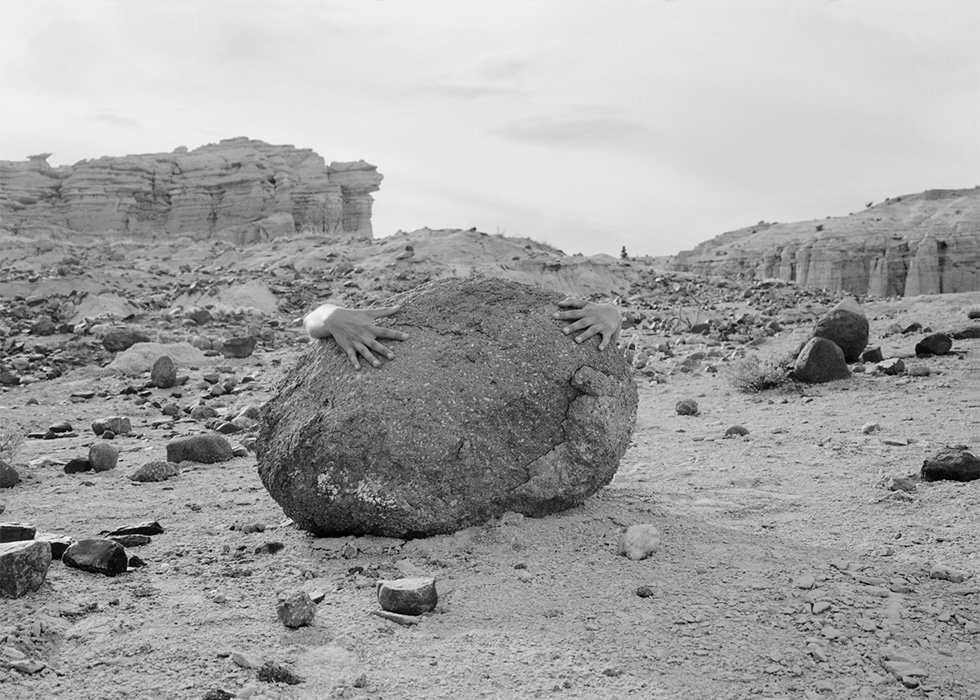
Banner: Koyoltzintli, Spider Woman Embrace, 2019. From the series MEDA. © and courtesy the artist.
Speakers: 1-2) Courtesy the artists. 3) Untitled, Closing Ritual documentation from A Voyeur at the Keyhole, Ama Josephine Budge (2026). Photograph by Changli Luo.
Inspired by: Koyoltzintli, Obsidian Woman, 2019. From the series MEDA. © and courtesy the artist.
Join our newsletter and get the latest on Autograph’s exhibitions, events, open calls, digital content, books, prints and fundraising. Find out more.



Autograph is a space to see things differently. Since 1988, we have championed photography that explores issues of race, identity, representation, human rights and social justice, sharing how photographs reflect lived experiences and shape our understanding of ourselves and others.
Support our work