0
0
0

A personal essay exploring communication and connection beyond words
Below, deaf artist Seo Hye Lee responds to Nhu Xuan Hua: Of Walking on Fire, Autograph’s current exhibition exploring what is communicated (or withheld) across generations.
Nhu Xuan Hua’s father is deaf – the only deaf person in a hearing family, communicating in a language he largely invented alone, consisting of elements of French, English and French sign language. In this personal essay, Lee traces the development of her own private, improvised language that she developed with her mother across three decades and three different countries. Incorporating broken Korean, English, facial expression and gesture, Lee reflects on her experience of communication and deafness and what that made possible: a way of loving and knowing beyond words.
This text was commissioned as part of Autograph’s Call for Writing 2026 and is the artist’s first commissioned text work.
Korea, 1990
“Nae ul gul bah (look at my face)"
I have many memories of visiting audiologists and speech therapists ever since I was a child. Being told to repeat words I could not hear very well, slowly distorting my mouth and tongue to form words in the way I thought they were being said. It was usually older women’s voices that I understood best – not too high, not too low, but just the right level of sound, intonation and movement of the mouth so that I could make sense of the words being spoken. During this time it was hard to connect with others, but my mom and I developed unique ways to communicate that no one else in the family understood. Even so, mishaps still happened.
“Oo yoo sa wah (go buy the milk)”
My mom showed me with her hands how tall it needed to be. I thought she had said “Doo boo sa wah” (go buy the tofu) and stood in front of the tofu section, confused. My solution was that she must’ve meant the equivalent size of tofu when stacked, so I bought multiple packs home. When I came back, she looked at the tofu in my hands, confused. And then, realising my mistake, laughed and told me slowly that she was asking for milk, not tofu.
%20nhu%20xuan%20hua,%20the%20one%20who%20couldn’t%20talk,%202021.jpg)
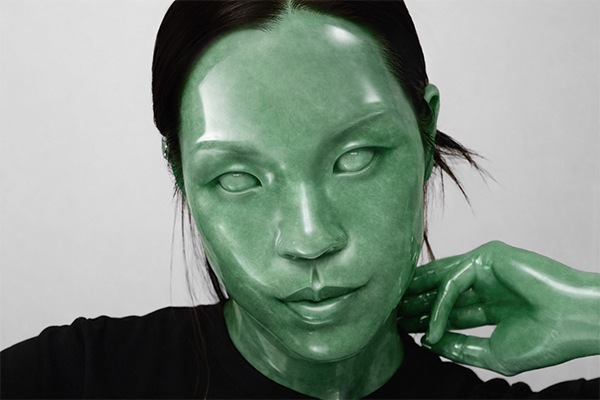
Nhu Xuan Hua, The one who couldn’t talk, 2021
America, 2000
“Do you speak English?”
Moving away from my home country meant that I had to start over again with a new language. Relearning how words were being spoken, how to understand, and how to speak. This coincided with the introduction of my cochlear implant (a small electronic device intended to aid hearing), which came with more mishaps and confusion, but also new possibilities – and my mom and I kept growing the language between us.
It felt like Americans found more humor in any misunderstandings, and were more forgiving when it came to me not understanding them immediately, as I was read as a foreigner. Having another visible reason for not understanding allowed me more time to get used to the different way of hearing that came with my cochlear implant surgery. Having the implant meant that communication with my mom became more oral, relying more on sound, and less on body language and gesture. Sometimes my mom would go back to doing facial expressions and gestures when we were in noisy places, such as restaurants and shopping malls. Since we were both learning English together, we would try to refrain from speaking Korean, in order to practice with each other. Using both broken English and broken Korean to communicate often resulted in multitudes of shared laughter.
“Do you speak Korean?”
Whenever I saw another Korean person, I would be asked if I spoke the language. Not being confident in my Korean pronunciation skills, I would always say I speak English better even though Korean is my mother language. But with my mom, I was able to speak Korean - no matter how broken it was, and she would understand me. In front of other family members, they would look at my mom whenever I said something, as if they needed her to translate.
%20nhu%20xuan%20hua,%20new%20chapter%20–%20archive%20from%20the%20year%20’85,%202026.%20commissioned%20by%20autograph,%20london%20(2).jpg)
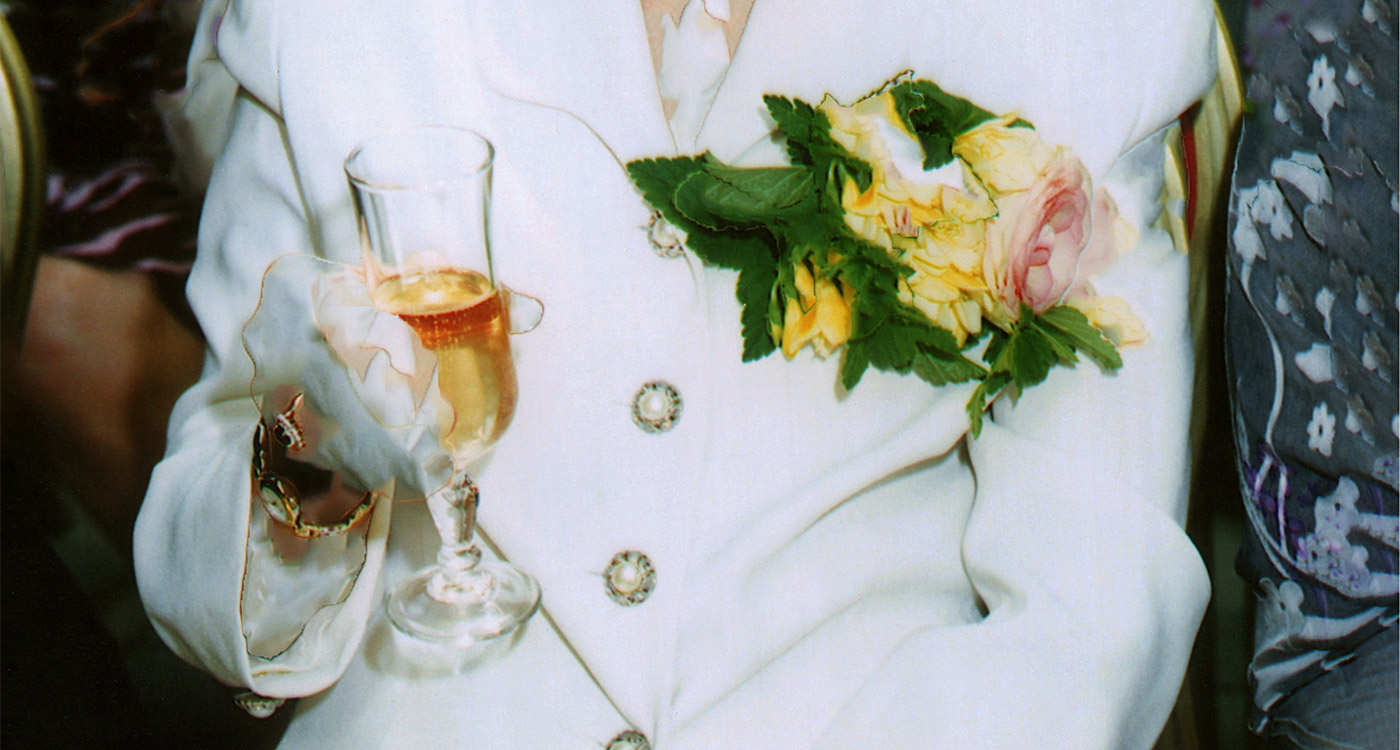
Nhu Xuan Hua, New Chapter – Archive from the year ‘85, 2026
England, 2010
“Jal deul uh (can you hear well)?”
- my mom asks, confined in the rectangular shape and static of my mobile phone. I sit across from the phone, wearing big headphones to hear her speak and watch her directly. I had started studying in the UK which was my first time being away from my mom, across an ocean and no longer able to reach me with her body language.
She bought us tiny stands for our phones so we could sit in front of them, leaving our hands free to gesture across the screen. Spending more time away from Korea and using English much more frequently meant a gradual decline of my Korean language, especially my pronunciation skills. Mom had to resort to using a mixture of broken Korean and English to communicate with me.
“Umma, nah wat suh (Mom, I am here)”
When my mom fell unconscious in the hospital after being admitted following months of being unwell, I flew the 14 hours to get to her. She lay in bed, so still, no movement on her face or body. I could not communicate with her in the way we were used to. I had to be the one to speak into her ears, the words that I sincerely hoped would reach her, and get to wherever she was in her body. I tried to speak Korean words coherently - not too fast or too loud - as she always taught me to. Unable to show my facial expression or body language to her closed eyes and motionless body, I clung onto her limp hands so tight - the same hands that showed so many gestures before.
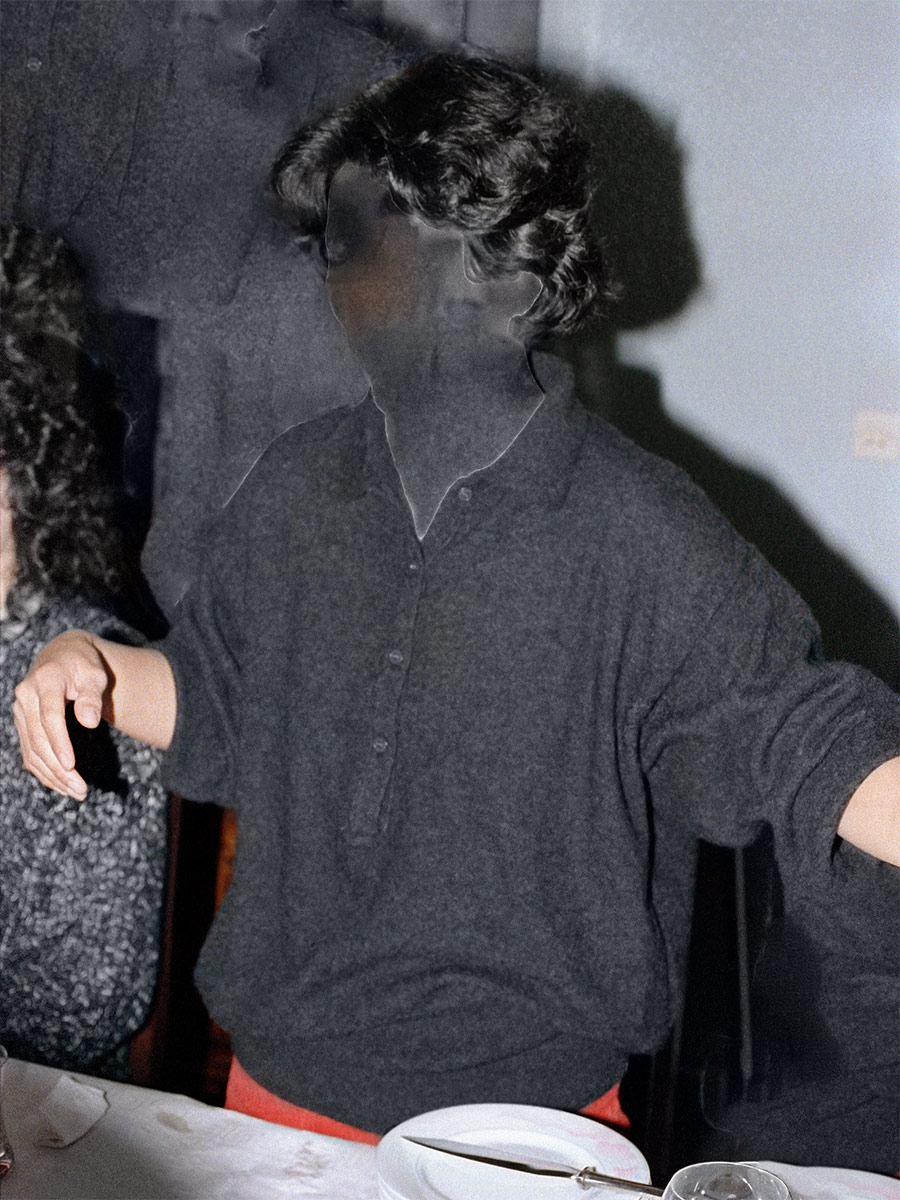
Nhu Xuan Hua, Ma - Archive from the year '88, 2017-2022
%20nhu%20xuan%20hua%2C%20the%20dancers%20%E2%80%93%20archive%20from%20the%20year%20%E2%80%9985%2C%202016-2021.jpg)
Nhu Xuan Hua, The Dancers - Archive from the year '85, 2017-2022
Today
“This ______ and that ______.”
A comment is made during an artist panel discussion from the audience, which I do not quite hear. I look at the host who has been leading the discussion and they catch my gaze, understanding, and gently repeat the comment for me. The time it takes for me to comprehend suddenly feels so long and I am adrift. But the host’s slow repetition - this act of communication and understanding from someone who isn't my mom - ends the silence and brings me back into the room.
Glancing across a table, room or space and knowing that someone can understand me and become a bridge between me and the world gives me great comfort and the knowledge that my deafness does not have to mean exclusion. The experience has made me think about how language does not have to be solely oral or written - it can be fluid, flexible, malleable. Learning this encouraged me to explore these elements in my own artistic practice.
Sometimes there would be moments when something was spoken and my mom would choose to not tell me what it was - her body language alone was enough to tell me what was being withheld. Her choosing to withhold was something I learned to respect. I also learned how to pick up the pieces that were left for me to understand during her silence. Adaptation is something I have acquired over many years from experiences like this and I’m still fascinated by how my language expands and stretches with others. Even after my mom’s sudden departure, she still connects me to the world.
Hand written notes, texts typed on phones, facial expressions, gestures, pointed fingers, moving lips, eyes and faces fixated on one another. All coming together to speak, listen and understand.
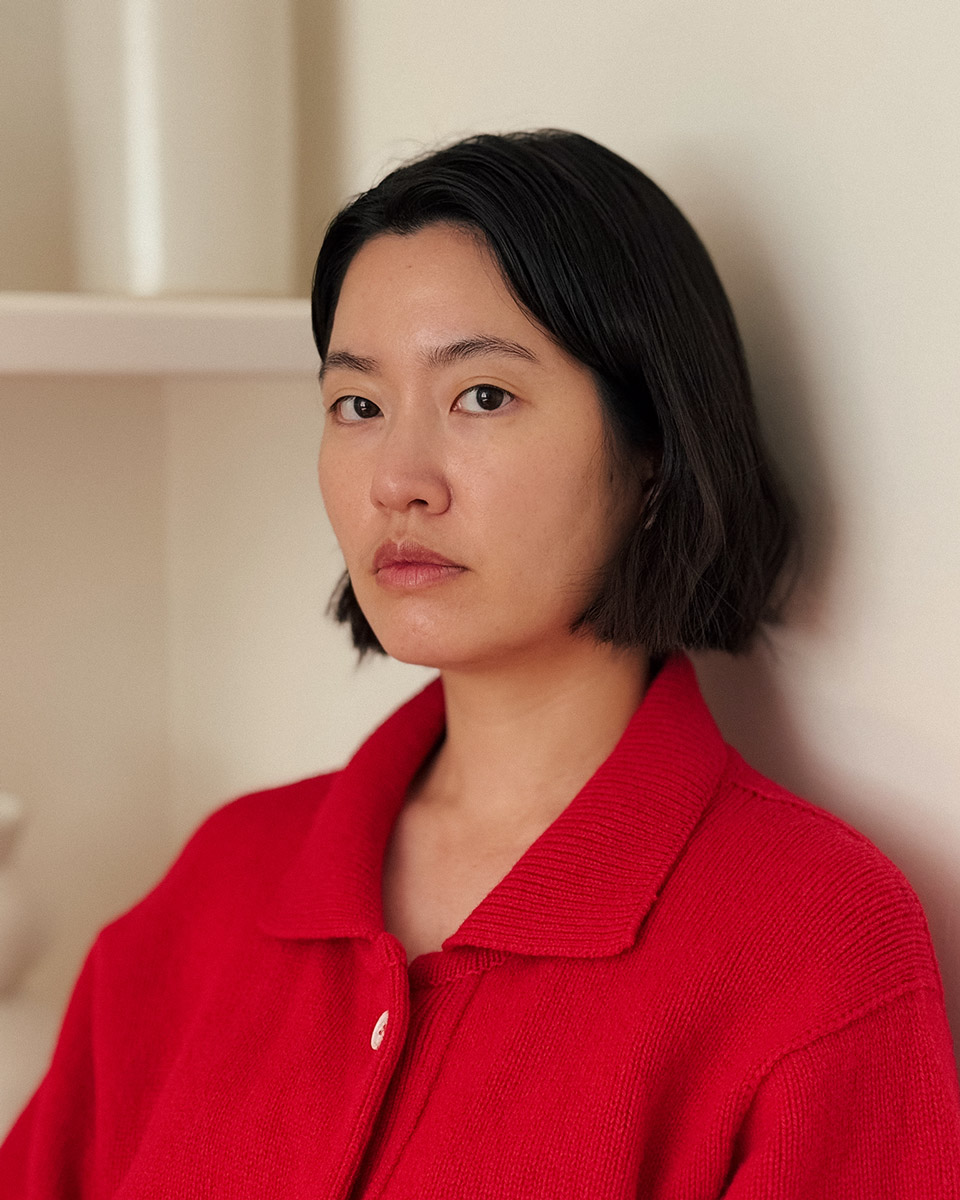
Seo Hye Lee is a South Korean artist based in the UK. Drawing from her lived experience of hearing loss and as a cochlear implant user, she works across drawing, moving image, and multi-sensory installation to explore the intricate terrains of sound and silence.
Across her practice, Seo Hye champions accessibility and collaboration, drawing inspiration from both collective and personal encounters with sound. Her research and projects have been supported by the Vital Capacities Residency and Arts Council England's DYCP programme.
Her recent moving image work Deafening Silence / Ohrenbetäubende Stille (2026), commissioned by IMAI as part of Circulating Copies, is a collaborative video work developed in exchange with d/Deaf communities in Germany and UK and presented through public screenings across the city of Düsseldorf.
In April 2026, Autograph put out an Open Call for writers. This text commission is the result of that Open Call, selected by a panel of judges from over 240 submissions.
Banner image: Nhu Xuan Hua, Tata Canada [detail], 2026. © Nhu Xuan Hua and courtesy of the artist and Anne-Laure Buffard, France. Commissioned by Autograph, London.
Images on page all © the artist: 1) Nhu Xuan Hua, The one who couldn’t talk, 2021. Courtesy of the artist and Anne-Laure Buffard, France. 2) Nhu Xuan Hua, New Chapter – Archive from the year ’85, 2026. Courtesy of the artist and Anne-Laure Buffard, France. Commissioned by Autograph, London. 3) Nhu Xuan Hua, Ma - Archive from the Year '88, 2017-2022. Courtesy of the artist and Anne-Laure Buffard, France. 4) Nhu Xuan Hua, The Dancers – Archive from the year ’85, 2017-2022. Courtesy of the artist and Anne-Laure Buffard, France.
About the author: Courtesy of Seo Hye Lee.
Inspired by: Nhu Xuan Hua, Promise of Spring, 2026. © Nhu Xuan Hua and courtesy of the artist and Anne-Laure Buffard, France. Commissioned by Autograph, London.
Join our newsletter and get the latest on Autograph’s exhibitions, events, open calls, digital content, books, prints and fundraising. Find out more.



Autograph is a space to see things differently. Since 1988, we have championed photography that explores issues of race, identity, representation, human rights and social justice, sharing how photographs reflect lived experiences and shape our understanding of ourselves and others.
Support our work