0
0
0

"Intuition, bodily sensations and the respect for Mother Nature and ancestral spiritualities are candidly re-staged to the point where their innocence becomes almost menacing."
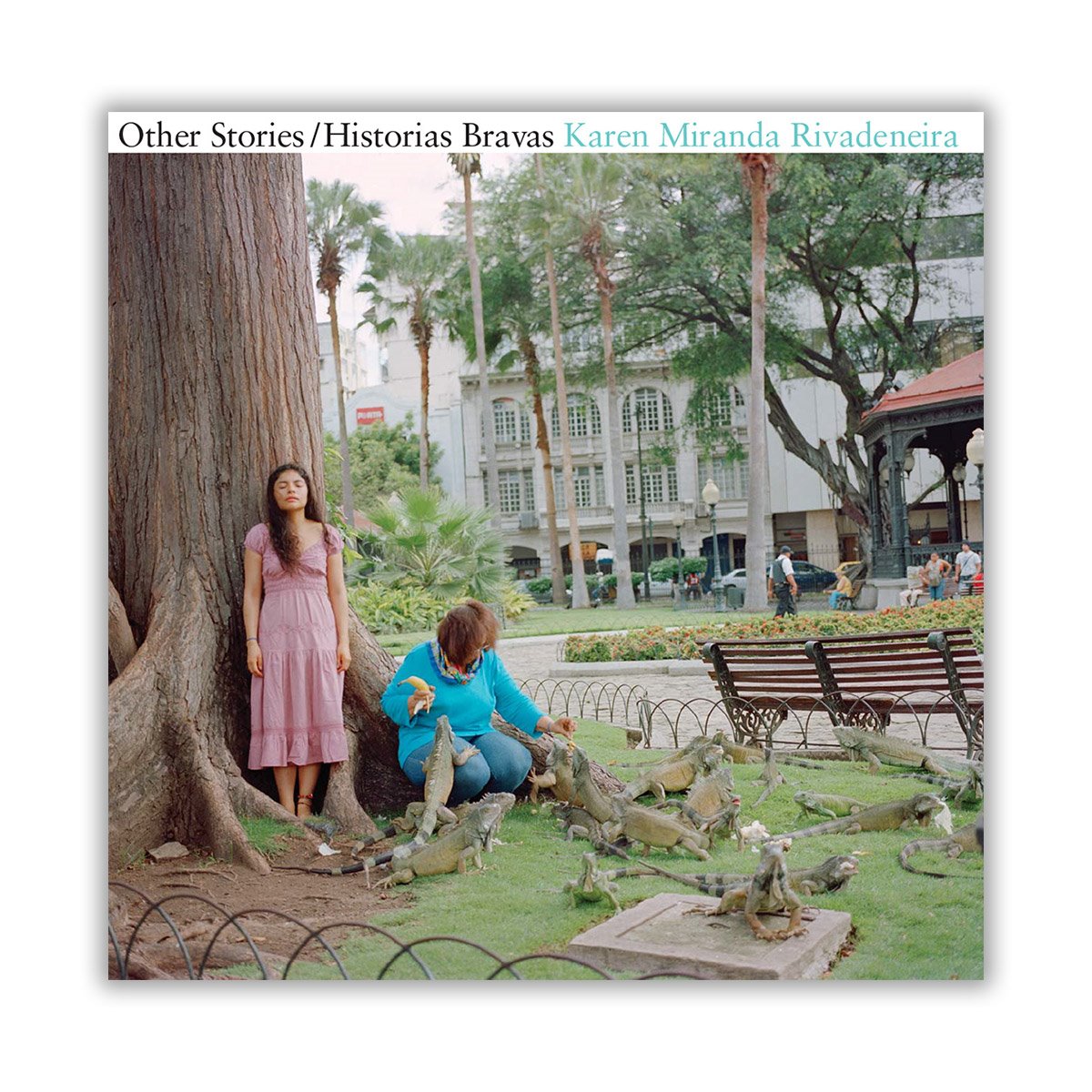
Below we’ve republished an essay by Alanna Lockward, first published by Autograph in 2017 as part of Koyoltzintli’s artist monograph Other Stories / Historias Bravas.
In Other Stories / Historias Bravas, Koyoltzintli (formerly known as Karen Miranda Rivadeneira) uses photography to aid memory, restaging and capturing scenes otherwise missing from her personal archives. The works feature members of her family – particularly her mother and grandmother. Here, Lockward contextualises Koyoltzintli’s work and considers the almost filmic nature of the series and it’s capacity to conjure the feeling of the memory being revisited.
A selection of works from Other Stories / Historias Bravas are featured in Autograph’s current exhibition Our Bodies Have Been Bridges, exploring the intersections of indigenous knowledge and feminist thought, on display at Autograph, London until 13 February 2027.
“It is difficult to get the news from poems yet men die miserably every day for lack of what is found there.” — William Carlos Williams
According to string theory, life(s) occur(s) simultaneously in different dimensions (eleven some say, infinite argue others). Who are we in each one of them? How are we dressed? With whom to do we share intimacy and love? Koyoltzintli's self-anthropology tableaux-vivants seem to be whispering to her different selves how to walk this path of self-recollection, exercising a particular photographic hypnosis.
Recollections of visiting curanderos and performing cleansing sessions peacefully weave a psychic retrieval in the cinematic narrative and aesthetics very familiar to us thanks to photographers like Claude Cahun, Cindy Sherman, Tracey Moffatt or Carrie Mae Weems and filmmakers such as Maya Deren¹. However, the pulsating mood in Koyoltzintli's self-excavations is antithetical to the spectacularity of those iconic artists.
Telepathy and the ability to understand and connect with “the things we cannot see” danced freely in her grandmother's stories: “... she would often mention the devil as an enchanter, who often tried to seduce her, and sometimes in her stories there were supernatural animals that functioned in many ways”². This is why in her cozy Wunderkammer an audacious ambition materialize: to give each image the power to transform reality, to infuse it with pure magic as in Ana Mendieta's Silueta series (1973-1978)³. This strive for transformation, initially modest, aimed at covering certain gaps in the artist's personal archives. The lack of visual mementos of significant moments of her life crystalized in a series of anachronistic archival atmospheres, an uncanny collection impregnated by a longing often associated with nostalgia. In this case, it is more than that, it is as if the determination to recover a personal territory gives her the right to preach and codify her own cosmology
accompanied by meaningfully chosen scenarios and props.
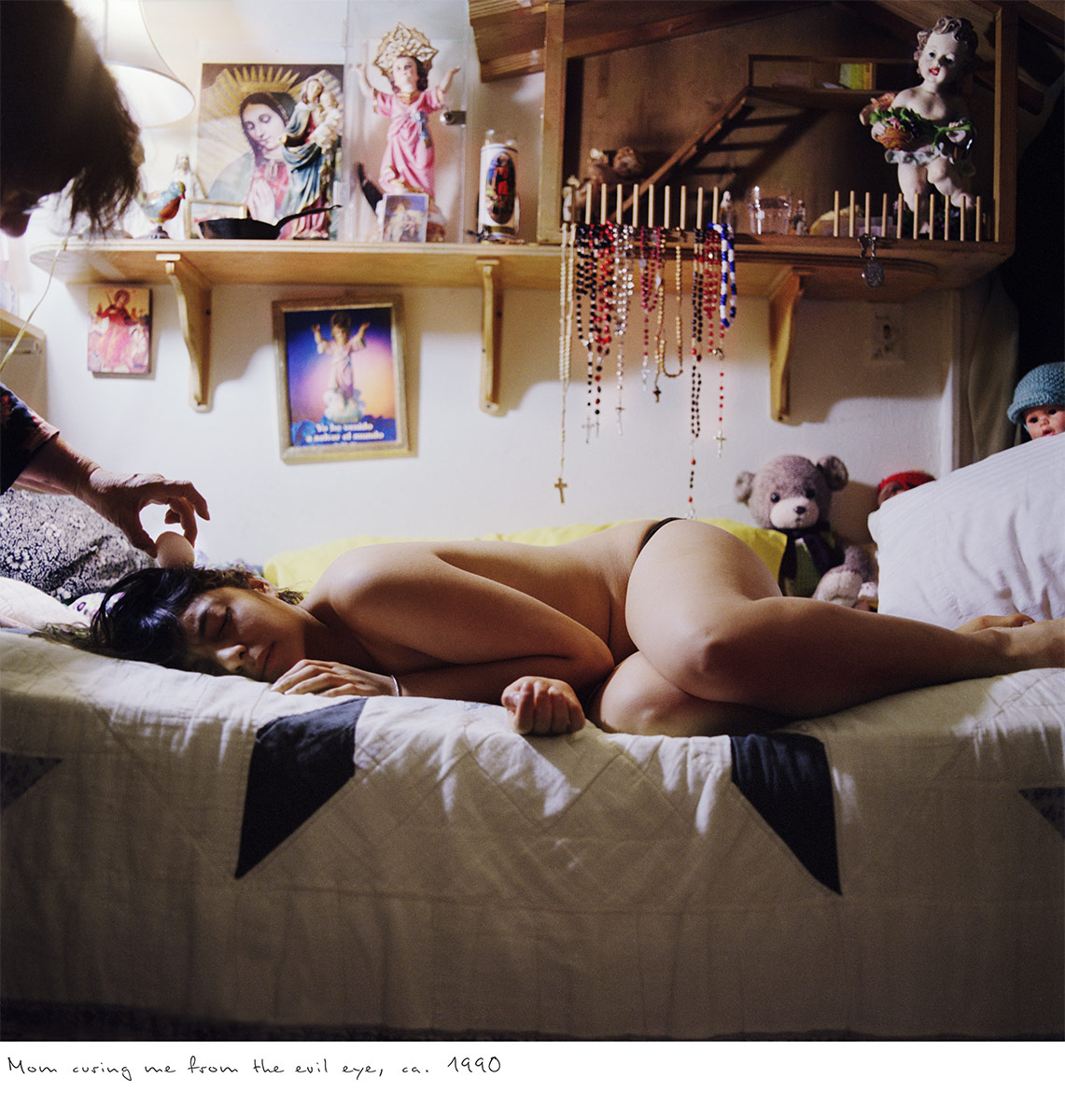
The absence of sophisticated equipment, a professional studio, set or personal assistant(s) —many of the photos were shot at a very small flat in Queens, NYC— is another material disparity with the previously mentioned beacons of the medium. She mostly uses natural light and relies on meditation to direct her subjects, as well as depends on circumstantial interventions to click the shutter. And this is one of the reasons why the freshness and 'authenticity' of Other Stories/Historias Bravas are almost irrefutable. Intuition, bodily sensations and the respect for Mother Nature and ancestral spiritualities are candidly re-staged to the point where their innocence becomes almost menacing. They seem to carry too much hidden meaning, too much motherly love, their precious nakedness bewilder us, they confronts us with our own fear of intimacy, with the generalized idea that exposing the self must be accompanied by a deliberate attempt at deprecation or at least conscious irony. The sweetness in the architecture of each set is as vivid as the blissful gestures flowering in the subjects' features. They are all women: “My brother and father are not in the images, but their essence is strong in some of them. I spend much more time with women than I did with them. The men hide in thoughts they do not want to revisit.”
Koyoltzintli has created a beyond seductive constellation of her performative persona(s) with the absolute trust of important women in her family. They readily accepted the artificiality of this reconstruction or rather dismantled it by simply reconnecting to the particular dimension or narrative invoked by the paradoxical ethical imperative of the project itself. “Once the project was concluded, I realized that the locations we created were even more powerful, because it made our collective minds retrieve more information in order to remember the objects and space, so this part of the work which is the 'background' took as long and was as important as the actual acts because they were all reconstructions of the memory, therefore placing the work in this ambiguous meta location that could always be here and there at the same time.” This distinctive element of the experience of migration, usually manifested through language, eating habits, music and spirituality, is condensed frame by frame by virtue of a diacritic blessing. Sharing a lineage of weaving, as “tejedoras” it was easy for them to visualize their roles and to follow willingly one of the fundamental premises shared by both photography and theater, which according to Lynn Gumper consists on the continual oscillation between illusion and reality. Moreover, Gumper adds: “Photography entails an incessant vacillation between the illusion of total objectivity and the reality of an inevitable subjectivity. Claude Cahun, Maya Deren, and Cindy Sherman all revel in paradoxes, not only making the fictional real and the real fictional but also rendering the internal external."⁴
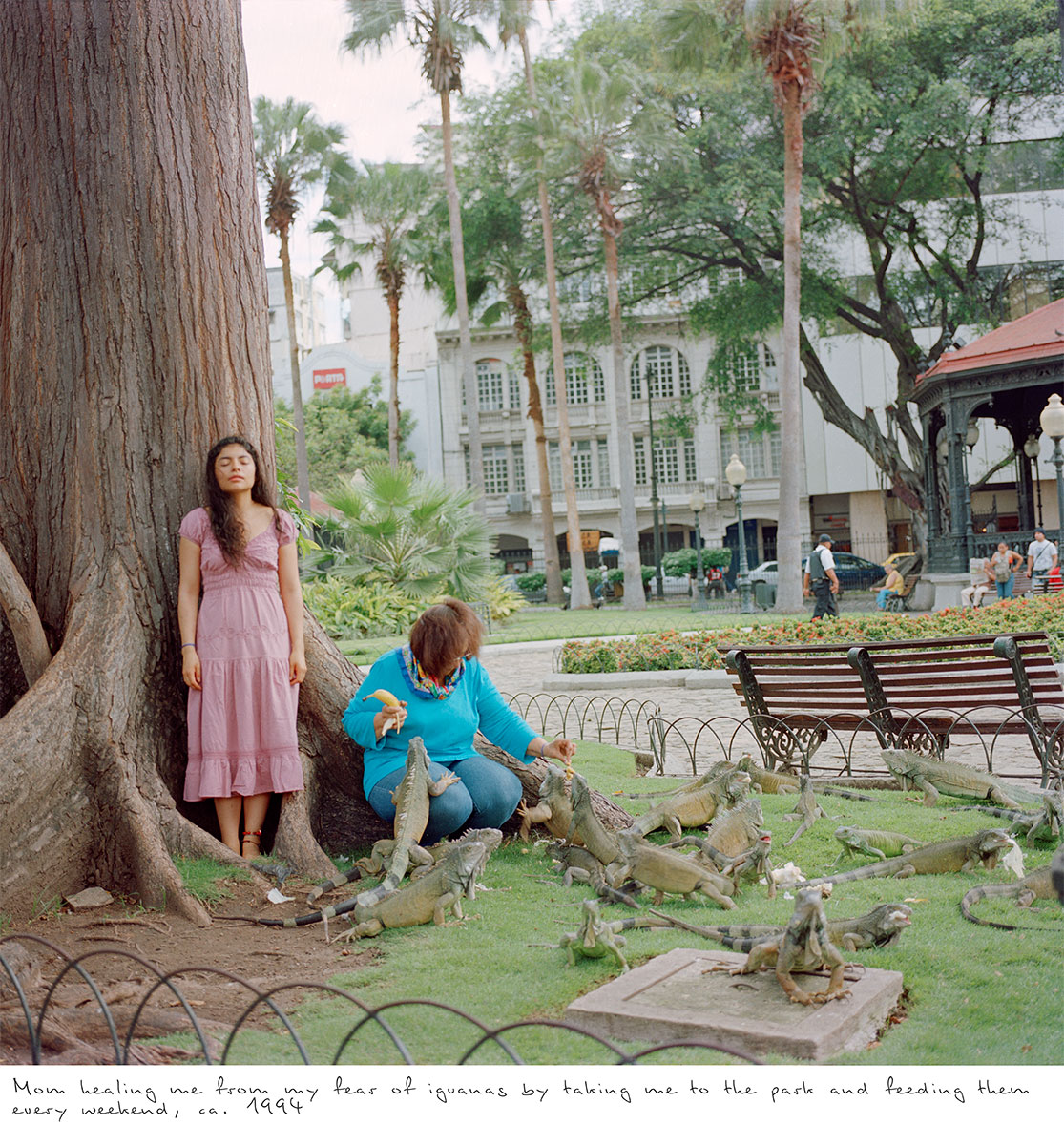
And it is in this resolve of putting your finger on it, on dissecting a particular sensation, in this search of a conspicuous “felt-absence”, of removing the visible and unveiling the meaningful, that the undercurrents of Koyoltzintlia's inner odysseys abandon their theatricality to become a reliable archive of ominous selfgazing narratives. There is so much truth in these atmospheric collective memories that one can easily forget their essentially reconstructed spirit. Always accompanied by a fictional or approximate date and a brief note describing the situation, feeling, vacuum and/or fear that the artist is conjuring, the candid authenticity and cinematic stamina of each piece persuade us beyond doubt, very much in the tradition of Tracey Moffatt's “Scarred for Life” series (1994, 1999). Yet role-playing collectively for the sake of detecting the heights and depths of what one believes that define our inner chore, instead of becoming a predictable narcissistic exercise turns out to be an organic platform for healing to take place. Unintentional, as the artist's argues, this aftermath also implies the necessary pain that such endeavors usually carry: “In Superkids [my mother] actually cried, I felt the responsibility of taking people back into their emotions, […] this image told me that I am making something happening, this is how collective memory works.”
Quoting the spiritual connection with the universe in Ana Mendieta and the densely symbolic vignettes of Sergei Parajanov's The color of Pomegranates (1968) as significantly influential in her quest for vividness, Koyoltzintli's Other Stories/Historias Bravas successfully subvert the mediafication of everyday life.
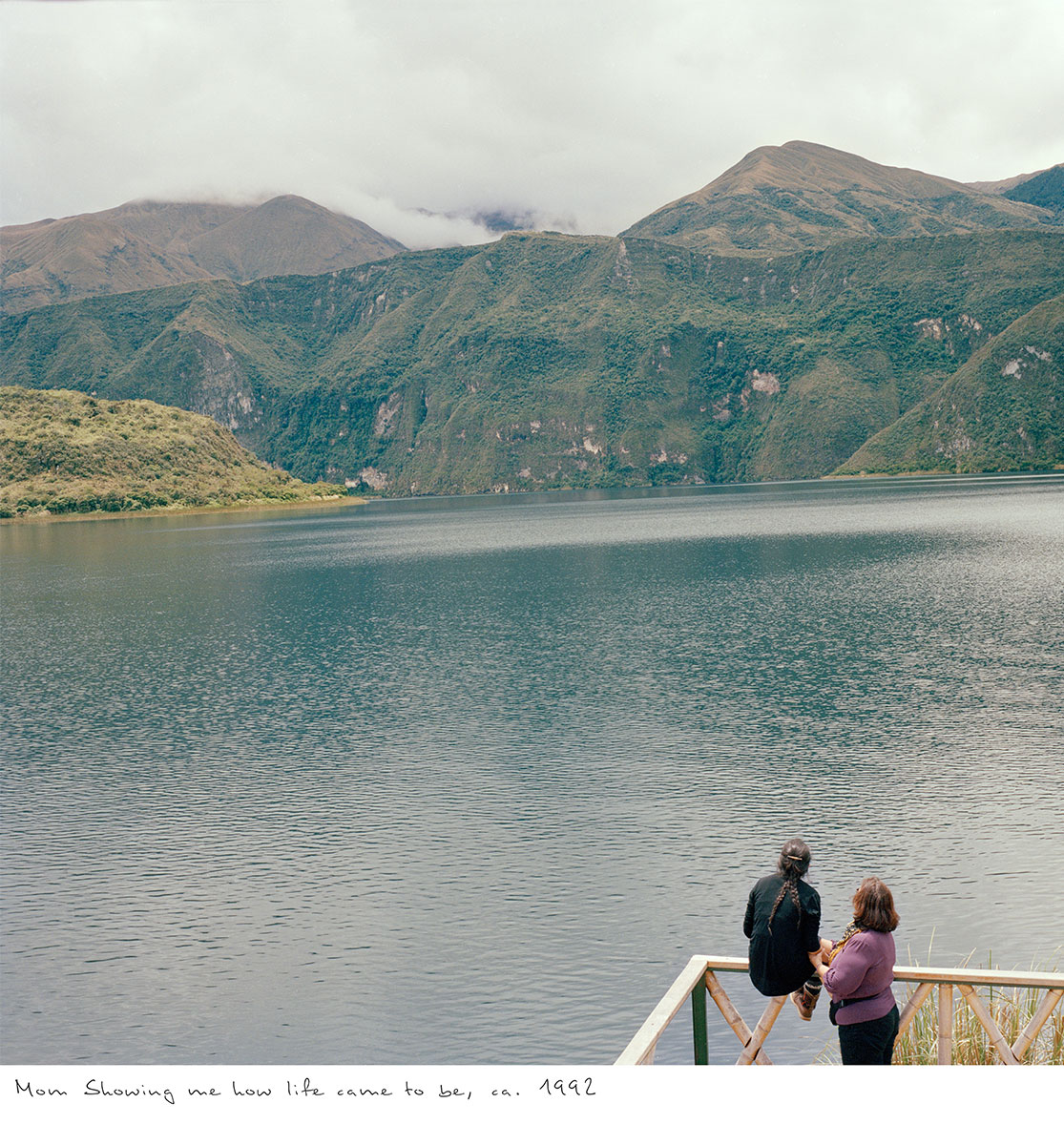
Achieved in opposite direction to the endemic over-exposure of the era of the selfie, her meticulous compositions transit on a couple of frames from 50 mm to 35 mm assisted by a timer. A handful of them were taken in exteriors and only one is a landscape. For Koyoltzintli this particular one, entitled Mom showing me how life came to be, ca. 1992 accurately summarizes her biographical journey mainly because: “... I am still pondering on the question of the origin of life.” This conscious uncertainty liberates her accounts into a space where storytelling becomes irrelevant, what matters here/there is the connection between photography and its poetic imagination.
_______
¹ “Like Claude Cahun, she was a friend of André Breton. Deren, however, denied any connection with the movement’s aesthetic aims. The Surrealist obsession with duality—with the lines separating the real and the imaginary, the rational and the irrational, the waking life and the dream—was, in fact, diametrically opposed to Deren’s fascination with the continuity of life and death, the physical and the spiritual, and “I” and the “non-I.” Her films were intended as imaginary arenas where this point of contact could be visualized—where boundaries normally fixed could dissolve, or become wildly flexible; where protagonists could move freely between dreams and waking life without ever resolving the differences between the two; where nature and culture, urban and rural environments could be separated (and linked) by a single step; where past and future selves could meet along the road, fracturing into clones moving along parallel paths of time and space.” – Shelley Rice (1999) Inverted Odysseys: Claude Cahun, Maya Deren, Cindy Sherman. New York: MIT University Press, p. 70.
² All quotes from the artist are part of our two interviews between June and July 2017.
³ “Now I believe in water, air and earth. They are all deities. They also speak. I am connected with the goddess of sweet water—this has been her year, and it is raining a lot. Those are the things that are powerful and important. I don't know why people have gotten away from these ideas.” – Ana Mendieta interviewed by Linda Montano. In: Performance Artists Talking in the Eighties. Berkley 2004, p. 180.
⁴ Lynn Gumper (1999) Introduction. Inverted Odysseys: Claude Cahun, Maya Deren, Cindy Sherman. New York: MIT University Press, p. x.
Alanna Lockward (b.1961 - d.2019)
Alanna was a Dominican-German author, filmmaker and independent curator. She was the founding director of Art Labour Archives, an exceptional platform centered on theory, political activism and art.
Her interests included Caribbean marronage, discursive and mystical legacies in time-based practices, critical race theory, decolonial aesthetics/aesthesis, Black feminism and womanist ethics. Lockward authored Pressure: Notes on Thought and Contemporary Creation from the Caribbean (Cendeac, 2006) and A Dominican Haiti: Ghost Tattoos and Bilateral Narratives (1994-2014), a compilation of her investigative work on the history of current challenges between the island-nations of Haiti and the Dominican Republic (Santuario 2014). She edited BE.BOP 2012-2014: The Body in the Continent of Black Consciousness (Ediciones del Signo 2016).

Free exhibition
8 October 2026 - 13 February 2027
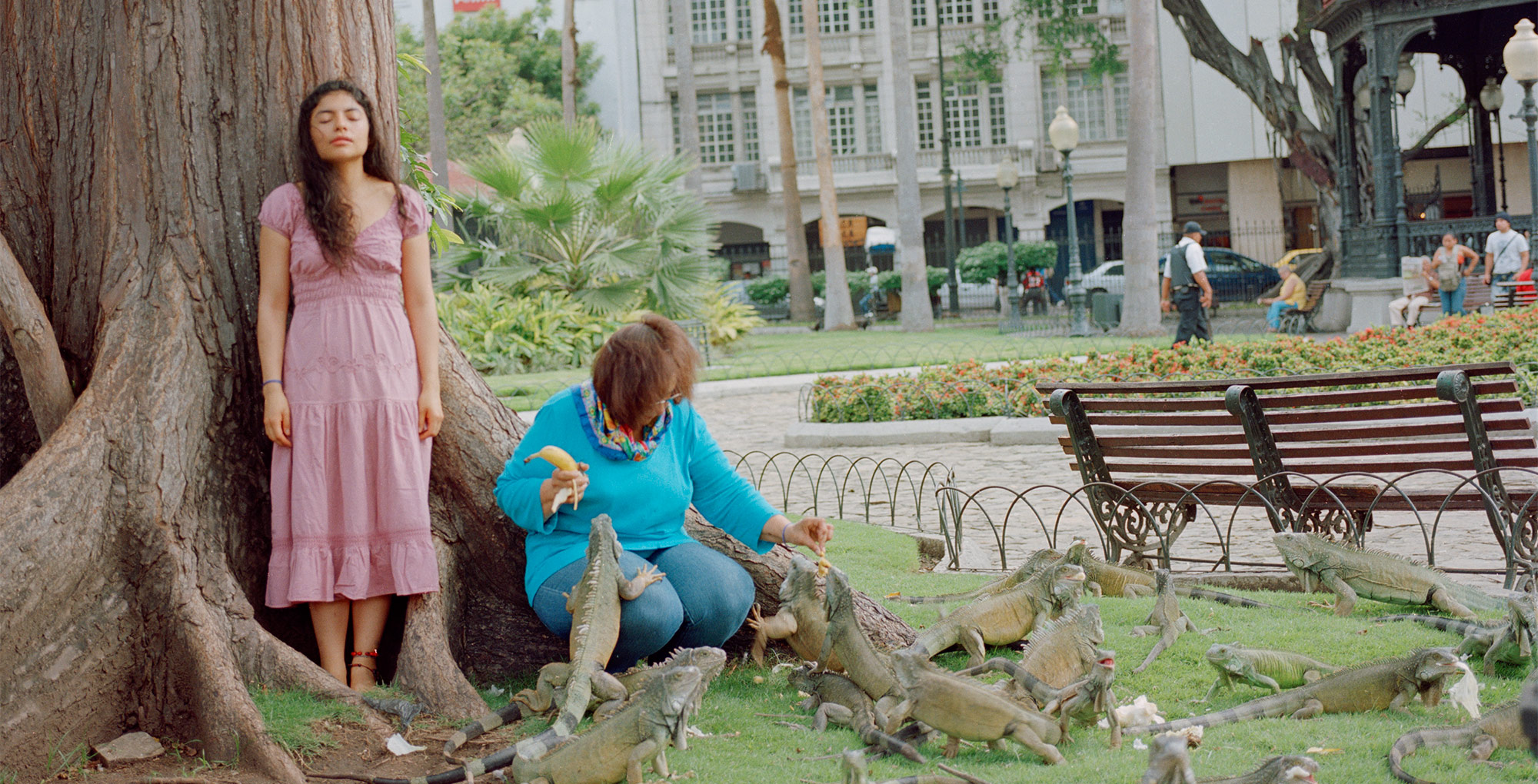
Banner image: Koyoltzintli, Mom healing me from my fear of iguanas by taking me to the park and feeding them every weekend c.1994 [detail], from the series Other Stories / Historias Bravas, 2011-2012. © and courtesy the artist.
Images on page all from the series Other Stories / Historias Bravas, 2011-2012. © and courtesy the artist: 1) Koyoltzintli, Mom curing my from the evil eye, c.1990. 2) Koyoltzintli, Mom showing me how life came to be, c.1992. 3) Koyoltzintli, Mom healing me from my fear of iguanas by taking me to the park and feeding them every weekend c.1994.
Exhibition: Laura Aguilar, Motion #50 [detail], 1999. © Laura Aguilar. Courtesy of The Laura Aguilar Trust of 2016. Collection of Light Work, Syracuse.
Join our newsletter and get the latest on Autograph’s exhibitions, events, open calls, digital content, books, prints and fundraising. Find out more.



Autograph is a space to see things differently. Since 1988, we have championed photography that explores issues of race, identity, representation, human rights and social justice, sharing how photographs reflect lived experiences and shape our understanding of ourselves and others.
Support our work