


 0
0
0

Writer Skye Arundhati Thomas explores the artistic work of Tarrah Krajnak and ways of working alongside unstable archives
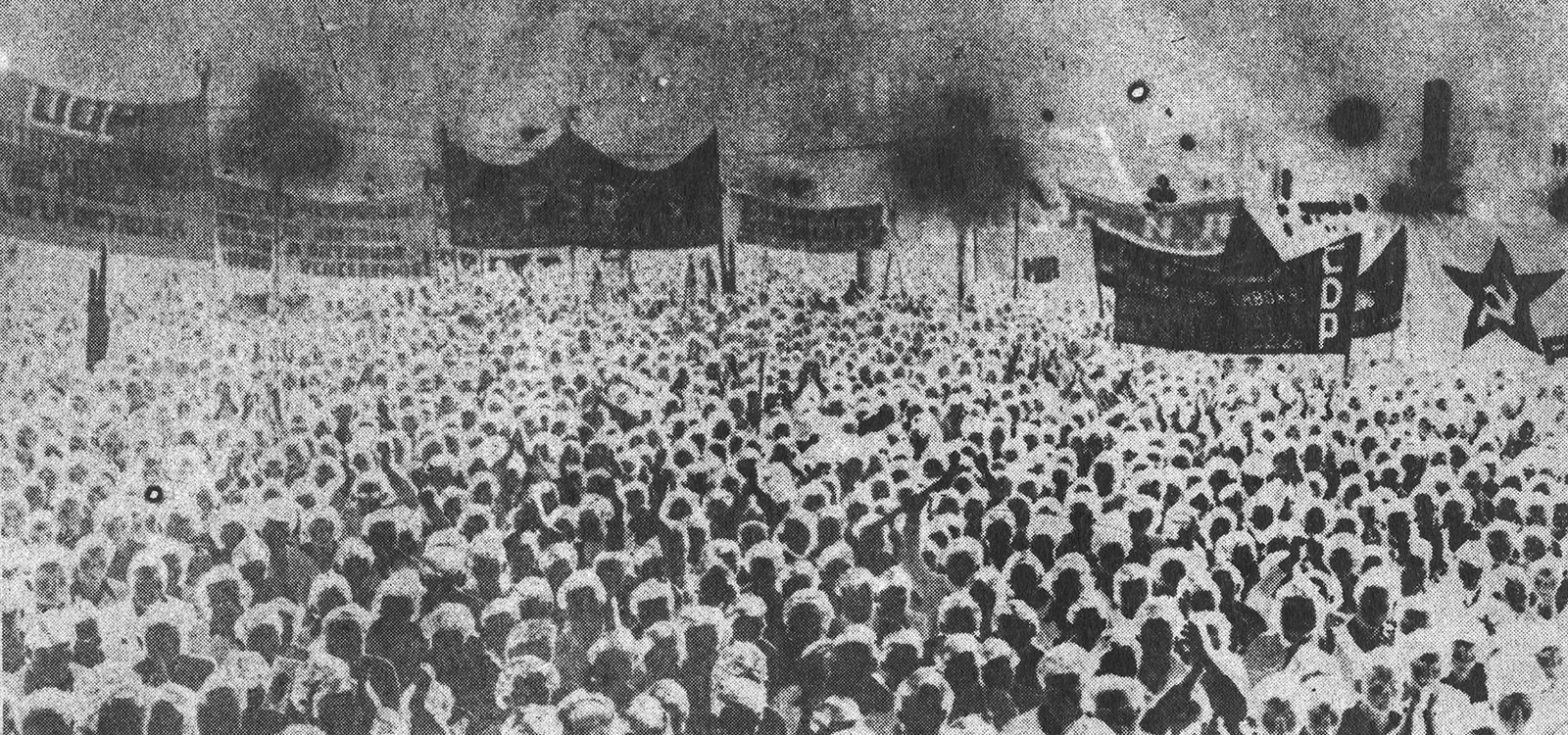
Autograph’s current exhibition, Our Bodies Have Been Bridges, brings together the work of three feminist artists - Laura Aguilar, Koyoltzintli and Tarrah Krajnak - working with issues and among communities typically omitted or erasured from archives and historical records.
Here, writer Skye Arundhati Thomas takes a closer look at the work of Tarrah Krajnak, and the often fraught exercise of engaging with archival material.
Our Bodies Have Been Bridges is free to visit at Autograph’s gallery in London until 13 February 2027.
History is an uneven playing field, riddled with absences, misdemeanours, and the vast, gaping voids characteristic of narratives that centre on spoils. As writers and artists, we’re on the hunt, chasing after the discreet omissions, the spare silences, trying to spot a clue. Those excluded from the archive – those displaced, erased, and those still alive despite – must contend with a vexed starting point: their histories were not just overlooked, but scraped away. What remains must be conjured, remembered, pieced together from whatever fragments survive. This may be a fraught exercise, often on the verge of misfire, but it is also deeply radical in its undertaking. In order to rewrite the historical telling, some of us must enter the archive’s materials and recombine them in ways it did not intend. We must plunder what was stolen, and try to polish it back to life.
We pore over what we have inherited, not just the artefacts but also what’s in their margins: the too-neat captions, the buried contact sheets. We try to hold what claims to be evidence up to the light, and scrutinise. Photographs are inherently unstable witnesses, even if the lens is finely controlled. Too many factors shape them: the narrative intention of the taker, the conditions of light. The minute articulations of what’s visible in the image, especially if there are people present: a passing glance, an upturned mouth betraying the beginnings of a smirk, a slight but telling crease in the face. The thrill of the archive is in what’s yet left to be deciphered; the archive maintains its allure because it’s so direly in need of reshaping. The photographs buried within it offer intricate, even if sometimes minute, portals. An errant hand in a frame, an unknown face with a recognisable likeness. That discernible, yet still somewhat intangible, ghostly impression of kin. In truth, we seek ourselves as much as we seek history.
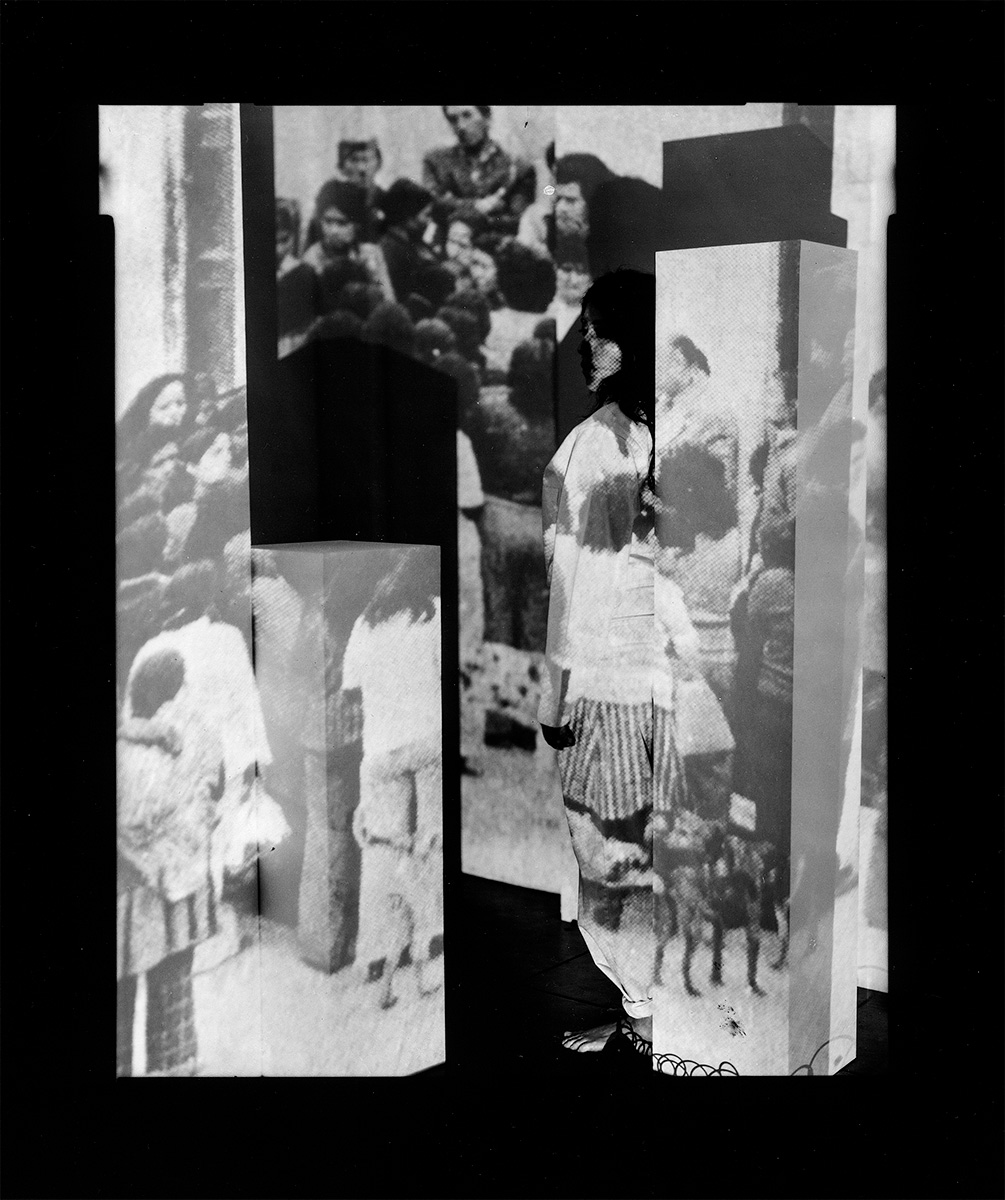
Self Portrait as Crowd, from the series 1979 Contact Negatives
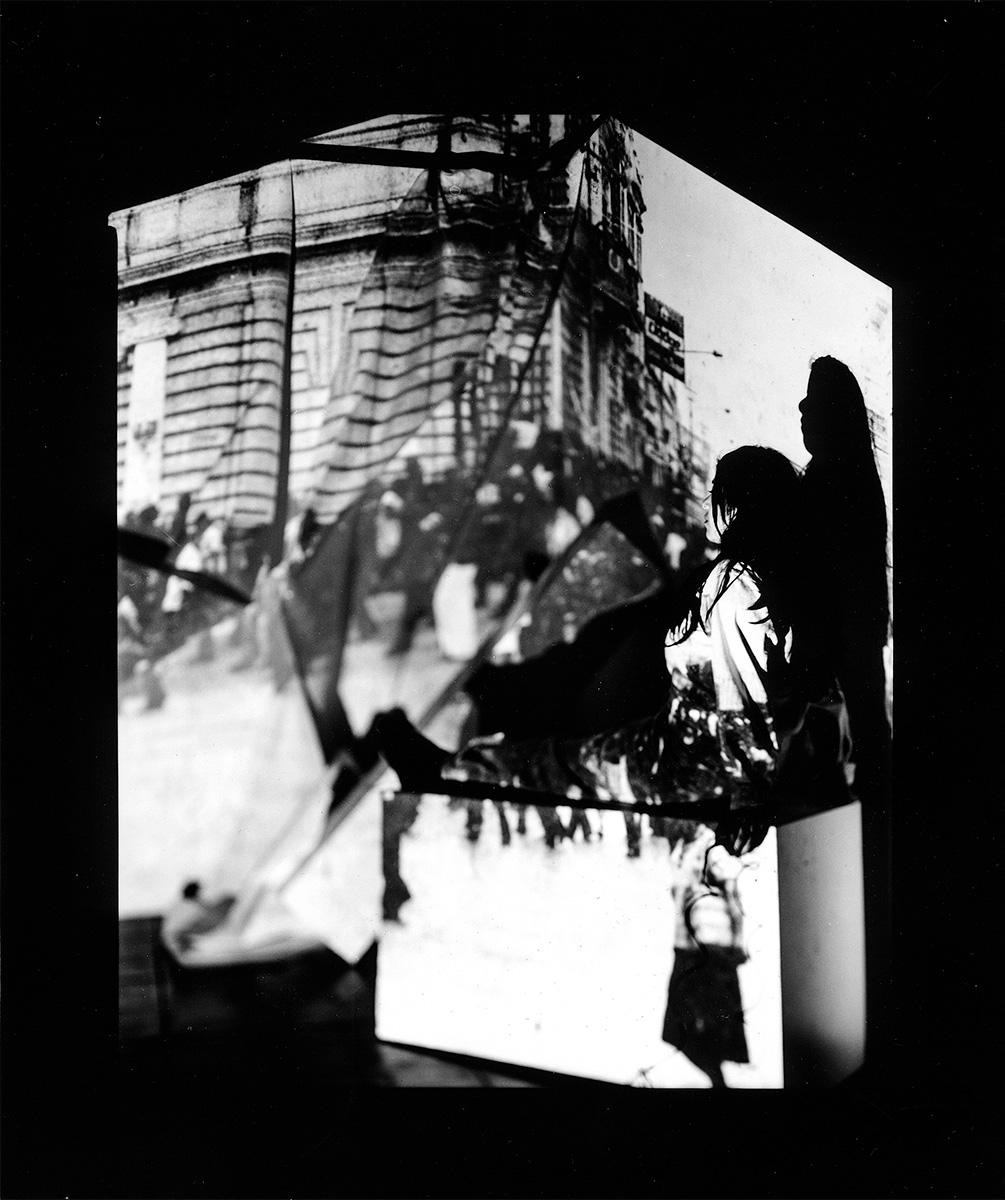
Self Portrait as Protest (Sitting), from the series 1979 Contact Negatives
The artist and photographer Tarrah Krajnak was born in 1979 in Lima. That same year, Peru began an uncertain emergence from military rule, simultaneously edging toward the internal armed conflict that would characterise its history for decades to come. To hold these two episodes together – a birth and a nation’s unrest – is to see that history is innately personal, and that it may not be so easily separated from the narrative arc of an individual life. Krajnak moved to the United States shortly after, to live with an adopted family in a mining town in Pennsylvania. "I’m a transracial adoptee in an Indigenous body," she says in an interview with After Image from 2023, "I’m untethered.… I’ve been unravelling that over the last ten years through archival research."¹
And so Krajnak journeyed back to 1979, in an attempt to reconstruct its contours. She looked through Peruvian newspapers and magazines from that year, only to find a jarring dissonance between image and word. Faces, places, and events in the photographs often bore little resemblance to the stories they were meant to illustrate. Reports of violence against women, exploitation, forced migration, and political upheaval were paired with a roster of recycled and interchangeable images. The photographs were reduced to illustrative – even if inharmonious –props. Krajnak took on the challenge, inserting her own body, quite literally, between the slim interstice of what was shown, and what had been intentionally bewildered.
Representation has long revealed itself to be a trap, in that the project is one of adding excluded bodies to existing historical canons whose structures recur and persist, entirely unchanged.
Krajnak made a history where none had been made available to her. She gathered vernacular photographs and magazine pages from flea markets around Lima, looking for any days in the year 1979. These images do not exactly comprise the artist’s history, but what ran in parallel. They are the visual culture of the year of Krajnak’s birth, the images in circulation fabricated to represent the moment, the atmosphere, the present tense of ‘79. Scattered at different levels and with varying intensities of light, Krajnak projects these found images onto her body. Standing in the centre of a room, the light winking and rippling across her as she moves, turning this way and that. She has staged this work several times: sometimes remaining unshaken in her pose, other times imitating the people in the found images, their poses, their soft gestures. Krajnak rephotographs these projections. She repeats this cycle until the palimpsest grows so dense that the original source can no longer be separated from what has been laid over it, which is, after all, the condition of how history is written.
This is the practice of speculative history: entering the spoiled archive, taking its materials, building the histories it was otherwise inclined to prevent. Krajnak seems to raise questions about canon-making itself. In her work, there is an important distinction: it’s not simply an exercise to correct the ‘representation’ of a body otherwise camouflaged by the archive. Representation has long revealed itself to be a trap, in that the project is one of adding excluded bodies to existing historical canons whose structures recur and persist, entirely unchanged. Krajnak enters as an intruder, at once at ease, folding herself in ways that could have been, or are yet to be. For the series El Jardín de Senderos que se Bifurcan (The Garden of Forking Paths), Krajnak returns to the orphanage where she was born. The title, borrowed from a short story by Jorge Luis Borges, elucidates her method. In the short story, time is stubbornly un-linear – in a spy thriller that takes a fantastical turn, Borges’s protagonists must embrace the branches, the multiplicities, and what appear to be infinite realities available to them. Krajnak invites us to consider the many histories that shape a single life – the life she lived, the lives of the people whose suffering was made interchangeable by the archive. These are the forking paths, and they seem to diverge into the archive’s gaps.
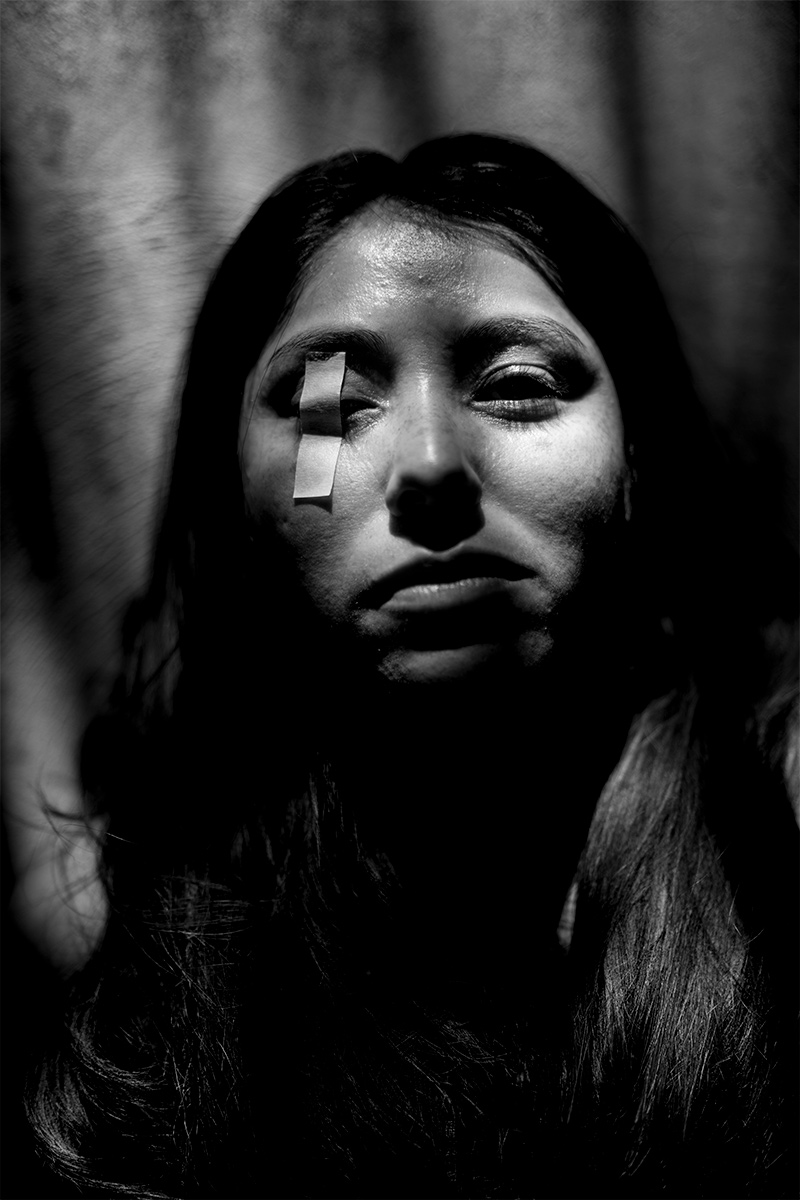
Dead Ringer (Found Photograph on Mirror), from the series El Jardín De Senderos Que Se Bifurcan
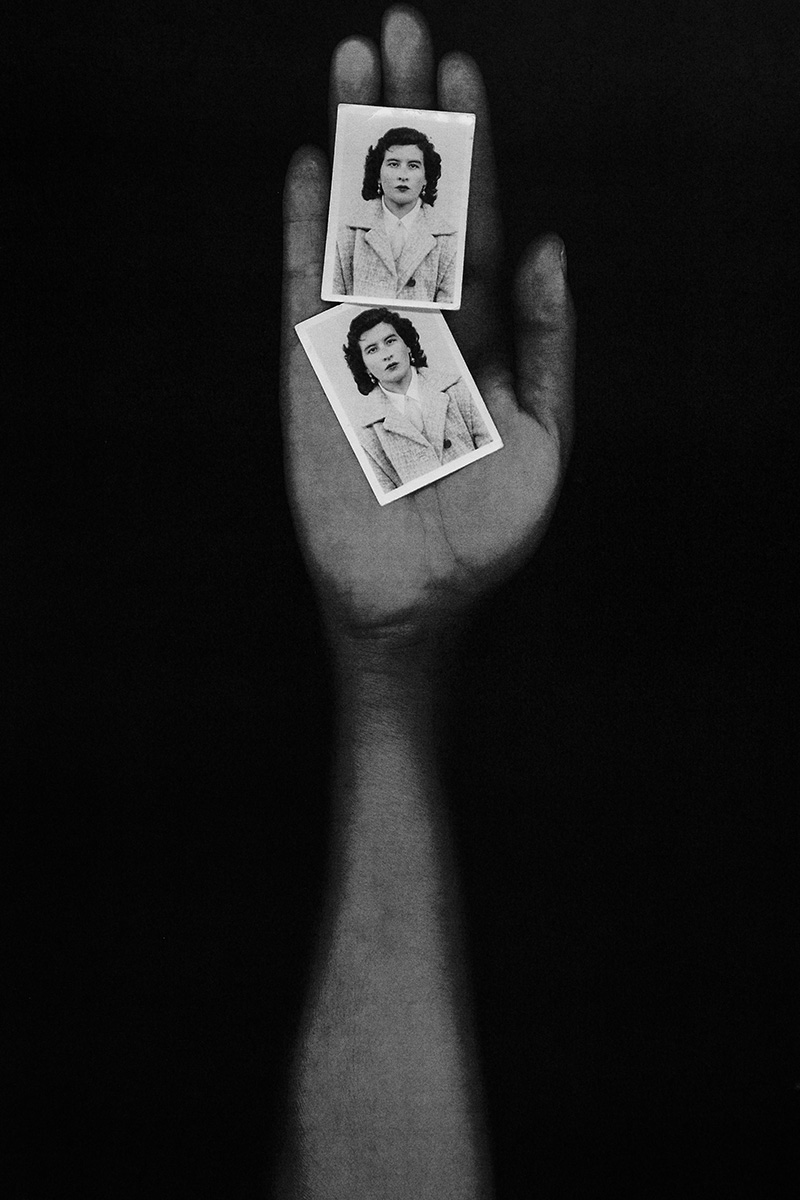
Holding Hands 2, from the series El Jardín De Senderos Que Se Bifurcan
History remains uneven; the archive still favours the taker. Artists like Krajnak do not fill the gaps or correct the record. They simply maintain proximity to them, to that which is painful, often uncanny, and otherwise unresolved. She lets the light pass through what was made interchangeable and onto her own skin, and what comes out of it is not truth exactly, neither is it impression, it’s perhaps a proof of a more ambiguous kind: that the scraped-away can be gathered, that the taken can be taken back, that a woman born in Lima in 1979 can return to that year without arriving there and make from its debris a history that presses itself into today, and into the future.
_______
¹ Tarrah Krajnak, quoted in 'I Promised I’d Return Soon' by Marcus Civin, Afterimage (2023) 50 (3): pp.27–37.
Skye Arundhati Thomas is a writer and editor from India. Their books include Lalitha Lajmi (Sternberg Press) and Pleasure Gardens: Blackout and the Logic of Crisis in Kashmir, co-written with Izabella Scott (MACK books). They are Editor and Curator at TBA21 in Madrid.

Free exhibition
8 October 2026 - 13 February 2027
Banner image: Tarrah Krajnak, Crowds, 1979, Lima, Peru [detail], Courtesy of the artist and Zander Galerie, Cologne.
Images on page: 1) Tarrah Krajnak, Self Portrait as Crowd, from the series 1979 Contact Negatives, 2019. Courtesy of the artist and Zander Galerie, Cologne. 2) Tarrah Krajnak, Self Portrait as Protest (Sitting), from the series 1979 Contact Negatives, 2019. Courtesy of the artist and Zander Galerie, Cologne. 3) Tarrah Krajnak, Dead Ringer (Found Photograph on Mirror), from the series El Jardín De Senderos Que Se Bifurcan, 2011-2022. © and courtesy the artist.
4) Tarrah Krajnak, Holding Hands 2, from the series El Jardín de Senderos Que Se Bifurcan, 2011-2022. © and courtesy the artist.
About the author: Skye Arundhati Thomas. Photo by Emma Riviera.
Visit: Laura Aguilar, Motion #50 [detail], 1999. © Laura Aguilar. Courtesy of The Laura Aguilar Trust of 2016. Collection of Light Work, Syracuse.
Join our newsletter and get the latest on Autograph’s exhibitions, events, open calls, digital content, books, prints and fundraising. Find out more.



Autograph is a space to see things differently. Since 1988, we have championed photography that explores issues of race, identity, representation, human rights and social justice, sharing how photographs reflect lived experiences and shape our understanding of ourselves and others.
Support our work

