


 0
0
0

Artist Koyoltzintli discusses her relationship with ancestry and place, and creative processes of vulnerability and introspection.
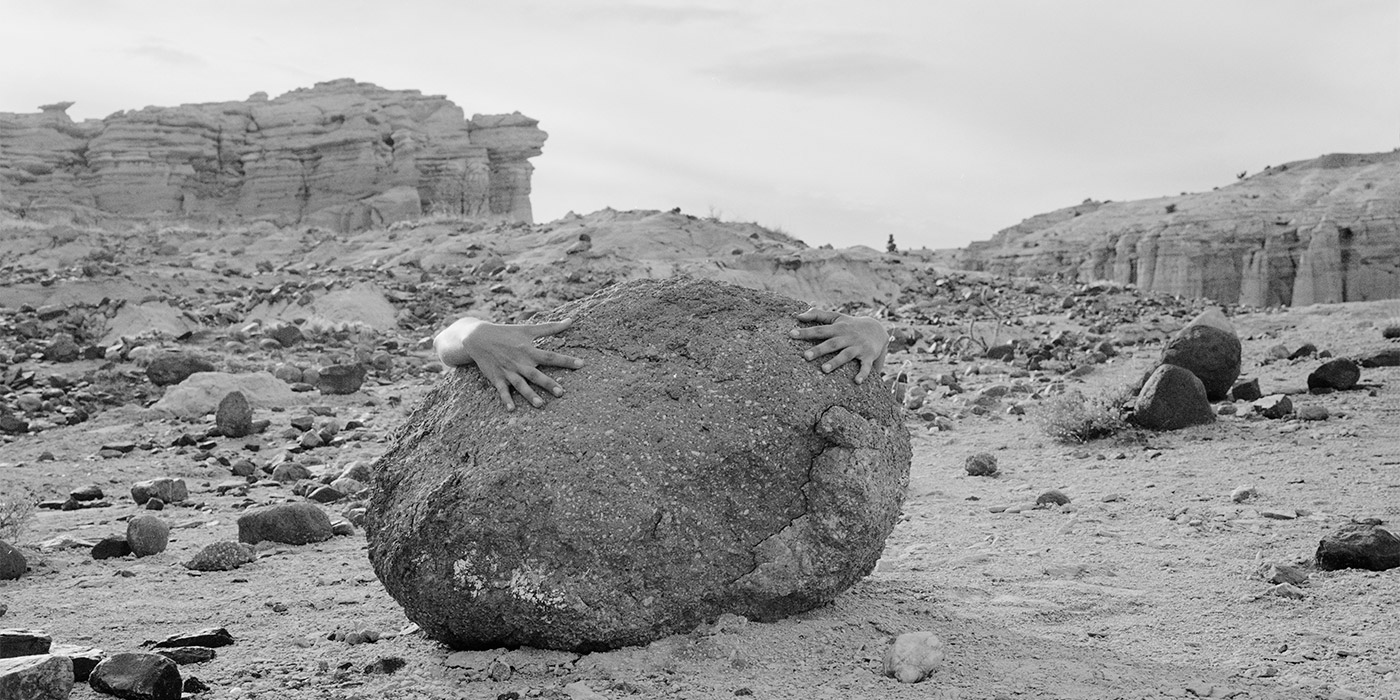
Koyoltzintli is an interdisciplinary artist and educator based in New York. She was raised on the Pacific coast and in the Andean mountains of Ecuador. Her work features in Autograph’s new exhibition, Our Bodies Have Been Bridges, alongside work by Laura Aguilar and Tarrah Krajnak.
In 2017, Autograph published Koyoltzintli’s monograph, Other Stories / Historias Bravas under the artist’s former name, Karen Miranda Rivadeneira. In this conversation almost a decade later, the artist speaks with Autograph’s Director, Mark Sealy, about self-knowledge, capturing personal relationships with ancestry and place, and processes of vulnerable introspection.
Our Bodies Have Been Bridges is on display at Autograph and free to visit until 13 February 2027.
Mark Sealy (MS): When we published Other Stories / Historias Bravas in 2017, did you feel that the book brought a kind of closure to that period of your work?
Koyolzintli (Ko): Not really. The book felt more like a chapter than a conclusion. My mother actually said to me: “You’ve got to move on. You cannot keep photographing us.” That made me think about where I needed to go next with the work and myself.
That period of work taught me about vulnerability. I realised that in order for me to see other people laid bare, I needed to see myself in the same light. I wanted to give something back, but at another level, through a different consciousness. I began thinking more deeply about the knowledge systems I had inherited. In the Andes there is this idea of reciprocity which is not about a direct exchange, but the idea that you give something, and the universe allocates it, and positions your gift for you.
MS: So Other Stories / Historias Bravas opened the door to another way of thinking about knowledge and sharing?
Ko: Yes. I began to understand that to go to the future is also to travel into the past. My grandmother and grandfather were very much in my consciousness, and the knowledge carried through those generational exchanges became increasingly important to me.
Before Other Stories was completed I had been inspired by and begun working with Mama Matilde, one of the last carriers of a particular knowledge source and cultural tradition in Ecuador. I was born in New York, the first in our family to be born outside Manabí in the West of Ecuador. My mother had migrated to America but had previously worked closely with the land. Her vocabulary was fluid, moving between Andean spiritual worlds and Catholicism. My mother and her sisters lived together in Queens and worked while in New York as seamstresses. All of this was part of my heritage.
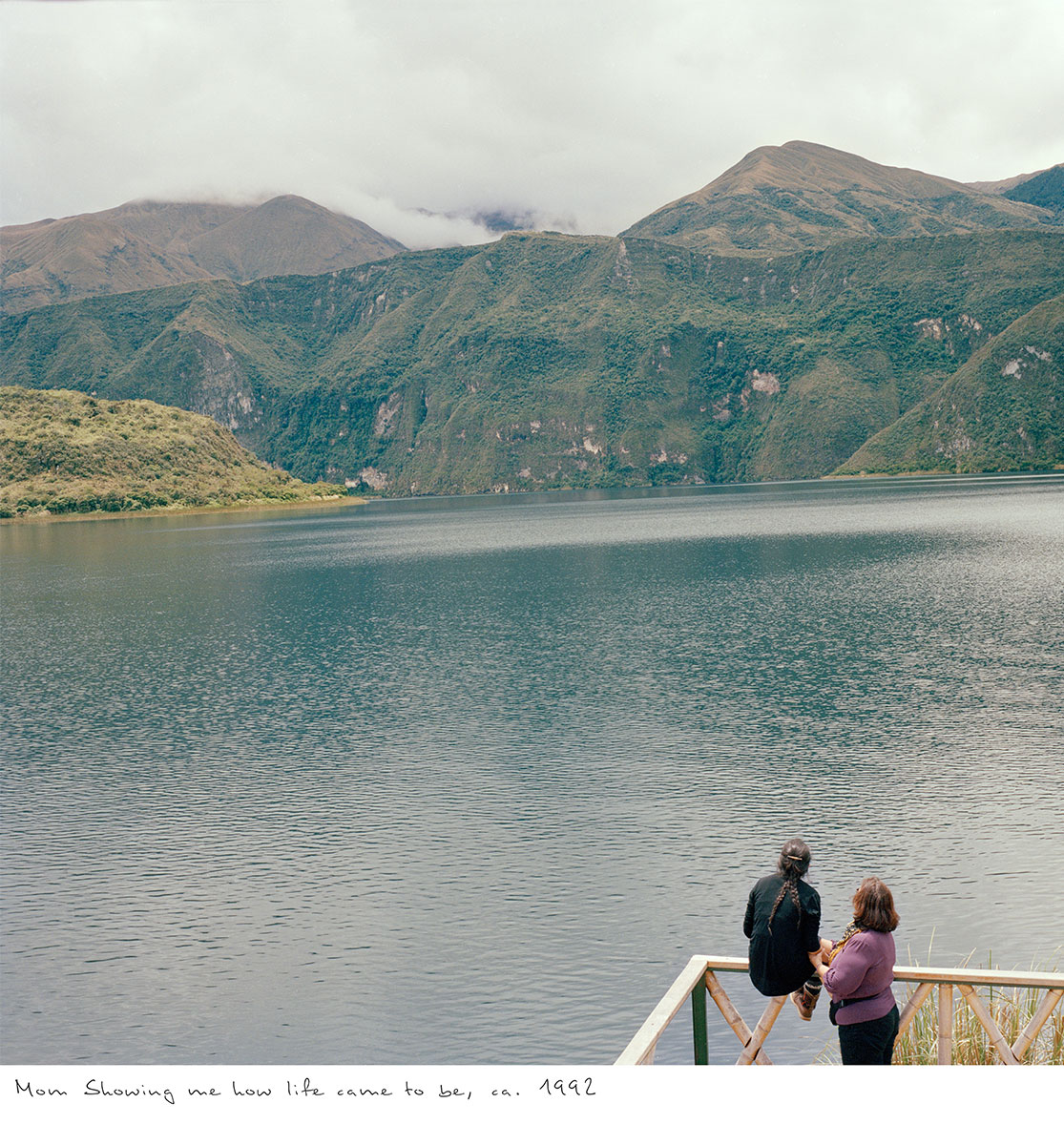
from the series Other Stories / Historias Bravas, 2017
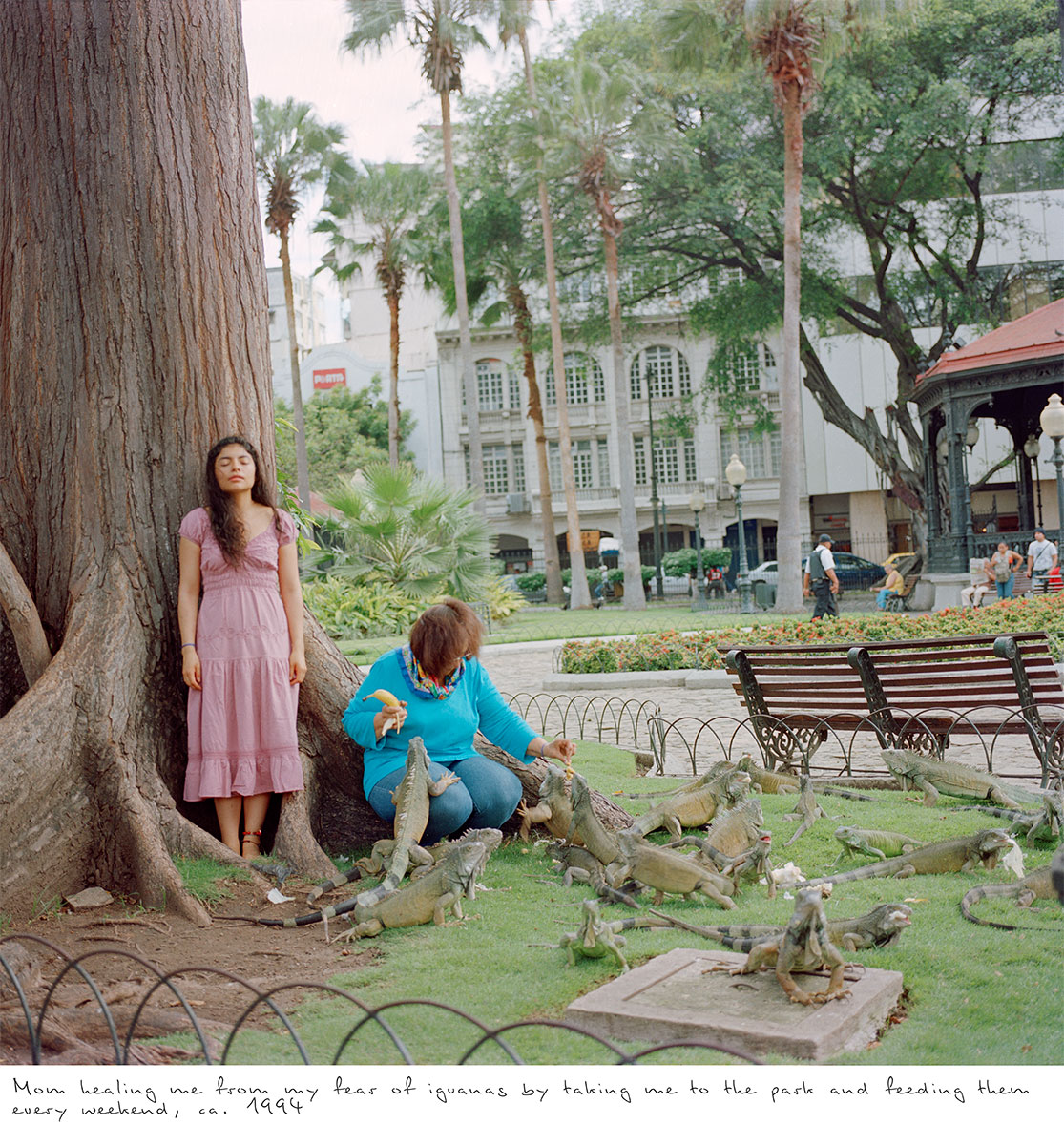
from the series Other Stories / Historias Bravas, 2017
MS: And meeting Mama Matilde in Ecuador changed your relationship to your core self-knowledge?
Ko: Completely. At first I thought I was making a documentary project on her. But the photographs became an excuse to learn from her and to be with her. I lived with her for a year and returned many times over ten years. I became involved in her healing practice and learned about plants, medicine and the supernatural world. She shared a lot of things with me.
She gave me the name Koyolzintli when we first met. When she died in 2020, I adopted that name formally, as a form of bonding - a way of keeping her close. The ten years I spent with her were not really about introspection. They were about learning, experiencing and living in a different way.
MS: And then the Meda (2019) works became a moment of turning inward?
Ko: Yes. I needed to step back and ask myself “Who is Koyo?”. I moved to New Mexico and began reclaiming pieces of myself. The landscape felt like an ancient ocean. I started thinking about the body and my ancestral worlds.
I photographed mainly women, asking them questions such as: if you could connect with your oldest ancestor, how do you think they would touch the earth for the first time? Where would they go? What would their first reaction be?
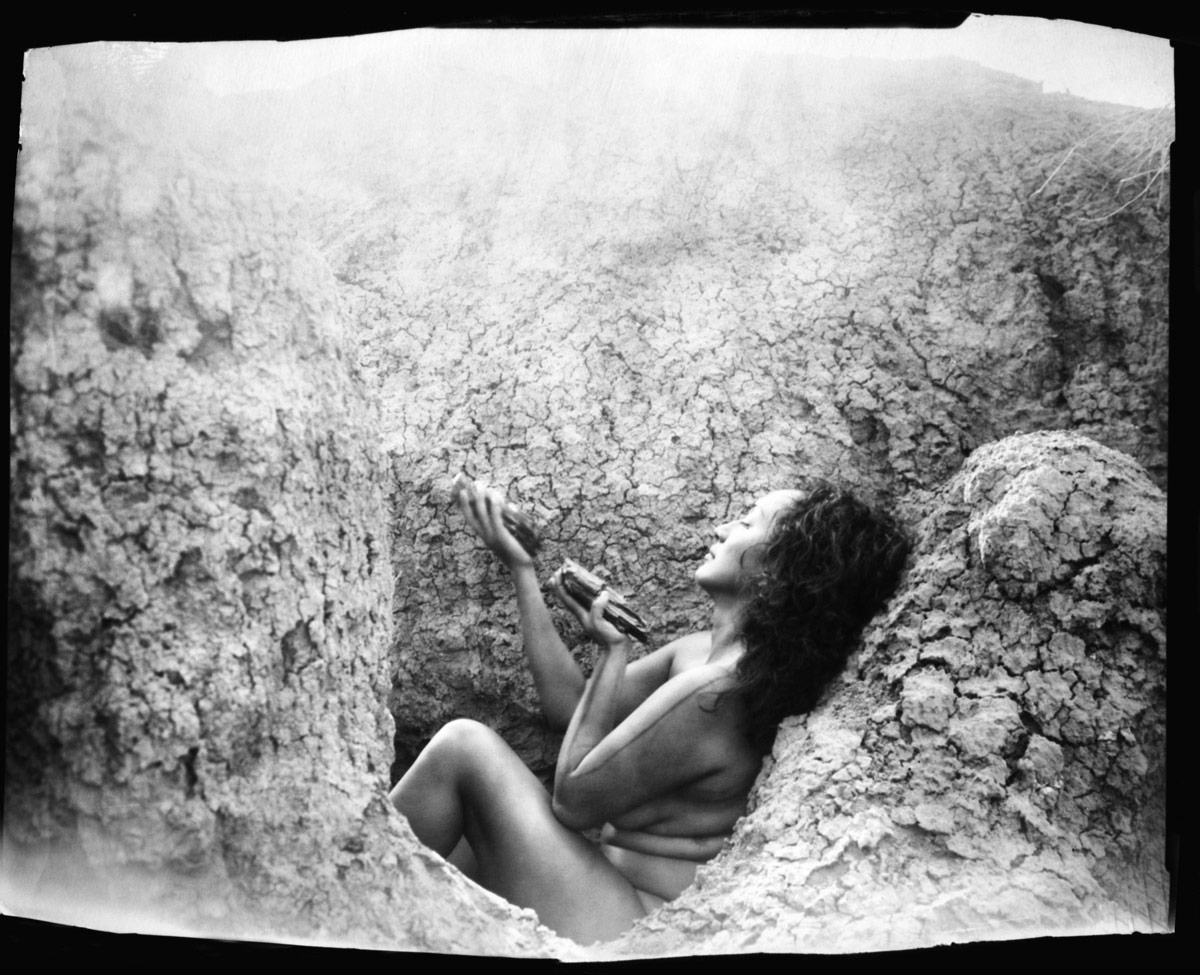
Obsidian Woman, from the series Meda, 2019
%20Koyoltzintli%2C%20Spider%20Woman%20Embrace%20from%20the%20series%20Meda%2C%202019.%20Courtesy%20the%20artist.jpg)
Spider Woman Embrace, from the series Meda, 2019
MS: There is something very powerful here about these women claiming their bodies and their relationship to the earth on their own terms, but also through you.
Ko: Yes. The women came from very different cultural backgrounds. Some were nurses, lawyers, human rights activists and artists. We met at parties, farmers’ markets, dances, meditation gatherings and places where people were serving soup. I was interested in what happened when they were given the space to think about their bodies and their relationship to place, space and the environment.
I don't want to homogenise indigenous experience. There isn't one indigenous unity. Each person has their own relationship to ancestry and place. One woman, for example, chose to hold a rock because she imagined that her ancestor needed an embrace. These are personal relationships and the images honour them.
I want people to pause before what I call ‘spiritual shopping’. Rather than taking something from another culture, I want us to genuinely relate to where we are in the present.
MS: That also seems to connect to the question of vulnerability in Other Stories. The women in Meda are not simply being photographed; they are making decisions about how they occupy space, that is actually quite radical considering how many barriers there are that limit choice of location spiritually and physically.
Ko: Exactly. One woman had never imagined that she could undress in front of a camera. But she chose the location, lay down, became vulnerable and cried. The final photograph doesn't necessarily show that transformation. What matters is what happened for her, the process, the change.
Some of the women talked about reclaiming themselves “for their own sake.” The photograph became a reminder that they could have that moment of personal reclamation.

Mud Woman Gazing, from the series Meda, 2019
MS: That connects to Laura Aguilar’s work too, this idea of claiming space, refusing the expectation that the body should conform to a particular or manufactured image.
Ko: Yes. The body can claim space in its own way. There are multitudes within these experiences. I am interested in that difference rather than trying to make everything fit together. I am deeply inspired by Laura’s work.
Ko: I think all of the work is a calling. People from Indonesia, Iran, Japan and Senegal have written to me saying that the images speak to them. What I wanted was to expose our vulnerability so that people could reckon with where they are spiritually in their own terms, in their own time and space.
Sometimes we create what we are lacking. What I was lacking was introspection. A lot of what I created through the work was a gift of introspection to allow others to have that moment for themselves.
MS: So perhaps the photographs become a kind of pause in the chaos of all the white noise of “progress” we are subjected to.
Ko: Yes. I hope the work reminds people that they can have an intimate time with where they are, wherever they are.
Dedicated to the memory of our dear friend and colleague: Alanna Lockward (23 March 1961 – 7 January 2019)

Free exhibition
8 October 2026 - 13 February 2027
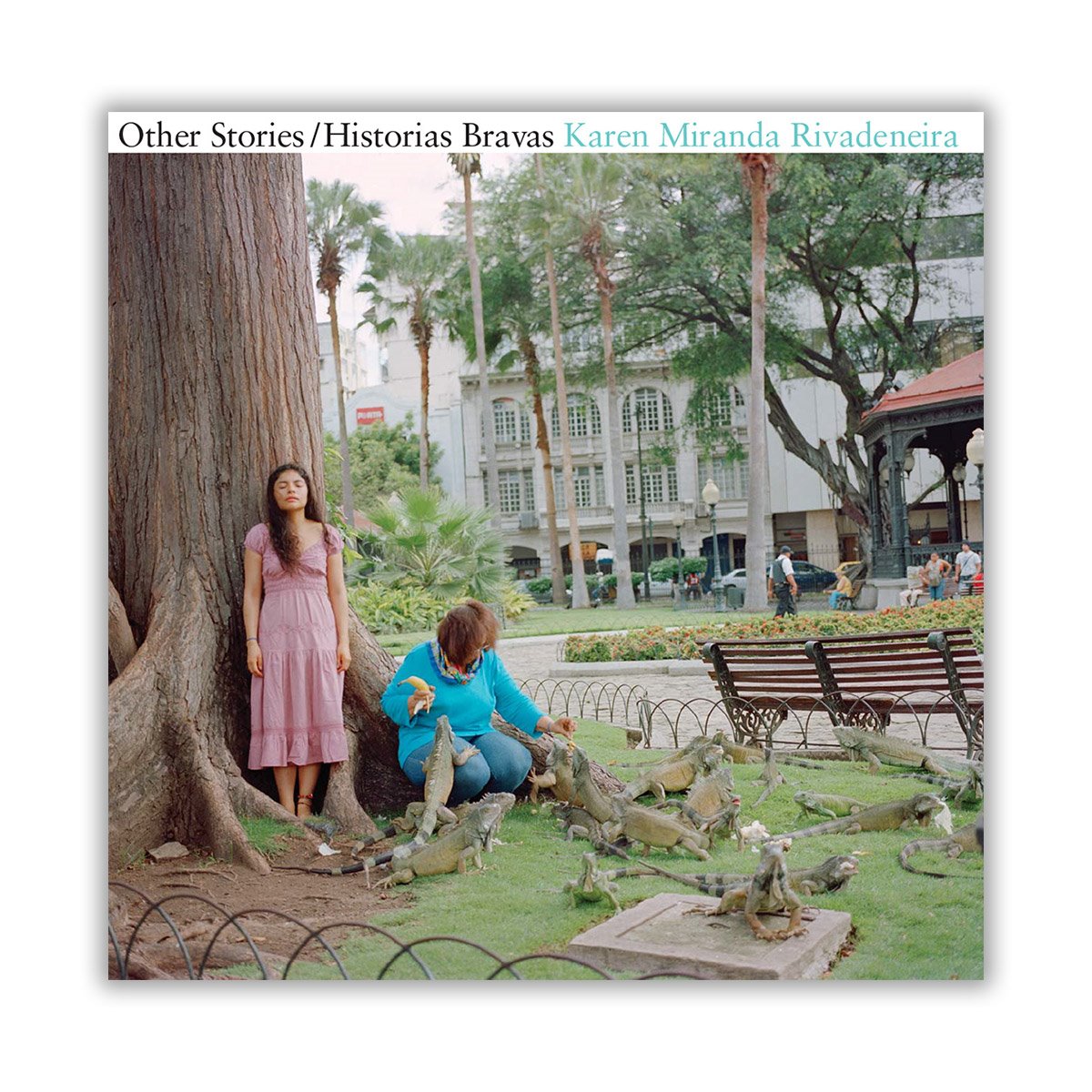
Featuring works from the artist's series alongside an essay published in English and Spanish by Alanna Lockward.
Buy it hereBanner image: Koyoltzintli, Spider Woman Embrace [detail], from the series Meda, 2019. © and courtesy the artist.
Images on page: 1) Koyoltzintli, Mom showing me how life came to be, c.1992, from the series Other Stories / Historias Bravas, 2011-2012. © and courtesy the artist. 2) Koyoltzintli, Mom healing me from my fear of iguanas by taking me to the park and feeding them every weekend c.1994, from the series Other Stories / Historias Bravas, 2011-2012. © and courtesy the artist 3) Koyoltzintli, Obsidian Woman, from the series Meda, 2019. © and courtesy the artist. 4) Koyoltzintli, Spider Woman Embrace, from the series Meda, 2019. © and courtesy the artist. 5) Koyoltzintli, Mud Woman Gazing, from the series Meda, 2019. © and courtesy the artist.
Visit: Laura Aguilar, Motion #50 [detail], 1999. © Laura Aguilar. Courtesy of The Laura Aguilar Trust of 2016. Collection of Light Work, Syracuse.
Join our newsletter and get the latest on Autograph’s exhibitions, events, open calls, digital content, books, prints and fundraising. Find out more.



Autograph is a space to see things differently. Since 1988, we have championed photography that explores issues of race, identity, representation, human rights and social justice, sharing how photographs reflect lived experiences and shape our understanding of ourselves and others.
Support our work

