


 0
0
0

Exploring the potential of weaving as metaphor and practice to create and connect communities
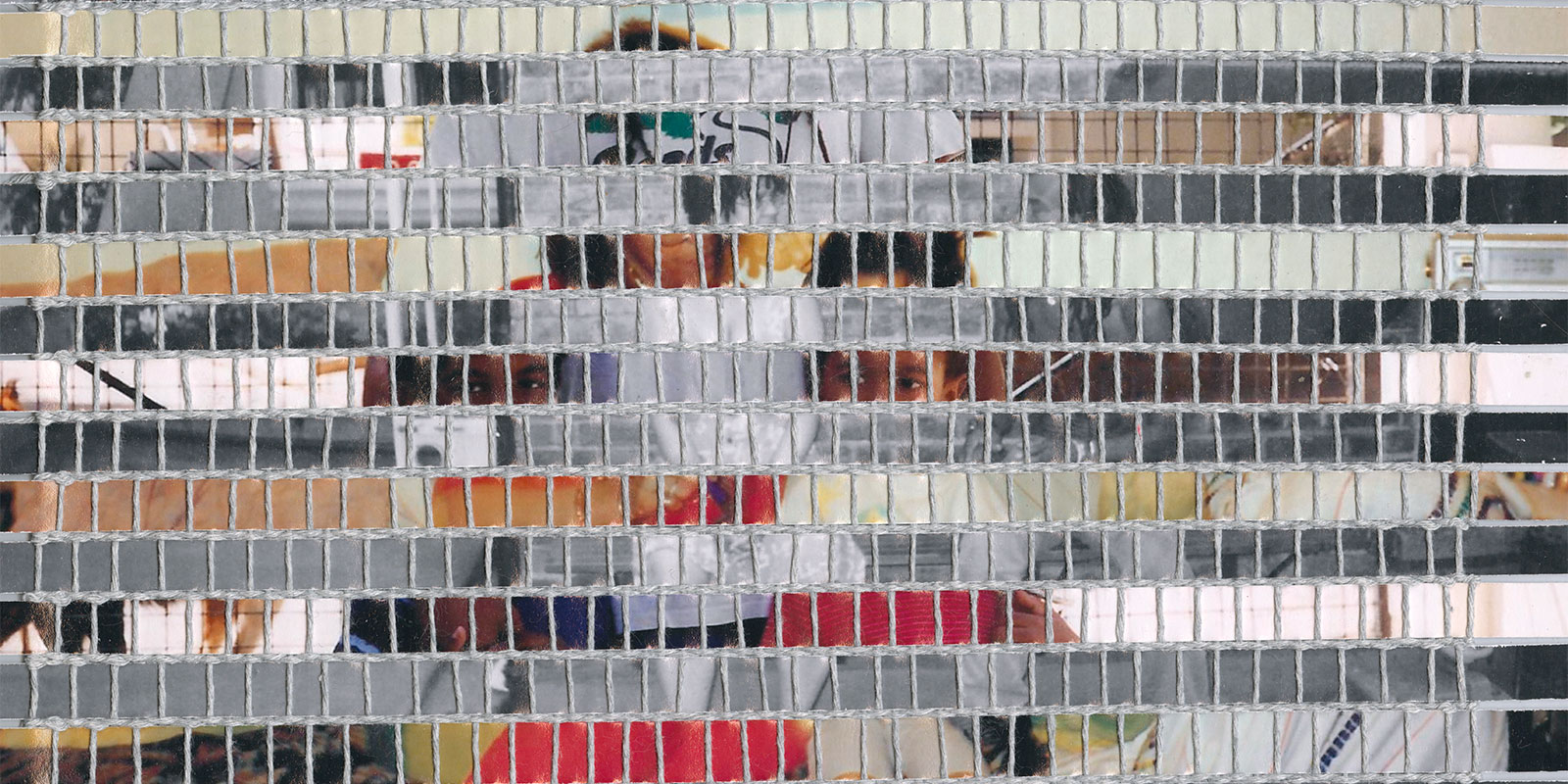
Education Consultant Dr Lesley Nelson-Addy reflects on the creative practice of Aasha John, the second Artist Teacher to take part in Autograph’s Visible Practice Residency project. Lesley has worked with Aasha over the past year to evaluate the project’s impact both on Aasha’s personal creative practice, and professional practice in the classroom. Here, Lesley considers weaving as a theoretical and creative practice with the potential to create and connect communities.
Aasha John’s exhibition, As I Weave, will be on display at Autograph from 3 – 6 June 2026.
After I completed the evaluation report for the second year of the Visible Practice Residency project, I found myself reflecting on the various ways the concept of weaving infused Aasha John’s experience as an Artist Teacher.
To weave is to interlace fragments or threads together to create something new – literally and metaphorically.
During her undergraduate degree, Aasha developed an interest in making handmade books. For her final project, she decided to explore how we “use books as a tool for learning.” From the outset, Aasha combined her approach to art and her interest in how we learn creatively, to form the foundation of her ambition to become an art teacher. As a Teaching Assistant, Aasha continued collaging and bookmaking, often from found materials, with a strong emphasis on care: “turning something that has been thrown away into something new and quite ornamental”. From the outset, Aasha has focused on the fragility and potential of old or discarded materials to become something precious.
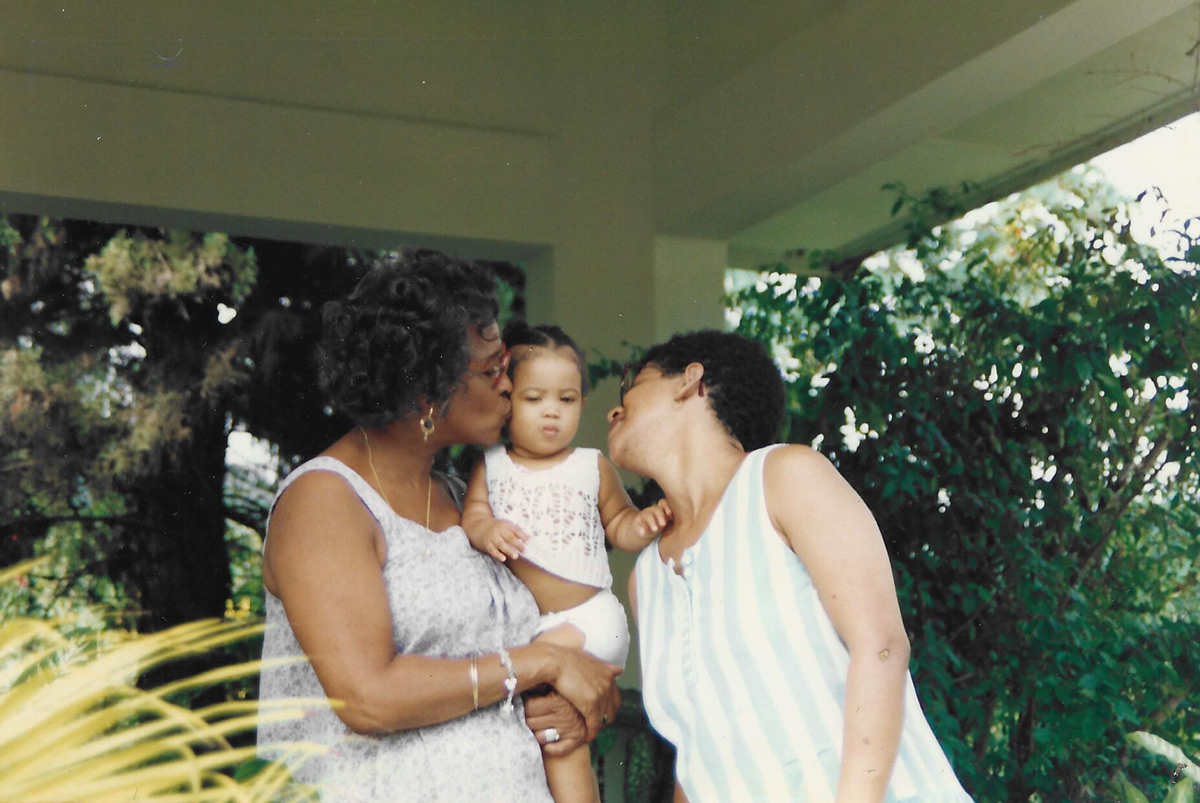
Joy's Garden, Image from John's family archive, 1990
After qualifying as an art teacher, Aasha maintained her creative practice. She attended community-based workshops and drew on her familial heritage through storytelling. One such project, Stories from My Grandmother’s Garden, brought together photographs of her grandmother’s plants and family stories. Aasha shared endearing details about Joy, her grandmother, that remain etched in my memory. She described a massive garden in her grandmother’s house in Trinidad with “flowers everywhere.” It was extraordinary to hear that Aasha’s grandmother, aged 98, who “had always loved gardening and plants” would still name plants and remember the plants she cultivated in that garden decades ago. It was Aasha who drew the connection between her grandmother’s garden and her approach to art within this project:
That intergenerational link is through art, and through the care as well. So, something like cultivating a garden and sharing that. That feeds into this project, that passing down of generational crafts or interests that you might think are quite passive at times, but you are keeping [them] alive through stories and doing those things together.
Storytelling, and doing so in community, is a significant feature of Aasha’s practice. Early in her career, Aasha used making as a way to bring students and people in the wider community together through a Saturday morning club. She invited people who loved art in school, but who didn’t identify as artists to “make something that [led to] a sense of pride and joy at being able to make something.” This club helped attendees recreate that sense of accomplishment they may have felt when they made something they were proud of in school.
Aasha’s engagement with art exists beyond and within the formal structures of learning and teaching. Aasha commends the art curriculum for not being too prescriptive, which allowed her to write and create her own curriculum that meets the needs of students, “and encourages students to address and challenge the world around them and share part of themselves.” In her teaching practice, both prior to and during the residency, Aasha consistently brought in artists and exhibitions that used art for resistance, protest or anti-racism, alongside the National Curriculum and assessment requirements. Aasha’s identity as a Black woman, and her deep knowledge of artists of colour, empowered staff and students to explore a new world of art that could refine their creative thinking and their ability to articulate their views on worldly issues. One of the students in the Creative Resistance Club that Aasha ran in her school during the residency explained the reason why she wanted to join:
Most of the issues I talk about, I am not allowed to say in school. Miss John mentioned that it is a type of club where you can freely discuss issues that you are concerned about – political things, anything, to be honest. I just wanted a space where I could create my own work and not get in trouble or get any questions on why I am producing these kinds of things. It’s art resistance club and I want to highlight the fact that I have my own voice.
However in her own work, Aasha resists the urge to make art that exposes or confronts socio-political issues – she does not want to engage explicitly with political messages but still wants to “use making as a way of exploring something”. So, Aasha takes a meta-approach to resistance, tied up in the process of weaving, to consider “the resisting forces hold the pieces together”, and the psychological resistance that people experience when trying to recall memories. She does this by returning to the intergenerational link featured in her earlier work. As I Weave is a powerful collection of carefully interwoven photographs with accents of lace from Aasha’s grandmother’s garments.
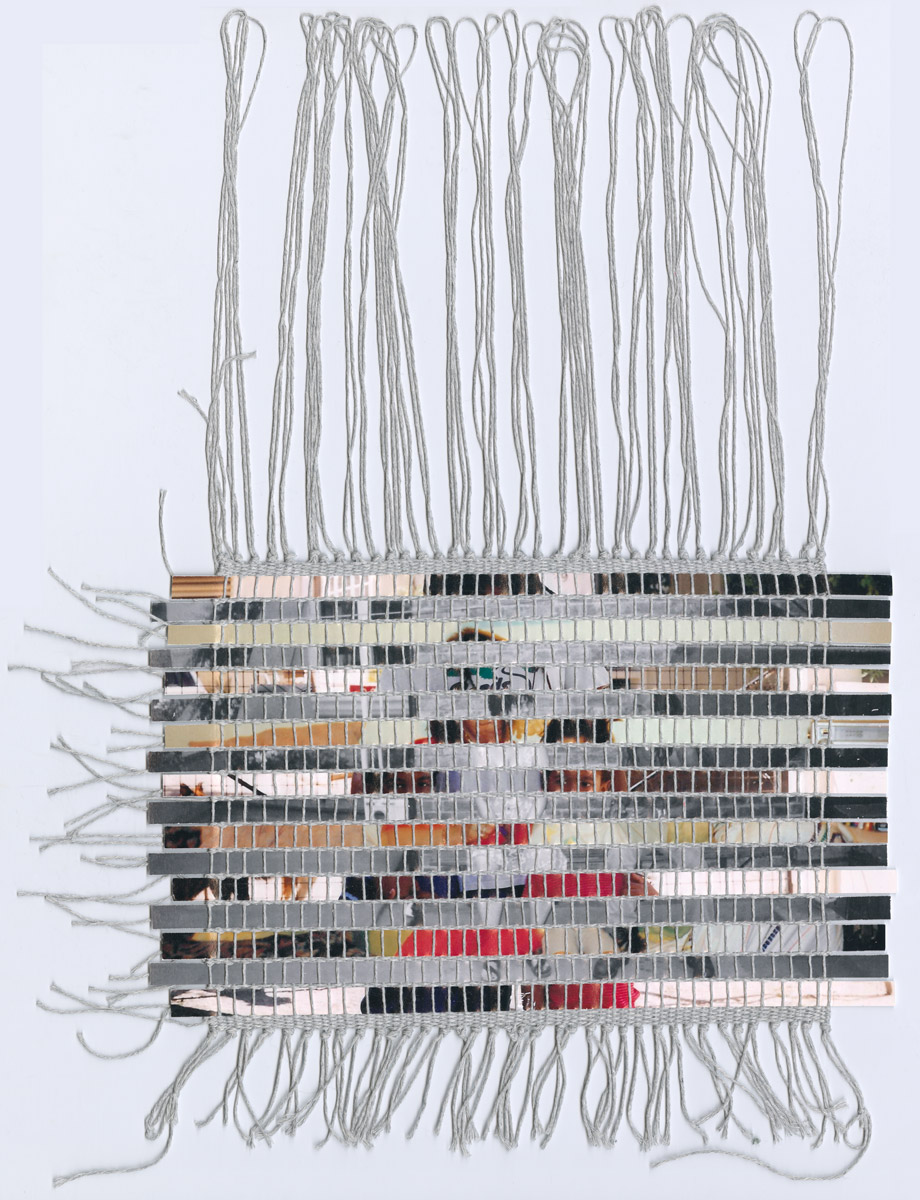
Aasha John, Leon and Jamaal II, 2026
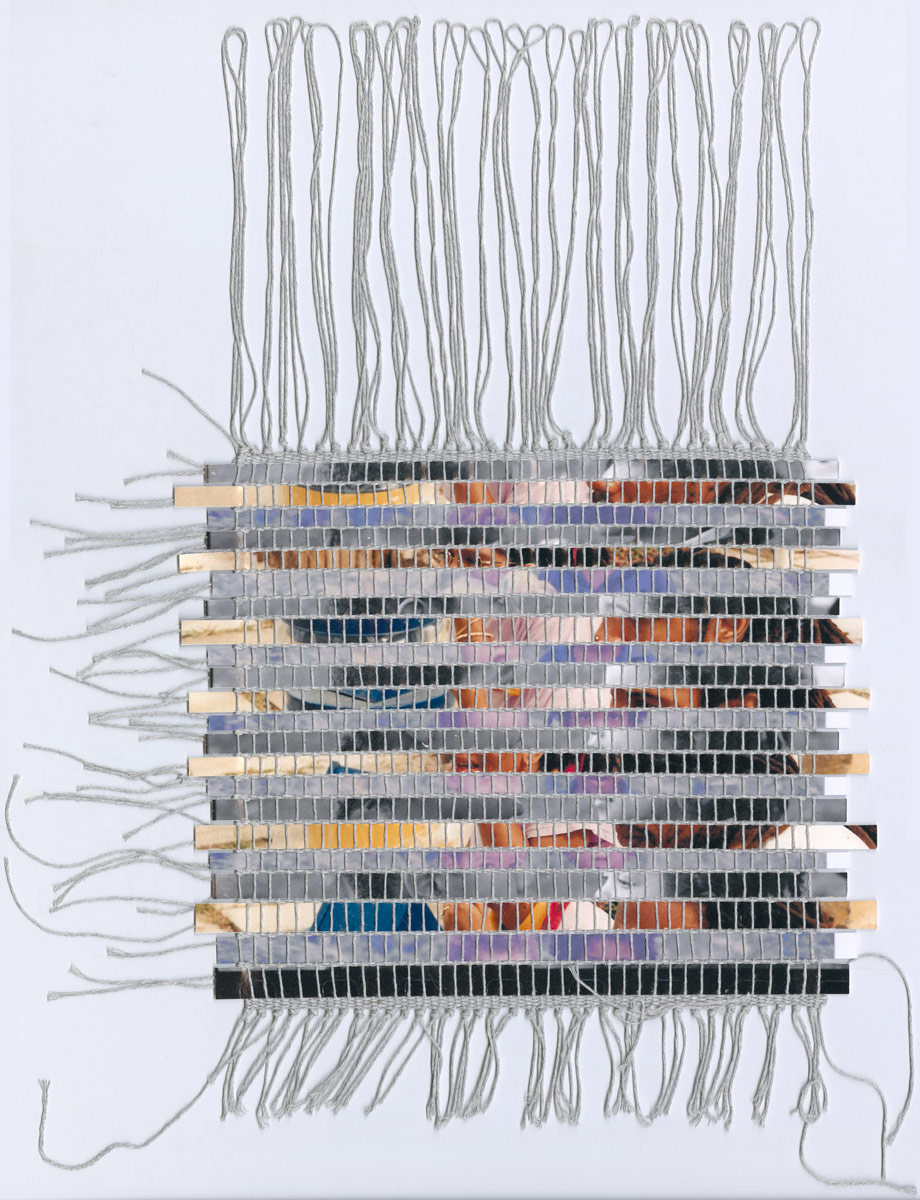
Aasha John, Leon and Jamaal III, 2026
The exhibition includes Aasha’s family photographs delicately and securely interwoven with wool, combining textures and colours to illustrate the complexity of family memories. Aasha explained that she did this because she felt as though she was at the stage in her career where she was “looking back at things and joining stuff together.” In this sense, where Aasha is in her career has shaped how she engaged with the residency. In a workshop held at Autograph entitled Re-weaving the Art and Design Curriculum Aasha shared her practice with 19 teachers from her school and the wider community. During the CPD session, one teacher commented that they developed a “cultural awareness through visualising / weaving personal narratives” and another teacher intended to “run weaving for other [departments as] it is a great way to reflect”.
From the start and throughout her career, Aasha has been weaving stories, materials, socio-political messaging and memories together for herself, fellow staff, students, and the wider community. It is my hope that the upcoming exhibition As I Weave is an affirmation of what is already true about Aasha: she is a Head of Faculty with vast expertise, and
she is an artist.
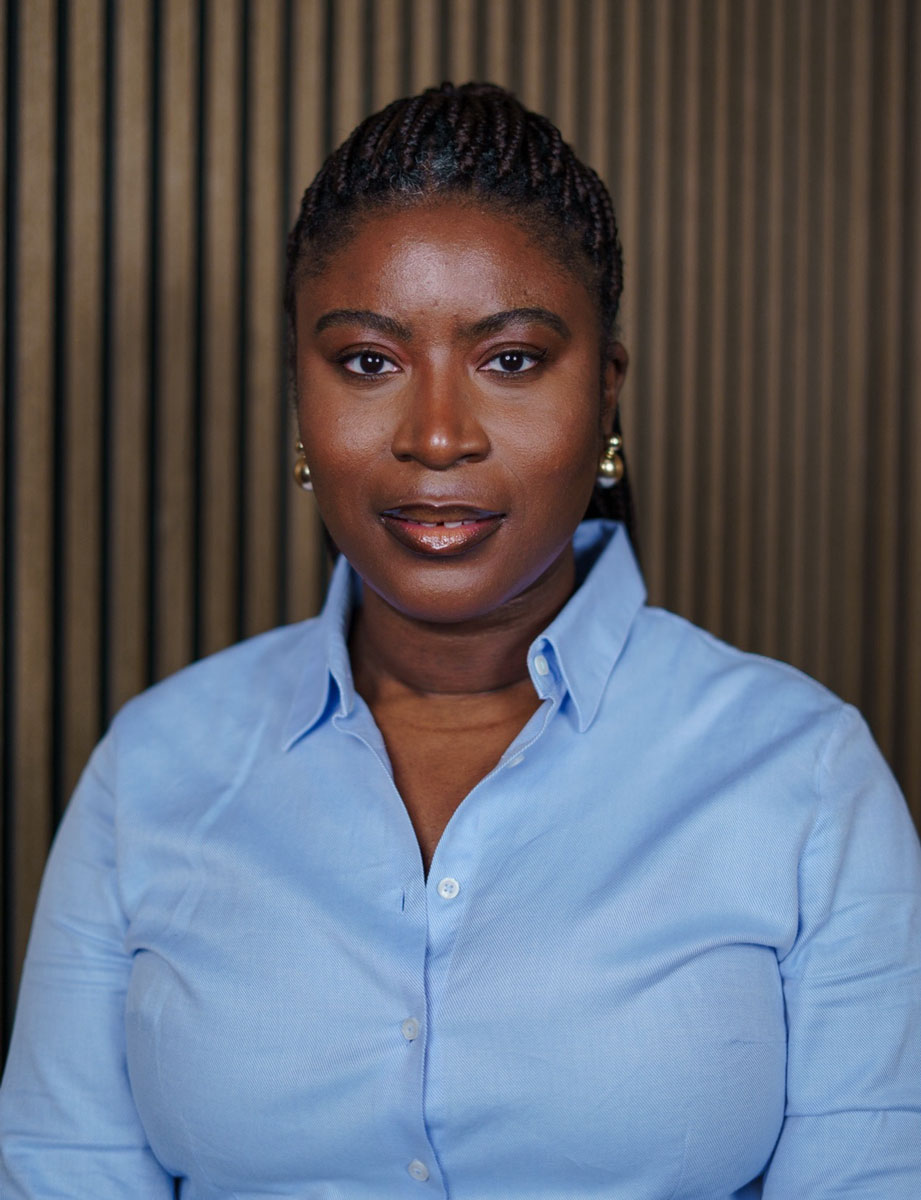
Lesley is an Education Consultant and former Education Manager at the Runnymede Trust. She co-authored the 2021 Lit in Colour report and continues to shape the strategic and creative direction of the programme. Lesley has over a decade of experience across English teaching, curriculum development and educational research. Her doctorate in Education, awarded by the University of Oxford, was funded by the ESRC and Oxford-Marriott-Wolfson scholarships. She is co-chair of the National Association for the Teaching of English’s Reviewing Literature working group and was elected Vice Chair and Trustee of NATE in January 2026.
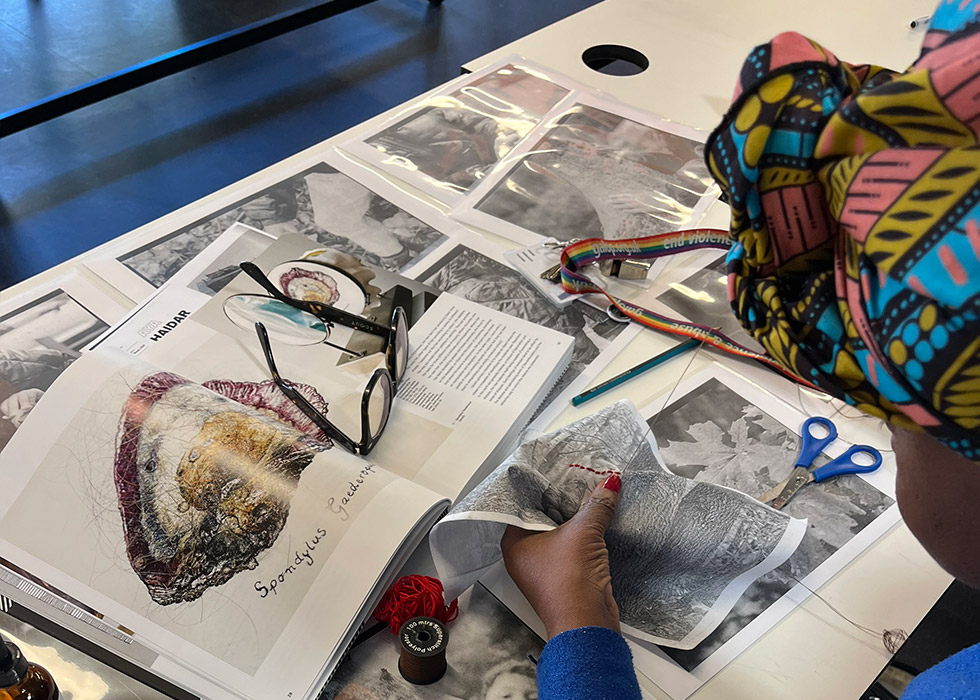
Supporting artist-teachers to develop a new body of work, within and beyond the school environment.
Find out more
.png "sample")


Banner image: Aasha John, Leon and Jamal II [detail], 2026. © and courtesy the artist.
Images on page: 1) Image from Aasha John's family archive, Joy's Garden, 1990. 2) Aasha John, Leon and Jamaal II, 2026. © and courtesy the artist. 3) Aasha John, Leon and Jamaal III, 2026. © and courtesy the artist.
About the author: Image by Tobi Filani. Courtesy Dr Lesley Nelson-Addy.
Join our newsletter and get the latest on Autograph’s exhibitions, events, open calls, digital content, books, prints and fundraising. Find out more.



Autograph is a space to see things differently. Since 1988, we have championed photography that explores issues of race, identity, representation, human rights and social justice, sharing how photographs reflect lived experiences and shape our understanding of ourselves and others.
Support our work

