


 0
0
0

Writer Claudia Durastanti provides a personal response to Nhu Xuan Hua’s exhibition, considering communication and identity breakdown
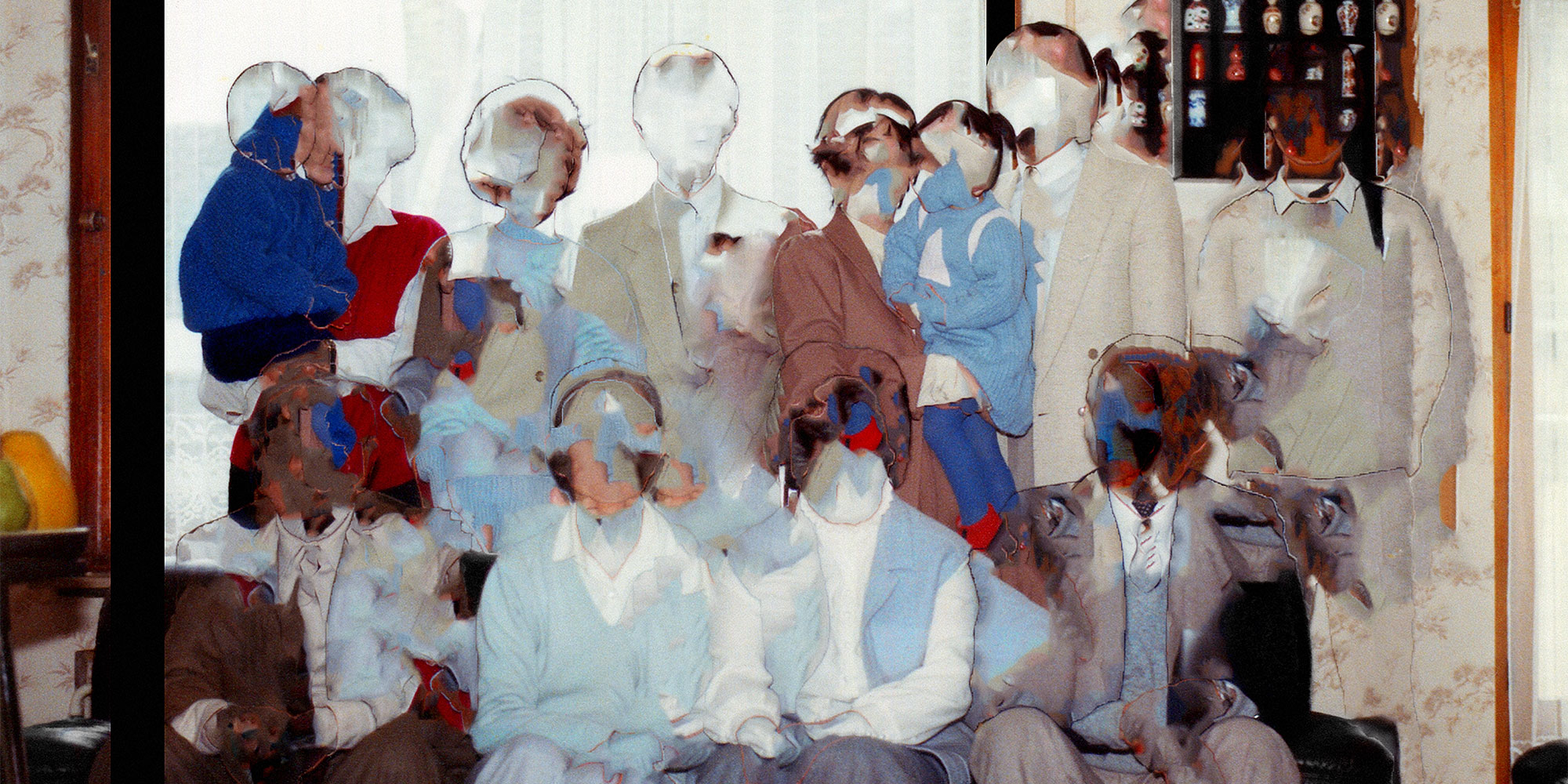
We commissioned writer Claudia Durastanti to respond to Of Walking on Fire, Autograph’s new exhibition of work by Nhu Xuan Hua reflecting on how stories are communicated – or withheld – across generations.
Below Durasanti reflects on the fragility of language, whether written, spoken, signed or captured through the archive, photography or other visual forms. She explores the ruptures and ripples of her experiences as a child of deaf parents who has experience of migration – resonating with Hua’s own experiences and work, albeit against a different backdrop.
Of Walking on Fire is free to visit until 19th September 2026.
When I look at Nhu Xuan Hua’s work I am reminded of something.
Of sitting at the beach last summer, five months pregnant. I was waiting for the results of some genetic testing for my daughter. I wanted to investigate my blood to see how similar it would turn out compared to my ancestors: might I unveil a medical history that I was unaware of? But I also wanted to find out about something closer – a family history I was more conscious of. The results weren’t surprising, and yet as I read the email I couldn’t help but shake. I felt I was almost witnessing a scandal.
I am the daughter of two deaf parents, so I knew deafness could show up sooner or later, but I never fully believed I had it in me.
The results said I am a carrier of deafness, as I have an altered gene for hearing loss, but I don’t manifest it. My daughter is the same now: a vessel, not a voyager, in the realm of apparent silence.
I texted my mother to share the news with her, and I told her that it’s not that I resent having this gene, but that I wish I didn’t inherit it from my father, the person in my family I feel less close to. Her response was eerie. While my mother is not genetically deaf (she lost her hearing due to an illness in her childhood), I might be. She said that technically, I’m deafer that she will ever be. She carries herself in the world absorbing silence while I can break it whenever I like; she’s the surface of deafness, but I have the code.
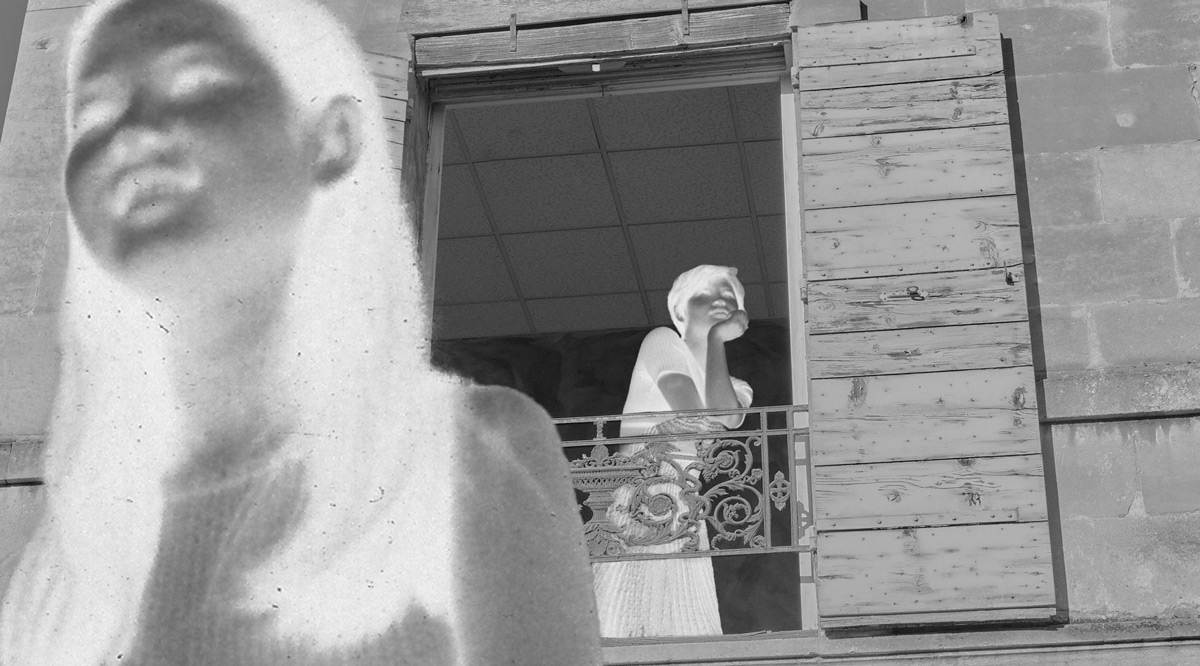
Room with a view, 2025
If I were to represent this knowledge and this fact in the form of an exhausted genealogical tree, what would it look like? A hidden branch, an invisible branch, a broken branch? Perhaps it would be something fading, slowly dissolving under different conditions of light. A possibility that never emancipates through reality. We all have these inner scandals, embedded in our bodies. Like Nhu Xuan Hua’s work which draws on her family archive, people and life events can be presented in the form of a negative, polar whites and neon blacks, a clear sign that we are still in the process of showing our final form, but here’s the thing: perhaps the final form will be unattainable to us and to those we love.
It takes a breaking event for these familial ruptures to surface, like acids slowly wasting the exterior of a beloved picture, but most of the time they just make things seem cloudy. Dark unbroken knots that will outlast our last day on Earth. And yet there are other times when the inner potential and untold stories within oneself get so bright that you almost feel blinded, like I did as I sat on that beach chatting with my mother over the phone. It is art, really, that allows for this vivid awareness.
%20Nhu%20Xuan%20Hua%2C%20The%20one%20who%20couldn%E2%80%99t%20talk%2C%202021.jpg)
The one who couldn't talk, 2021
When I look at Nhu Xuan Hua’s work I am reminded of something.
That language is not the only way to uncover the risky potential of the self. Because it is my medium of choice, I believed that writing is a privileged form when it comes to developing negatives. I came to this conclusion by training: as a child, I spent a lot of time with my mother in her ramshackle painting studio. She would consume her days on glorious large canvasses painted with bright colors, chasing nuances and details. The work sat there for a week or so, before she splashed it and covered it with buckets of black paint, cancelling everything she worked so hard on.
It left an eternal mark within me: that you could waste beauty so easily. That you shouldn’t become too attached to your own voice. That’s when the writing started for me: it was my duty to uncover the colors underneath, to recover part of that lost lexicon and make it understandable again, visible again.
But the colors don’t necessarily come back the way you expect them to: some of them are muted, forever silenced, chalky with layers of materials, so lost in the vastness of that black that you didn’t choose and it’s your legacy.
%20nhu%20xuan%20hua%2C%20little%20super%20in%20versailles%20%E2%80%93%20archive%20from%20the%20year%20'88%2C%202026.%20commissioned%20by%20autograph%2C%20london.jpg)
Little Super in Versailles - Archive from the Year '88, 2026
When I look at Nhu Xuan Hua’s work I am reminded of something.
When looking for new metaphors to place myself in space and time, I focused on the negative spaces produced by migration, and I thought that every time we leave a place, we also leave a hologram of ourselves in that house, town or city. We might never go back, but that parallel existence is still there, connected to us through some sort of smart plug. Never adhering to the idea of migration as eradication, I see these multitudes of holograms as a multiplication of roots, an infestation of parallel strands of the people who left: some of them bright, some of them faded, some of them covered in a shroud. These holograms and roots persist, even when they are not immediately discernable.
But when I look at Nhu Xuan Hua’s work I am reminded of something.
I find a new metaphor, a new image, perhaps a kinder one.
I rarely went to the beach as a child, but I remember the ladies walking on the sand offering henna for your hands or selling cute cheap sun tattoos. These sun stains, carving temporary symbols out of a pleasant exposure to the summer air, didn’t stay forever, sometimes not even for a week, and followed the changing of the seasons.
We have so much to reveal under our skin. We can hold onto it for a while, and then just forget, plugging into a new source of power. There’s an electrical joy in Nhu Xuan Hua’s work, new images forming on a surface of apparent loss.
Claudia Durastanti is an Italian writer, translator and cultural critic. Her 2022 novel, Strangers I Know, was shortlisted for the Strega Prize and translated into 21 languages. Her forthcoming novel Missitalia will be published by Summit in the US and Fitzcarraldo in the UK. Her work has appeared in Granta, Apartamento, The Paris Review and elsewhere. She's the curator of the feminist press La Tartaruga.
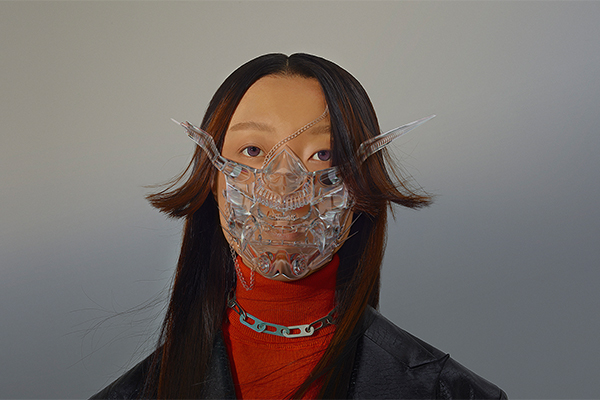
Banner image: Nhu Xuan Hua, New Chapter - Archive from the year '85[detail], 2026. © Nhu Xuan Hua. Courtesy of the artist and Anne-Laure Buffard, France. Commissioned by Autograph, London.
Images on page: 1) Nhu Xuan Hua, Room with a view 2025. © Nhu Xuan Hua. Courtesy of the artist and Anne-Laure Buffard, France. 2) Nhu Xuan Hua, The one who couldn’t talk, 2021. © Nhu Xuan Hua. Courtesy of the artist and Anne-Laure Buffard, France. 3) Nhu Xuan Hua, Little Super in Versailles – Archive from the year '88, 2026. © Nhu Xuan Hua. Commissioned by Autograph, London.
About the author: Photo by Sarah Lucas Agutoli.
Join our newsletter and get the latest on Autograph’s exhibitions, events, open calls, digital content, books, prints and fundraising. Find out more.



Autograph is a space to see things differently. Since 1988, we have championed photography that explores issues of race, identity, representation, human rights and social justice, sharing how photographs reflect lived experiences and shape our understanding of ourselves and others.
Support our work

