


 0
0
0

Artist Nhu Xuan Hua discusses her work exploring family history, memory and communication across generations
Nhu Xuan Hua is a French artist and photographer of Vietnamese heritage. Known for her distinctive visual language, Hua originally trained in fashion photography and has gradually shifted towards a multidisciplinary practice that explores memory, identity and displacement.
In this conversation, the artist speaks with senior curator Bindi Vora on the occasion of her first UK solo exhibition, Of Walking on Fire, at Autograph in London. They discuss the personal experiences, influences and visual language behind Hua’s work, and the significance of fragmentation when working with memory and language as subject matter.
Bindi Vora (BV): Within your series Tropism: Consequences of a Displaced Memory, recollections appear to transform rather than exist as something fixed. How does this evolving understanding of memory shape the images you make?
Nhu Xuan Hua (NXH): Memory is never stable. It moves, it breathes, it mutates depending on the moment we return to it. What interests me is not memory as documentation but memory as a living thing.
In Tropism: Consequences of a Displaced Memory, each photograph becomes a new translation of something that once existed but can never fully be recovered. Archives provide the bones of the memory, but the present moment – and my relationship to the images, the people or the events depicted – reshapes it. The work emerges from a negotiation between what was inherited and what is imagined. I’m less interested in fixing memory than in showing how it continues to move through us and through me.
With The Dancers, Archive from the year ’85 (2017-22), I began with a photograph of my parents’ first dance at their wedding. As I worked with the image, the tensions I experienced growing up resurfaced. During the process, I slowly erased my mother and duplicated my father so that he appears to dance with himself.
What began as a simple gesture gradually became a metaphor – a visual translation of the imbalance I had observed within their relationship. The image quietly echoes a dynamic of dominance within the relationship, raising the question of who was truly leading the dance.
%20nhu%20xuan%20hua%2C%20the%20dancers%20%E2%80%93%20archive%20from%20the%20year%20%E2%80%9985%2C%202016-2021%20(1).jpg)
The Dancers – Archive from the year ’85, 2017 - 2022
%20Nhu%20Xuan%20Hua%2C%20The%20White%20dress%2C%20The%20Roses%20and%20the%20Black%20Window%20%E2%80%93%20Archive%20from%20the%20year%20%E2%80%9972%2C%202016-2021.jpg)
The White dress, The Roses and the Black Window – Archive from the year ’72, 2017 - 2022
BV: Much of your practice feels concerned with acts of translation – between languages, gestures and images. How has navigating different cultural and linguistic systems shaped the way you think about communication in photography, particularly through gesture and metaphor?
NXH: Translation has always been present in my life. At home languages overlapped but rarely aligned perfectly: Vietnamese, French and French Sign Language. Communication often existed in the gaps between them. Interpretation became a tongue in itself. Because of that, I became attentive to other forms of understanding: posture, rhythm, silence, the way someone occupies space. I learned very early that meaning does not only live in words. Gesture is probably the first language one learns to read before hearing and speaking.
Across my work, I translate those silent conversations with my family into my own visual language. Growing up with my father, who is deaf, shaped this deeply. He would often ask for subtitles when we watched films together, asking: “est-ce que c’est en V.O?” - “Is it the original version?” In France, many films are dubbed into French which means there are no French subtitles available. Those small moments stayed with me. In my photographs, gestures often function like subtitles: a hand touching a neck, a face showing discomfort, an object delicately held. These details guide the emotional rhythm of the image and suggest that the scene might be holding something beyond what appears at first glance.
My father himself found ways to communicate through images. Growing up deaf isolated him from a very young age. Being disabled in Vietnam in the early 1950s made things even harder. Educational systems weren’t able to meet his communication needs, and he was often told he could not learn. So, he found another way to express himself and understand the world: through drawings and paintings, filling his canvases with symbols and hidden messages.
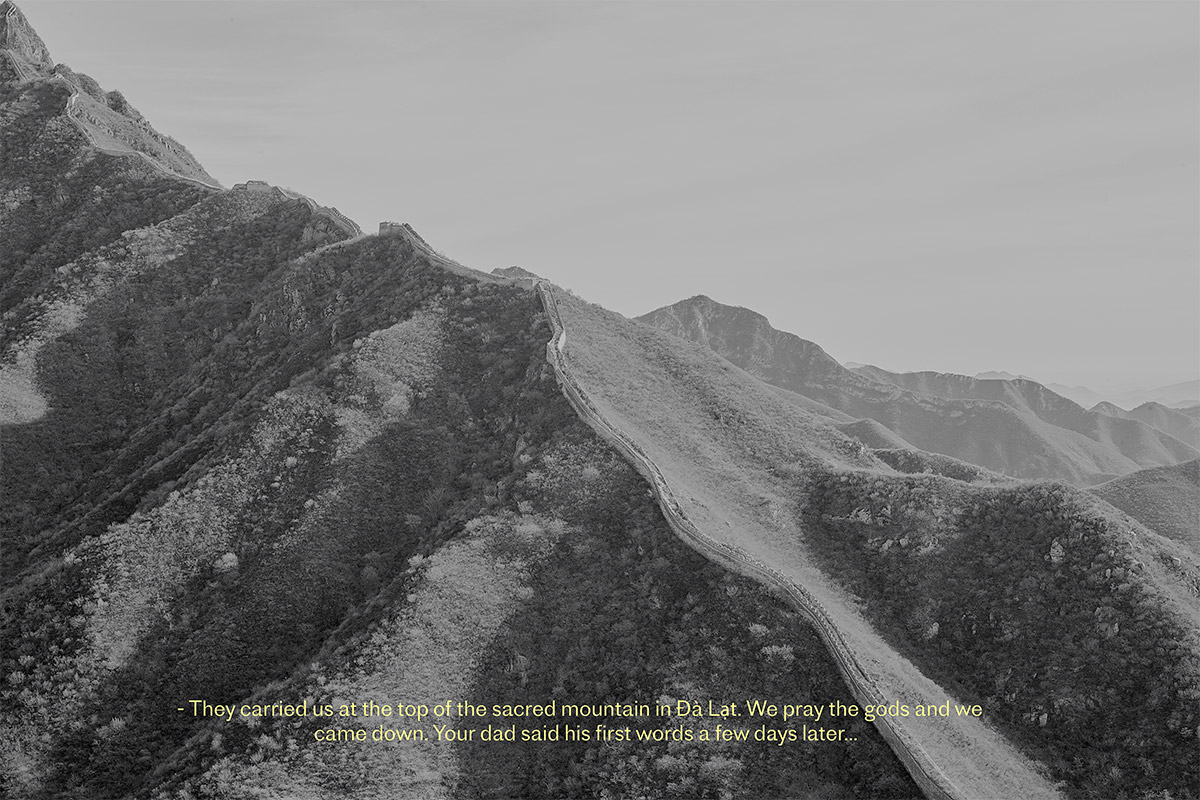
The Sacred Mountain in Đà Lạt, 2026
However when he arrived in France in 1978, following the war in Vietnam, the conditions of migration forced him to abandon his dream of becoming an artist. He faced discrimination and couldn’t find employment. I remember my mother using a writing manual to help him compose letters in French so he could apply for jobs, hoping the family would not have to rely solely on her cashier salary. Years later, when I was around ten, he met someone who helped him exhibit some of his paintings in suburban towns south of Paris. He was encouraged to paint Vietnamese landscapes in Chinese ink because that was what would sell. Symbolism had always been central to his practice, so he complied, but secretly transformed the mountains on the horizon into bodies engaged in sex. That gesture of quiet resistance later inspired my photograph I Won’t Change Because You Asked from the series Vows, Oysters and Tangerines (2019) presented in the exhibition as a wallpaper in Gallery 1.
Photography naturally became a place where those multiple languages and tools could coexist visually, emotionally and symbolically. An image can hold ambiguity without forcing resolution. It allows different cultural codes, memories, and interpretations to inhabit the same frame – almost like a small theatre for life. It becomes a form of communication that does not require perfect fluency to be felt.
In my series Let the Horses Ride (2025), the inversion of the image into a negative became a way to protect both the viewer and myself from what lies behind those moments of apparent happiness within a family. The joy is real, but there is always a lingering chaos that I need to acknowledge for the image to feel truthful to me. I am interested in that moment when the viewer senses something familiar but cannot fully explain why. Gesture and metaphor allow the image to remain open; they suggest meaning rather than closing it. The small black-and-white “punctuation” images throughout the exhibition function as little metaphors. They reveal hidden sentiments or murmur thoughts that I cannot fully phrase with words – almost like quiet reminders, or subliminal apparitions.
%20nhu%20xuan%20hua%2C%20i%20won%E2%80%99t%20change%20because%20you%20asked%2C%202019.jpg)
I won't change because you asked, 2019
BV: You’ve often described how the mispronunciation of your name has produced ruptures in your identity and how your brother’s name was similarly misread and mocked whilst growing up. How do these experiences resonate within your fashion photography? I am thinking specifically about your work Be A Super (2021) where you lent into these histories and reframed something painful as a source of power.
NXH: Names carry history, but they are also fragile when they travel between cultures. Growing up, hearing my name constantly mispronounced created small fractures in my sense of identity. For a long time, I blamed my mother for giving me such a complicated name for French people to pronounce. She always told me one day I’d carry that name with pride.
My brother experienced something similar. His name, Mẫn, became a source of teasing at school. In Vietnamese it means accomplished and is associated with intelligence, sensitivity and diligence - a sharp and attentive mind. But at school, his classmates would distort it, turning it into the names of superheroes from movies, calling him “Super Man”. Those experiences felt like something we simply had to adapt to.
Looking back, I realise that some of my images unconsciously became small tools of resistance – holding both a sense of lightness and a desire to empower the way we speak and exist in the world. The photograph Be A Super was a direct homage to my brother – a way to acknowledge his resilience, strength and quiet dignity. By creating that image I was able to reverse that dynamic. Instead of adjusting ourselves to fit the dominant pronunciation or narrative, I wanted to amplify the difference and transform it into something powerful.
In the exhibition you can also see The one who couldn’t talk (2021), a portrait of a woman wearing a glass mask inspired by ancient warrior armour. The mask protects, but it also appears fragile, as if it could shatter at any moment. That tension between vulnerability and strength runs throughout the work.
Fashion photography offers a space for that kind of transformation. It allows exaggeration, theatricality and symbolism. I leaned into those tools for Be A Super in order to create an image where vulnerability becomes strength – almost like building protective armour out of something that once caused discomfort. In that sense, the work became a way of reclaiming the narrative and turning misrecognition into visibility.
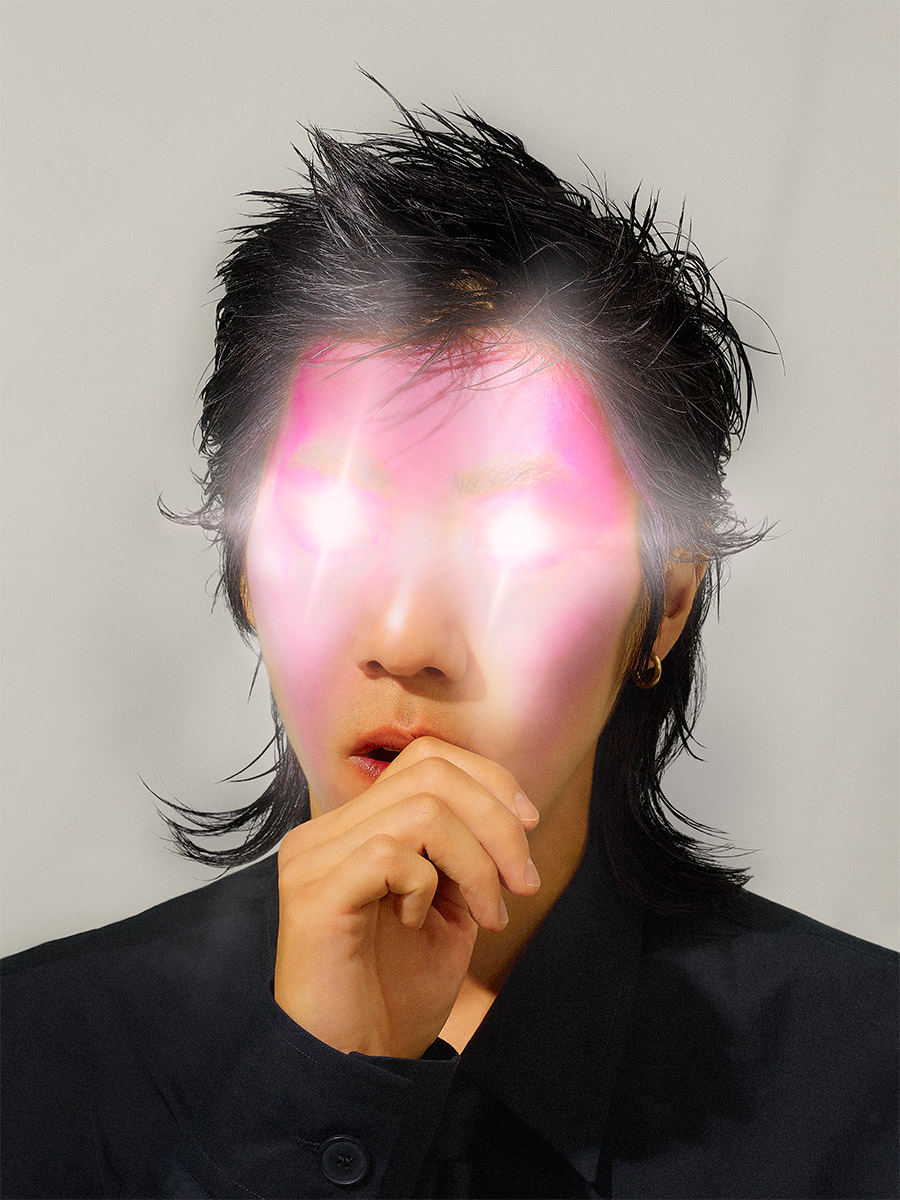
Be A Super, 2021
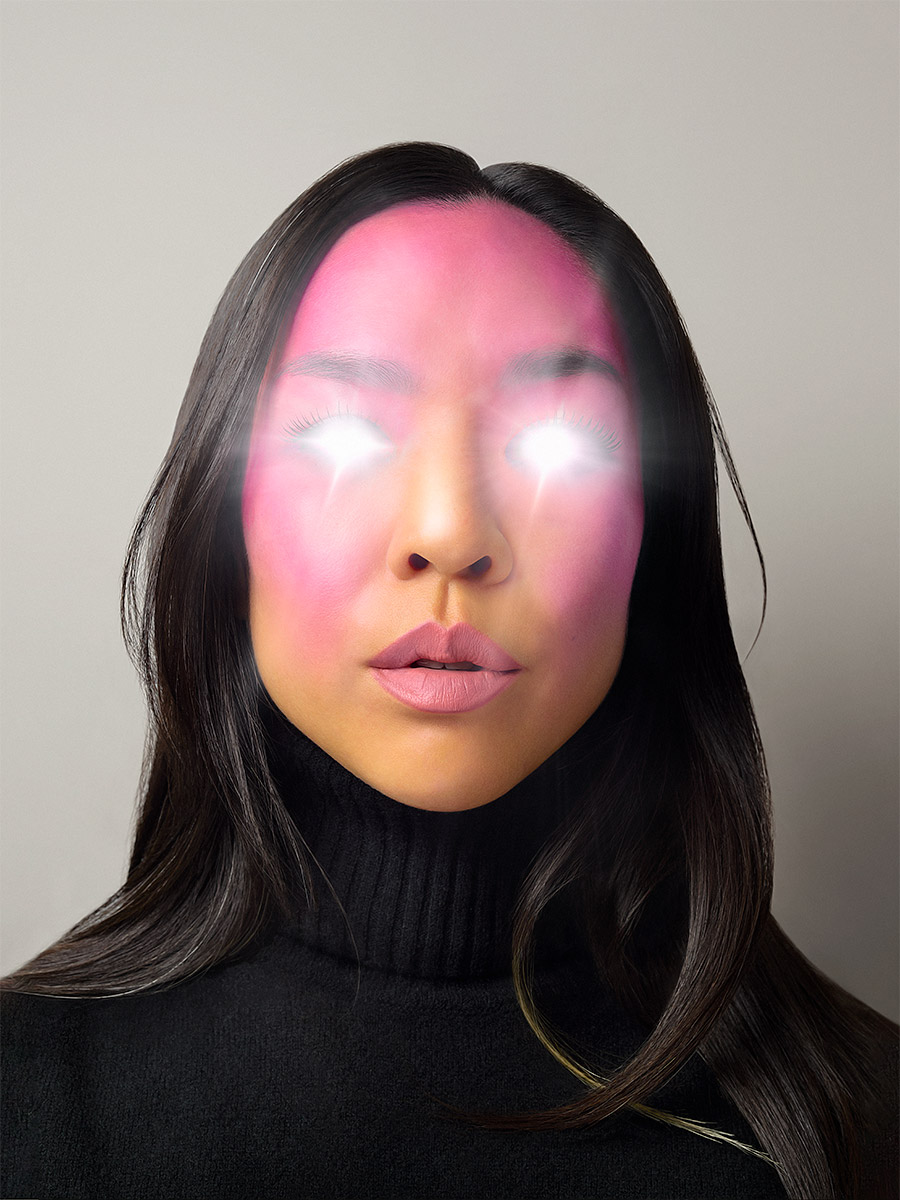
Be A Super 2, 2025
BV: There’s an inherent surrealism or uncanny quality in your photographs, where familiar scenes feel slightly displaced or dreamlike. How does this slippage between reality and fiction help you approach memories that feel fragmented or unstable?
NXH: Memory rarely returns as a complete story. It appears distorted, in flashes, almost like dreams or colour palettes. The surreal or uncanny elements in my images come from trying to remain faithful to that experience and sometimes pushing the limits of recollection.
When memory is fragmented, realism alone cannot always express its complexity. By allowing fiction or dreamlike elements to enter the image, I create a space where those fragments can coexist and be linked into a dialogue. It becomes a place where reality and imagination overlap, where certain feelings can become tangible.
When words are missing, I often build images by assembling elements from different sources: cinema, music, poetry, fiction, conversations and personal anecdotes. These references help me construct a visual language that can hold emotions which are otherwise difficult to articulate.
In Singer, "How much love can be repeated?", Honey baby (2020) draws directly from a scene in the film Goodbye South, Goodbye (1996) by Hou Hsiao Hsien. In the film, a man stands at a karaoke machine, slightly drunk and very lonely, singing the lyrics “Lots of love, lots of hate, a world of desire”. I have always been fascinated by karaoke – it carries both celebration and melancholy. It can feel like a dream of becoming a singer that is never quite fulfilled. That tension between performance, longing and solitude resonates with the emotional atmosphere I try to create in my images.
%20Nhu%20Xuan%20Hua%2C%20Singer%20%E2%80%9CHow%20much%20love%20can%20be%20repeated_%E2%80%9D%2C%20Honey%20baby%2C%202020.jpg)
Singer, "How much love can be repeated?", Honey baby, 2020
BV: For our exhibition Of Walking on Fire, Autograph commissioned you to make new work in which you chose to foreground and celebrate the presence of the feminine figure. What was it like to turn the camera onto yourself and create the two self-portraits that feature – Be A Super 2 and Promise of Spring (2025)?
NXH: Turning the camera toward myself felt both intimate and unsettling. For a long time my work focused on family histories or collective narratives. Self-portraiture requires a different kind of exposure; it removes a layer of distance. In 2025, while going through a personally challenging year and being invited to create new work for Of Walking on Fire, I felt the need to reclaim that power for myself as well. This led to Be A Super 2, a self-portrait that continues the reflection around my name and identity. The gesture was about reclaiming and inhabiting my name fully rather than allowing it to be reshaped by others.
In Gallery 2, I also present a new piece that took me a long time to complete: Promise of Spring. The title is the English translation of my Vietnamese name, Hứa Như Xuân. Finishing this work required a certain courage, because it meant placing myself more directly within the image and acknowledging, with humility, my own strength and desire for transmission.
I wanted to honour the lineage of women in my family, through a reference to nature and female deities as it is practiced in the Vietnamese religion, Đạo Mẫu. Through shamanic rituals, it celebrates the mother goddesses that represents the four palaces of Heaven, Earth, Water and Mountains – figures associated with protection, compassion and the nurturing power of feminine energy. Through this piece, I became interested in how materials and objects could act as extensions of the body, almost like protective skins.
Jade, for instance, carries symbolic meanings across Vietnamese cultures – standing for protection, resilience and spiritual balance. A jade bracelet is often passed from mother to daughter as a protective object. There is a saying that if the bracelet breaks into four pieces, it means it has saved you one life. This exploration is something I am continuing to pursue in my practice: thinking about how femininity, symbolism and spirituality can shape new forms of self-representation.
%20Nhu%20Xuan%20Hua%2C%20Promise%20of%20Spring%2C%202026.%20Commissioned%20by%20Autograph%2C%20London.jpg)
Promise of Spring, 2026
BV: How do you move between your personal, autobiographical work and the more conceptual demands of editorial commissions for major fashion houses – and does anything shift in your approach when you do?
NXH: The starting point is different, but the internal process often remains similar. Editorial commissions usually begin with a clear framework – a fashion collection, a theme, a brand identity. That structure can actually be very stimulating. It provides a departure point from which ideas can unfold. Within that framework, I still try to bring my own visual language: gestures, symbolism and a certain emotional atmosphere. It becomes a dialogue between the narrative of the brand and my own vocabulary.
My personal work emerges from a much more introspective and intuitive place. It tends to unfold more slowly and is often less predictable. The images grow out of personal memories, family histories or questions I am trying to understand over time.
But the two spaces constantly nourish each other. Editorial work sharpens my sense of staging, rhythm and precision, while personal projects keep the emotional core of the practice alive. Moving between them allows me to maintain both discipline and freedom within the work.
BV: Can we speak about the role of poetry and language as part of your process of making?
NXH: When language fails to communicate something directly, poetry opens another path. It allows emotion, memory and metaphor to coexist without forcing a logical explanation. In my process, words often appear before the images. I write fragments, constellations of ideas, sometimes just isolated sentences. They act like small seeds from which visual scenes begin to grow.
Poetry also mirrors how memory functions – through association, rhythm, repetition. It accepts ambiguity rather than trying to resolve it. That openness is important for me, because many of the emotions or memories I work with cannot be translated in a straightforward way. In that sense, photography becomes a continuation of the poem, but in visual form. The image extends what the words begin, allowing certain feelings or ideas to exist beyond language.
%20Nhu%20Xuan%20Hua%2C%20New%20Chapter%20%E2%80%93%20Archive%20from%20the%20year%20%E2%80%9985%2C%202026.%20Commissioned%20by%20Autograph%2C%20London%20(2).jpg)
New Chapter – Archive from the year ’85, 2026
BV: When you were first developing an aesthetic as an emerging artist, what artists, films, books or visual cultures most influenced how you saw the world and made work?
NXH: Cinema played an important role in shaping how I first began to see images, especially films where atmosphere and symbolism carry as much weight as narrative. As a child I was also deeply influenced by pop culture – television, music videos, pop-up and adventure books for children. Those early visual experiences introduced me to a sense of staging, fantasy and transformation that still resonates in my work.
Later on, I discovered photographers and artists whose work embraced a strong sense of mise en scène. Artists like Duane Michals, Joel-Peter Witkin, David LaChapelle and Tim Walker showed me how photography could be theatrical, symbolic and emotionally charged. I was also drawn to female photographers such as Sarah Moon, Ellen von Unwerth and Bettina Rheims, whose works carry a strong sense of narrative and femininity. I was equally fascinated by artists whose practices felt almost obsessive in their precision and imagination, such as Alberto Giacometti, M. C. Escher and H. R. Giger.
Asian cinema became a major influence, particularly filmmakers like Tsai Ming-liang, Hou Hsiao-hsien, Edward Yang, Jia Zhangke and Trinh T. Minh-ha. Their films often explore time, memory and displacement in subtle ways, which resonated deeply with my own questions.
At the same time, everyday visual culture influenced me just as strongly – family photo albums, domestic interiors, religious iconography and objects carried across migrations. These personal and cultural references gradually became part of the visual vocabulary I continue to explore in my work today.
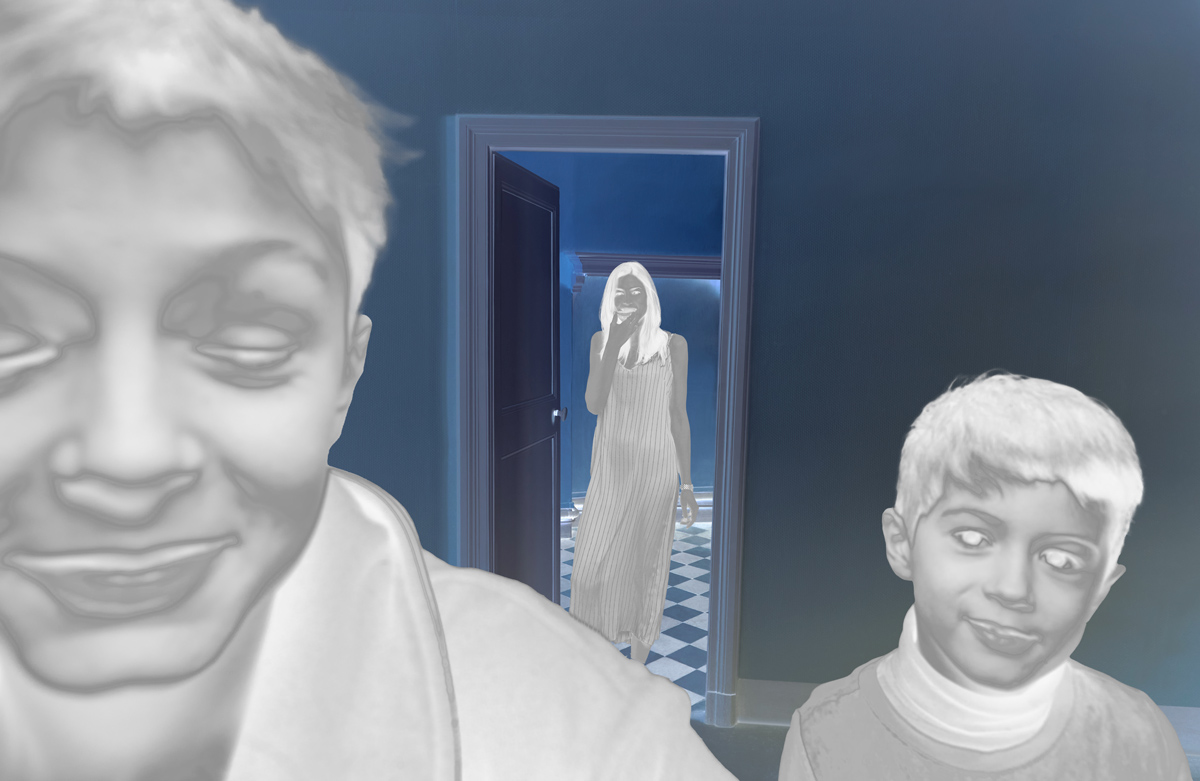
Jam on Toast 1, 2025
BV: Finally, Of Walking on Fire unfolds through fragments, silences and gestures rather than one linear narrative – what do you hope audiences will carry with them?
NXH: I hope audiences allow themselves to experience the exhibition in the same way memory unfolds – through fragments rather than a single story or linear narrative. There is a French phrase that has always stayed with me: "prendre son cœur et taper sur le cœur de l’autre" – to take one’s heart and gently knock it against the heart of another. In a way, that is what I hope the images might do.
If viewers leave with anything, I hope it is a feeling of recognition. Not necessarily of my story, but of their own memories, their own moments of displacement or transformation. Sometimes images function like quiet companions. They do not explain everything, but they stay with you. And perhaps it is in that lingering presence that meaning continues to grow.
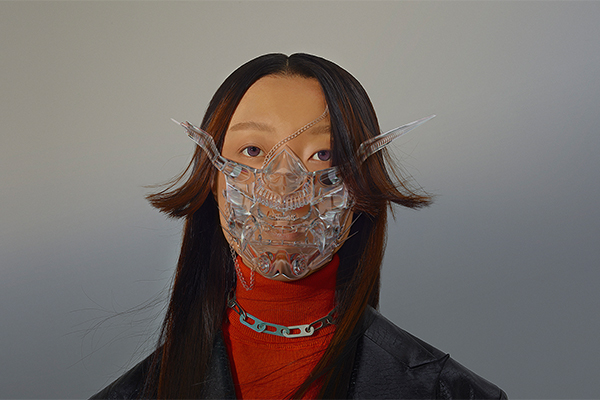
All images © Nhu Xuan Hua.
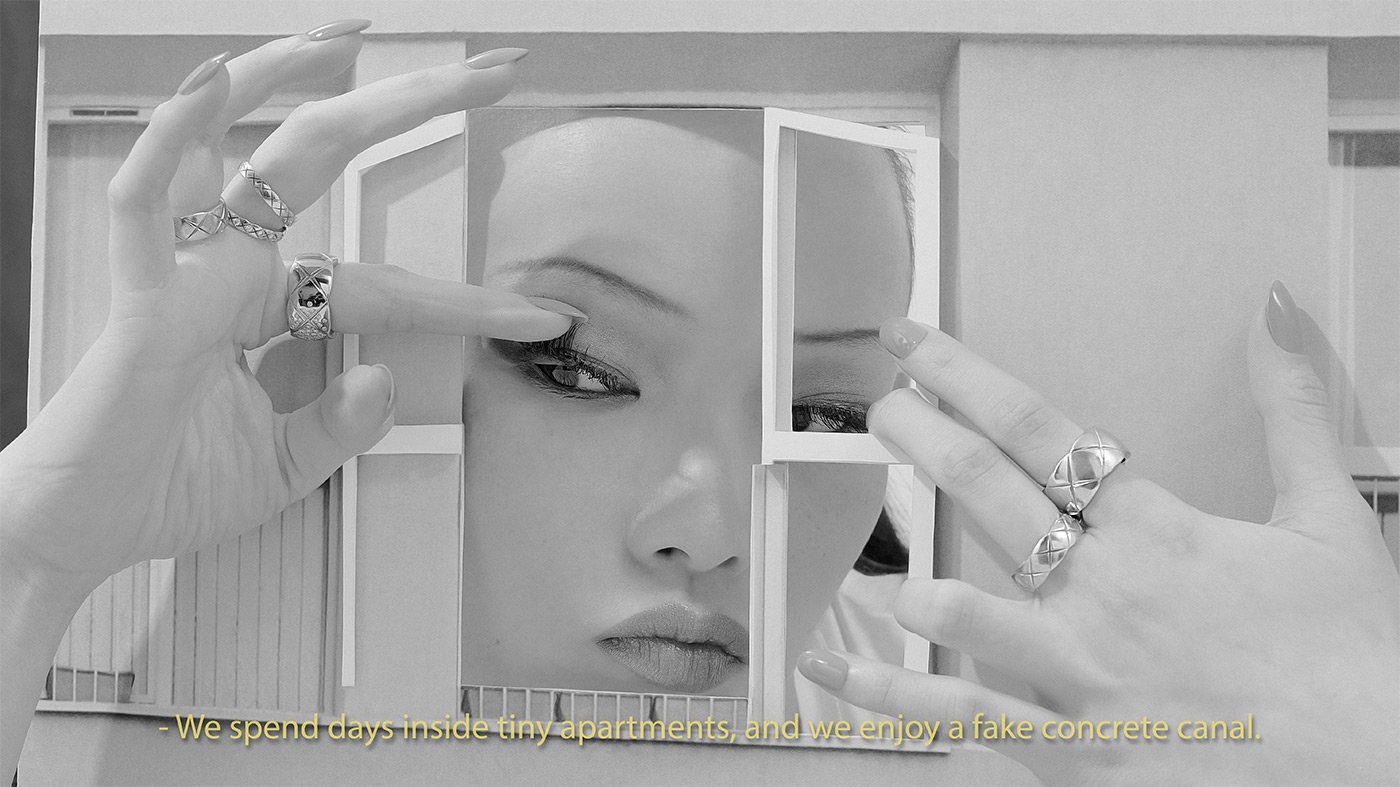
Banner image: Nhu Xuan Hua, We spend days inside tiny apartments and we enjoy a fake concrete canal, 2020. Courtesy of the
artist and Anne-Laure Buffard, France.
Images on page: 1) Nhu Xuan Hua, The Dancers – Archive from
the year ’85, 2017-2022. Courtesy of the artist and Anne
-Laure Buffard, France. 2) Nhu Xuan Hua, The White Dress, The Roses and the Black Window – Archive from the year ’72, 2017-2022. Courtesy of the artist and Anne-Laure Buffard, France. 3) Nhu Xuan Hua, The Sacred Mountain in Đà Lạt, 2026. Courtesy of the artist and Anne-Laure Buffard, France. 4) Nhu Xuan Hua, I won't change because you asked, 2019. Courtesy of the artist and Anne-Laure Buffard, France. 5) Nhu Xuan Hua, Be a Super, 2021. Courtesy of the artist and Anne-Laure Buffard, France. 6) Nhu Xuan Hua, Be a Super 2, 2026. Commissioned by Autograph, London. 7) Nhu Xuan Hua, Singer “How much love can be repeated?”, Honey baby, 2020. Courtesy of the artist and Anne -Laure Buffard, France. 8) Nhu Xuan Hua, Promise of Spring, 2026. Courtesy of the artist and Anne -Laure Buffard, France. Commissioned by Autograph, London. 9) Nhu Xuan Hua, New Chapter – Archive from the year '85, 2026. Courtesy of the artist and Anne -Laure Buffard, France. Commissioned by Autograph, London. 10) Nhu Xuan Hua, Jam on Toast 1, 2025. Courtesy of the artist and Anne -Laure Buffard, France.
Visit the exhibition: Nhu Xuan Hua, The one who couldn’t talk, 2021. Courtesy of the artist and Anne-Laure Buffard, France.
Join our newsletter and get the latest on Autograph’s exhibitions, events, open calls, digital content, books, prints and fundraising. Find out more.



Autograph is a space to see things differently. Since 1988, we have championed photography that explores issues of race, identity, representation, human rights and social justice, sharing how photographs reflect lived experiences and shape our understanding of ourselves and others.
Support our work

